
Pest Control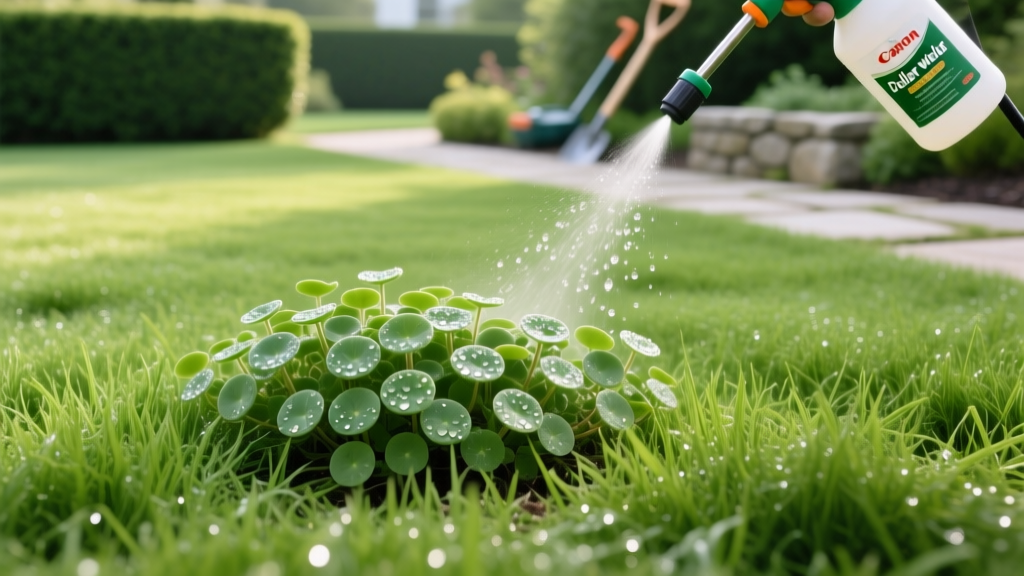
Best Dollar Weed Killer Options for Lawn Spot Treatment
Dollarweed (Hydrocotyle umbellata) is one of the most frustrating broadleaf weeds to invade warm-season and cool-season lawns. Unlike dandelions or clover, dollarweed thrives in the exact conditions that ruin turfgrass: excessive moisture, poor drainage, and compacted soil. When tackling isolated patches, broadcasting granular herbicides is a waste of chemicals and money. Spot-treating with a targeted liquid dollar weed killer is the most efficient eradication method, provided you select the correct active ingredient for your specific grass type and utilize a non-ionic surfactant to penetrate the weed's waxy leaf cuticle.
Identifying Dollarweed Before You Spray
Before mixing any herbicide, confirm you are actually looking at dollarweed. Homeowners frequently confuse it with dichondra or morning glory. Misidentification leads to selecting the wrong dollar weed killer, resulting in chemical burn to your turf and wasted product. Dollarweed features perfectly round, bright green leaves that resemble miniature lily pads, measuring between 1/2 and 1.5 inches in diameter.
| Feature | Dollarweed (Hydrocotyle) | Dichondra (Dichondra repens) |
|---|---|---|
| Leaf Shape | Perfectly round, flat edges | Kidney-shaped, slightly notched |
| Stem Attachment | Connects to the exact center of the leaf | Connects to the edge of the leaf |
| Leaf Surface | Glossy, waxy, repels water | Matte, slightly fuzzy underside |
| Growth Habit | Upright stems, spreads via rhizomes | Creeping stolons, hugs the soil |
The Chemistry of Effective Dollar Weed Killers
The primary reason standard broadleaf herbicides fail on dollarweed is its thick, waxy cuticle. If you spray a standard water-based 2,4-D solution without a surfactant, the droplets will bead up and roll off the leaf, delivering zero active ingredient to the plant's vascular system. Furthermore, dollarweed possesses a deep, resilient rhizome network. Contact herbicides will only burn the top growth; you need systemic herbicides that translocate down to the roots.
⚠️ Turfgrass Safety Warning: Never apply herbicides containing high concentrations of 2,4-D or Dicamba to St. Augustine or Centipede grass when temperatures exceed 85°F. These grasses are highly sensitive to synthetic auxins, and heat stress will cause severe phytotoxicity (yellowing and curling). Always check the product label for your specific turf species.
Top Spot-Treatment Products and Pricing (2026 Market)
Based on current professional turf management standards and homeowner accessibility, here are the most effective liquid dollar weed killers for spot treatment, categorized by grass safety.
1. Celsius WG (Best for Warm-Season Turf)
- Active Ingredients: Thiencarbazone-methyl, Iodosulfuron-methyl-sodium, Dicamba
- Safe For: St. Augustine, Bermuda, Zoysia, Centipede
- Estimated Cost: $145 per 2 oz bottle (yields up to 15 gallons of mix)
- Mix Rate: 0.113 oz (approx. 1/2 teaspoon) per gallon of water
- Why it Works: Manufactured by Envu, Celsius WG is the gold standard for warm-season lawns. It offers exceptional heat tolerance, meaning you can spot-treat dollarweed in mid-July without burning your St. Augustine grass. It is highly systemic, pulling the chemical down into the dollarweed rhizomes over 7 to 14 days.
2. Hi-Yield Atrazine Weed Killer (Best for St. Augustine & Centipede)
- Active Ingredient: Atrazine (4%)
- Safe For: St. Augustine and Centipede ONLY (Will kill Bermuda and Zoysia)
- Estimated Cost: $28 per quart
- Mix Rate: 2.2 fluid ounces per gallon of water
- Why it Works: Atrazine acts as both a post-emergent and pre-emergent. When spot-sprayed on active dollarweed, it halts photosynthesis, slowly starving the plant over 15 to 20 days. According to the University of Florida IFAS Extension, Atrazine is one of the few post-emergent options that provides residual soil control to prevent new dollarweed seeds from germinating in the treated zone.
3. Ortho WeedClear for Lawns (Best for Cool-Season & Bermuda)
- Active Ingredients: 2,4-D, Dicamba, Quinclorac
- Safe For: Fescue, Kentucky Bluegrass, Ryegrass, Bermuda, Zoysia
- Estimated Cost: $25 for 32 oz concentrate
- Mix Rate: 2.0 fluid ounces per gallon of water
- Why it Works: This three-way synthetic auxin blend disrupts the cellular growth of broadleaf weeds. It is highly aggressive on dollarweed but must be kept away from St. Augustine and Centipede grass.
Step-by-Step Spot Application Protocol
To maximize the efficacy of your chosen dollar weed killer and minimize turf stress, follow this exact application sequence:
- Mow 48 Hours Prior: Cut your lawn to its normal height two days before spraying. This allows the dollarweed leaves to regenerate enough surface area to absorb a lethal dose of the herbicide.
- Add the Surfactant: Fill your 1-gallon pump sprayer halfway with water. Add 1/2 teaspoon of a Non-Ionic Surfactant (NIS), such as Southern Ag Surfactant ($15/pint). Agitate the tank. Do not use dish soap; it contains degreasers that can strip your turfgrass cuticle.
- Mix the Herbicide: Add the precise measurement of your chosen dollar weed killer. Fill the rest of the tank with water and shake gently to avoid creating excessive foam.
- Spray to Wet, Not Runoff: Apply a fine mist directly to the dollarweed patches. The leaves should look lightly dewed. If the liquid is dripping off onto the soil, you are wasting chemical and increasing the risk of root uptake by your turf.
- The 48-Hour Rule: Do not water your lawn, and do not mow for at least 48 hours post-application. The herbicide requires this time to translocate from the leaves down to the deep rhizomes.
Why Your Dollar Weed Killer Failed: Troubleshooting Matrix
If you have sprayed and the dollarweed is still thriving, consult this diagnostic matrix to identify the failure point.
| Symptom Observed | Probable Cause | Corrective Action |
|---|---|---|
| Spray beaded up and rolled off the leaves immediately. | Lack of surfactant or applying to dusty/dirty leaves. | Add NIS to the tank mix; wait for rain to wash dust off leaves before reapplying. |
| Weed leaves curled and turned brown, but regrew 3 weeks later. | Contact burn only; rhizomes survived due to weak translocation. | Perform a second spot-treatment 14 days after the first. Ensure you are using a systemic product like Celsius WG. |
| Surrounding turfgrass turned yellow and stunted. | Phytotoxicity from 2,4-D/Dicamba applied in >85°F heat, or overdose. | Water deeply to dilute soil chemicals. Apply a liquid kelp biostimulant to aid turf recovery. Switch to Atrazine or Celsius for warm-season grass. |
| Dead patches rapidly filled with new, tiny dollarweed seedlings. | Seed bank germination; no pre-emergent barrier was used. | Apply a pre-emergent like Prodiamine (Barricade) in early spring, or use Atrazine which offers post-emergent and pre-emergent activity. |
Cultural Controls: Addressing the Root Cause
Herbicides are only a temporary fix. As noted by NC State Extension TurfFiles, dollarweed is a classic indicator weed for excessive soil moisture and compaction. If you do not alter the environment, the weed will return within a single growing season.
- Audit Your Irrigation: Dollarweed requires constant moisture to survive. Reduce your irrigation runtime by 30%. Ensure your sprinkler heads are not overlapping and pooling water in the affected zones. Allow the top inch of soil to dry out completely between watering cycles.
- Core Aeration: Compacted soil prevents turfgrass roots from breathing and holds water at the surface where dollarweed rhizomes thrive. Rent a core aerator in the spring or fall to pull 3-inch soil plugs, improving drainage and allowing your turf to outcompete the weeds.
- Raise the Mowing Height: Shade the soil surface by raising your mower deck. For St. Augustine, maintain a height of 3.5 to 4 inches. Taller grass creates a dense canopy that blocks the sunlight dollarweed seedlings need to establish.
Expert FAQ on Dollarweed Eradication
Can I use white vinegar or boiling water to kill dollarweed?
While horticultural vinegar (20% acetic acid) and boiling water will burn the top foliage of dollarweed, they are strictly contact treatments. They will not penetrate the soil to kill the deep rhizome network. Furthermore, pouring boiling water or high-concentration vinegar onto your lawn will sterilize the soil, killing beneficial microbes and your turfgrass roots in the process. Stick to systemic, turf-safe herbicides.
How long does it take for dollar weed killer to show results?
Patience is required. Fast-acting synthetic auxins like 2,4-D will show leaf curling within 48 hours, but complete plant death takes 10 to 14 days. Slower-acting, highly systemic chemicals like Celsius WG or Atrazine may take 14 to 21 days to fully yellow and kill the weed. Do not reapply prematurely; wait at least 21 days before assessing the need for a second treatment.
Is it safe to spot-treat dollarweed near vegetable gardens?
No. Herbicides containing 2,4-D, Dicamba, and Atrazine are highly toxic to broadleaf food crops like tomatoes, peppers, and beans. Even microscopic drift from a pump sprayer can cause severe leaf cupping and yield loss in your garden. If dollarweed is growing within 10 feet of a vegetable bed, manually hand-pull the weeds, ensuring you dig at least 4 inches deep to extract the white rhizomes.

