
Pest Control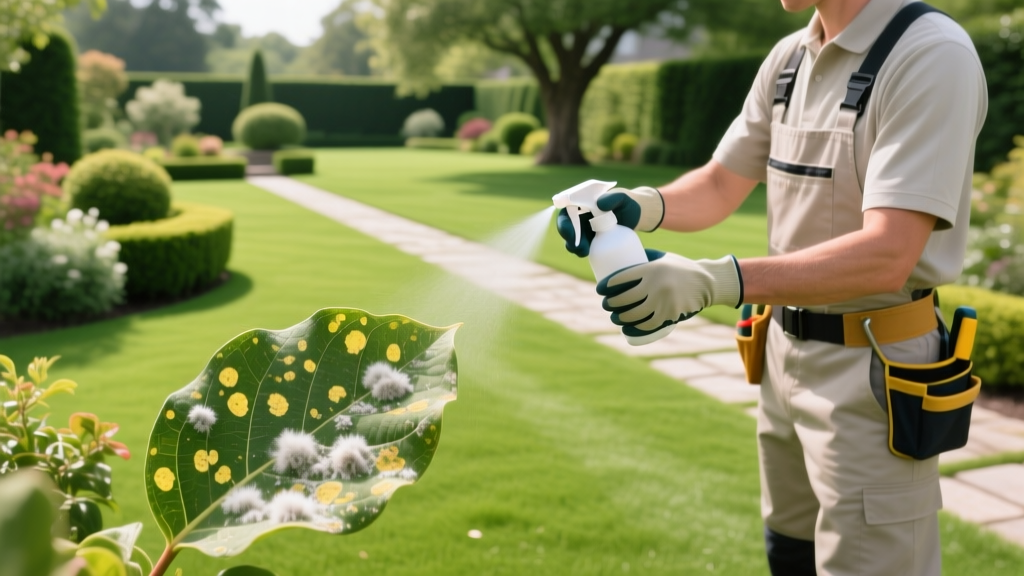
Downy Mildew Treatment: Step-by-Step Lawn and Garden Rescue
The Oomycete Distinction: Why Standard Fungicides Fail
Before applying any product, you must understand the pathogen. Downy mildew is not caused by a true fungus; it is caused by oomycetes (water molds), primarily from the genera Plasmopara, Peronospora, and Pseudoperonospora in garden beds, and Sclerophthora macrospora in turfgrass. Because oomycetes are more closely related to brown algae than to fungi, standard anti-fungal chemicals like thiophanate-methyl or myclobutanil are entirely ineffective. Successful downy mildew treatment requires targeted oomycide chemistry and strict moisture management.
Identifying Downy Mildew vs. Powdery Mildew
Misdiagnosis is the most common reason for treatment failure. Homeowners frequently confuse downy mildew with powdery mildew, leading to the purchase of useless fungicides. Use this diagnostic matrix to confirm the pathogen before spending money on chemicals.
| Diagnostic Feature | Downy Mildew (Oomycete) | Powdery Mildew (True Fungus) |
|---|---|---|
| Visual Symptoms | Angular, yellow/brown leaf spots bounded by veins. Fuzzy gray, purple, or brown growth strictly on the underside of leaves. | Circular white or gray powdery dusting primarily on the top surface of leaves and stems. |
| Environmental Trigger | Requires free water (rain, heavy dew, overhead irrigation) and cool-to-moderate temps (50°F–75°F). | Thrives in high humidity but dry foliage. Favors warm days and cool nights. |
| Pathogen Spread | Zoospores swim through water films to enter plant stomata. | Wind-blown spores land on dry leaf surfaces. |
Immediate Cultural Interventions (The First 48 Hours)
Chemical controls will fail if the microclimate remains saturated. Oomycete zoospores require standing water to swim and infect plant tissue. Execute these steps immediately upon spotting the first angular lesions.
- Surgical Pruning: Remove all heavily infected leaves. Do not compost them; oomycete sporangia can survive in cold compost piles. Bag and dispose of them in municipal waste.
- Halt Overhead Irrigation: Switch to drip tape or soaker hoses immediately. If you must hand-water, water only the soil surface at the base of the plant.
- Canopy Thinning: Remove up to 20% of healthy interior foliage on dense ornamentals or garden crops (like tomatoes and cucurbits) to increase airflow. This reduces the leaf wetness duration (LWD) below the 4-hour threshold required for zoospore germination.
- Mulch Adjustment: Pull moisture-retaining mulch (like straw or wood chips) back 3 inches from the main stem of affected plants to lower localized humidity.
Chemical and Organic Fungicide Protocols
Once cultural controls are in place, deploy targeted oomycides. According to NC State Extension's Cucurbit Downy Mildew tracking program, resistance to older chemical classes is widespread, making rotation critical.
Organic and Contact Options (Preventative)
Contact sprays must be applied before infection or at the absolute first sign of disease. They wash off easily and require strict reapplication schedules.
- Copper Octanoate (Copper Soap): Products like Monterey Liqui-Cop ($15–$18 per 16 oz bottle) are highly effective contact barriers. Rate: 2 tablespoons per gallon of water. Apply every 7–10 days. Ensure complete underside leaf coverage.
- Bacillus amyloliquefaciens: Bio-fungicides like Double Nickel LC utilize beneficial bacteria to outcompete oomycetes. Rate: 1/2 teaspoon per gallon. Best used in rotation with copper to prevent copper buildup in the soil.
Warning: Copper Phytotoxicity
Applying copper-based sprays when temperatures exceed 85°F or when plants are drought-stressed will cause severe leaf burn (phytotoxicity). Always apply copper octanoate in the early morning when stomata are open but the sun is not at its peak, allowing the spray to dry before evening dew triggers further mildew activity.
Applying copper-based sprays when temperatures exceed 85°F or when plants are drought-stressed will cause severe leaf burn (phytotoxicity). Always apply copper octanoate in the early morning when stomata are open but the sun is not at its peak, allowing the spray to dry before evening dew triggers further mildew activity.
Systemic Synthetic Options (Curative and Preventative)
For severe outbreaks where the pathogen has already entered the plant tissue, systemic products are required. Penn State Extension recommends phosphonates for ornamental downy mildew.
- Phosphorous Acid (Phosphonates): Products containing mono- and di-potassium salts of phosphorous acid (e.g., Fosphite or homeowner equivalents like Agri-Fos) move systemically through the plant's xylem and phloem. Rate: 1 to 2 teaspoons per gallon. Apply as a foliar spray or soil drench every 14–21 days.
- Mancozeb: A broad-spectrum protectant (e.g., Bonide Dithane M-45, ~$14 for 8 oz). Note: Mancozeb is strictly preventative and will not cure existing infections. Use it as a tank-mix partner with systemic treatments to protect new growth.
Turfgrass-Specific Treatment Matrix
Downy mildew in lawns, caused by Sclerophthora macrospora, is a completely different beast. It thrives in poorly drained, compacted soils, often affecting cool-season grasses and bermudagrass. Symptoms include general yellowing, stunting, and "crazy top" (a leafy, deformed seed head). Standard lawn fungicides often miss this oomycete.
| Symptom Stage | Recommended Action | Active Ingredient | Product Example | Est. Cost |
|---|---|---|---|---|
| Early (Yellowing/Poor Drainage) | Core aeration + topdressing with coarse sand to break up anaerobic soil layers. | N/A (Cultural) | Rental Core Aerator | $80–$120/day |
| Moderate (Stunting/Crazy Top) | Apply systemic oomycide. Water in immediately to reach the root zone and crown. | Metalaxyl or Propamocarb | Subdue MAXX (Pro) / Banol | $150–$250 |
| Homeowner Alternative | Broad-spectrum strobilurin application (moderate efficacy, best used preventatively). | Azoxystrobin | Scotts DiseaseEx Lawn Fungicide | $22–$28 (5lb bag) |
Expert Note: If you are a homeowner dealing with turf downy mildew, your primary focus must be on soil drainage. Sclerophthora zoospores swim through saturated soil pores. Without fixing the drainage via deep-tine aeration or French drain installation, chemical applications will only provide temporary suppression.
Long-Term Prevention Framework
Once an outbreak is neutralized, implement these structural changes to prevent the oomycetes from returning the following season.
Garden Beds and Ornamentals
- Resistant Cultivars: When replanting cucurbits or impatiens, select resistant varieties. For example, look for cucumber varieties labeled with DM resistance codes (e.g., 'Marketmore 76' or 'Dasher II'). For impatiens, switch to Impatiens hawkeri (New Guinea impatiens), which are immune to the Plasmopara obducens strain that devastates standard bedding impatiens.
- Canopy Spacing: Increase plant spacing by 25% in historically damp microclimates. A 12-inch spacing should become 15 inches to ensure wind can penetrate the canopy and dry foliage rapidly.
- Solarization: In heavily infected vegetable beds, clear the area after harvest and solarize the soil using 2-mil clear polyethylene plastic for 4 to 6 weeks during peak summer heat. This reduces the surviving oospore (overwintering spore) load in the top 6 inches of soil.
Turfgrass Maintenance
- Irrigation Auditing: Calibrate your sprinkler system to deliver exactly 0.5 to 0.75 inches of water per cycle. Frequent, light watering keeps the thatch layer perpetually wet, creating an ideal nursery for turf oomycetes. Water deeply and infrequently, strictly between 4:00 AM and 6:00 AM so the grass dries before nightfall.
- Thatch Management: Keep the thatch layer below 0.5 inches. Thick thatch acts as a sponge, harboring both moisture and overwintering Sclerophthora oospores. Use a power rake or dethatcher in early spring if the thatch exceeds this threshold.

