
Pest Control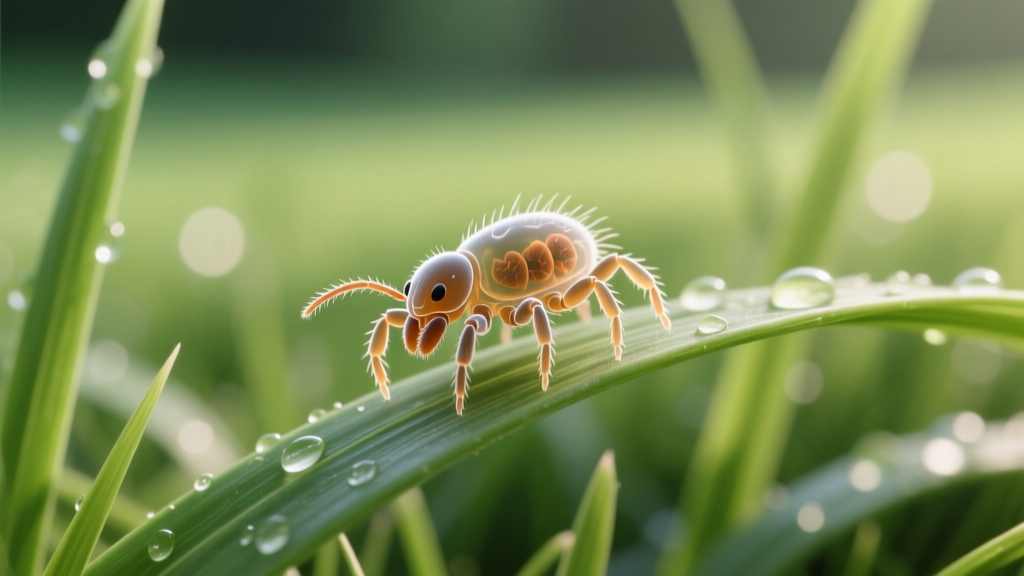
What Do Dust Bugs Look Like? A Visual Identification Guide
The "Dust Bug" Misconception: What Are You Actually Seeing?
When homeowners ask, "what do dust bugs look like," they are usually dealing with a case of mistaken identity. In entomology, there is no single species officially classified as a "dust bug." Instead, this colloquial term is used to describe three entirely different pests that thrive in dusty, undisturbed, or humid environments around your home and garden perimeter. Identifying the exact pest is critical, as the treatment for a microscopic arachnid differs vastly from the protocol for a visible, mold-eating insect.
To effectively eliminate the infestation, you must first determine which of the following three pests you are actually looking at.
1. True Dust Mites (Dermatophagoides)
True dust mites are microscopic arachnids, not insects. They measure only 0.2 to 0.3 millimeters in length, making them completely invisible to the naked eye. If you think you are seeing dust mites crawling on your furniture or baseboards, you are likely looking at a different pest. Dust mites have eight legs, translucent globular bodies, and do not bite. Instead, they feed on shed human and animal skin cells (dander) that accumulate in household dust. According to the American College of Allergy, Asthma, & Immunology, it is the mite's fecal pellets and decaying bodies that trigger severe indoor allergic reactions and asthma, not the living bugs themselves.
2. Psocids / Booklice (The Visible "Dust Bugs")
If you are seeing tiny, pale, fast-moving bugs scurrying through dusty corners, window sills, or damp basement walls, you are almost certainly looking at psocids (pronounced "so-sids"), commonly known as booklice or barklice. Unlike dust mites, psocids are visible, measuring 1 to 2 millimeters long. They have six legs, soft bodies, long antennae, and range in color from translucent white to pale brown. Psocids do not bite humans or damage structural wood; instead, they feed on microscopic mold and mildew spores that grow in dusty, high-humidity environments. The Environmental Protection Agency (EPA) notes that controlling indoor dampness is the primary method for halting the biological pollutants and mold spores that sustain psocid populations.
3. Carpet Beetle Larvae (The Dust Bunny Dwellers)
Often found hiding inside large "dust bunnies" under beds or in undisturbed closets, carpet beetle larvae are frequently mistaken for dust bugs. According to the National Pest Management Association, these larvae measure 4 to 5 millimeters and are distinctly different from mites and psocids. They are brownish, elongated, and covered in dense, bristly hairs. While the adults are small, oval beetles, the larvae are the destructive stage, feeding on natural fibers (wool, silk, cotton, pet hair) and dead insects trapped in household dust.
Visual Identification Matrix
Use the following comparison chart to accurately identify the pest invading your space based on physical characteristics and behavioral markers.
| Pest Type | Size | Color & Appearance | Leg Count | Primary Diet | Preferred Habitat |
|---|---|---|---|---|---|
| Dust Mites | 0.2 - 0.3 mm (Invisible) | Translucent, globular, spider-like | 8 (Arachnid) | Shed skin cells (dander) | Mattresses, carpets, upholstered furniture |
| Psocids (Booklice) | 1.0 - 2.0 mm (Visible) | Pale brown, translucent, long antennae | 6 (Insect) | Microscopic mold and mildew | Damp baseboards, window sills, bookshelves |
| Carpet Beetle Larvae | 4.0 - 5.0 mm (Visible) | Brownish, elongated, covered in bristles | 6 (Insect) | Natural fibers, pet hair, dead insects | Undisturbed closets, under heavy furniture |
Environmental Drivers: Why They Infest Your Space
All three of these pests share a common environmental trigger: unmanaged indoor humidity and poor air circulation. Dust mites absorb moisture directly from the air through their exoskeletons; they cannot survive if the relative humidity (RH) drops below 50%. Similarly, psocids require high humidity to cultivate the microscopic mold they eat. If you are seeing visible "dust bugs" (psocids), it is a biological indicator that your indoor RH is consistently hovering above 60%, creating a micro-climate for mold growth.
⚠️ Moisture Warning: If you spot psocids near exterior doors, garden-facing windows, or basement perimeters, check for exterior drainage failures. Soil graded toward your foundation or clogged gutters will push moisture through concrete slabs, creating the exact damp, dusty environment these pests require to breed.
Step-by-Step Eradication and Moisture Control Protocol
Eliminating dust-dwelling pests requires a multi-pronged approach that targets both the insects and their environmental life-support systems. Follow this exact protocol for permanent eradication.
- Deploy Digital Hygrometers: Purchase inexpensive digital hygrometers (e.g., ThermoPro TP50) and place them in affected rooms. Your absolute target is to maintain indoor RH below 50%. If levels exceed this, run a high-capacity dehumidifier (such as a Midea 50-pint unit) continuously until the baseline drops.
- Execute Sealed HEPA Vacuuming: Standard vacuums exhaust microscopic mite feces and psocid eggs back into the air through their exhaust ports. You must use a vacuum with a fully sealed HEPA filtration system (e.g., Miele Complete C3 or Dyson V15 Detect). Vacuum all carpets, baseboards, and upholstered furniture slowly to allow the suction to pull pests from deep within the fibers.
- Apply Amorphous Silica Gel (Not DE): Many homeowners mistakenly use Diatomaceous Earth (DE) for dust bugs. DE fails in humid environments because it clumps when it absorbs ambient moisture, rendering it useless. Instead, use CimeXa (amorphous silica gel). CimeXa works via static cling, drawing pests to the dust, and absorbs the waxy cuticle of the insect, killing psocids and carpet beetles in 1 to 2 days. Apply it lightly into baseboard cracks and window tracks using a bellows hand duster (like the JT Eaton Bellow Duster) at a rate of 2 oz per 100 square feet.
- Treat with Botanical Knockdown Sprays: For immediate relief from visible psocid swarms, apply a botanical insecticide like Essentria IC3. This product uses rosemary oil, geraniol, and peppermint oil to disrupt the octopamine receptors in the insects' nervous systems. It is safe for indoor use around humans and pets when applied according to the label, leaving no toxic residue in your living spaces.
Frequently Asked Questions
Can dust bugs bite humans or pets?
No. True dust mites do not bite; they only consume dead skin. Psocids (booklice) have mouthparts designed for scraping mold and cannot pierce human or animal skin. If you are experiencing bites in dusty areas, you are likely dealing with fleas, bed bugs, or bird mites, which require entirely different pest control protocols.
Why do I see more dust bugs after it rains?
Heavy rainfall drives up outdoor humidity and forces moisture into your home's perimeter. This sudden spike in indoor RH triggers rapid mold growth in dusty, hidden crevices, which causes psocid populations to explode within 48 to 72 hours. Ensuring your exterior grading slopes away from your foundation at a minimum drop of 6 inches over the first 10 feet will prevent this moisture intrusion.
Will washing my sheets kill dust mites?
Yes, but temperature is the critical factor. Washing sheets in cold or warm water will not kill dust mites. You must wash all bedding in water heated to at least 130°F (54°C) for a minimum of 15 minutes to effectively kill the mites and denature the allergenic proteins in their fecal matter.

