
Pest Control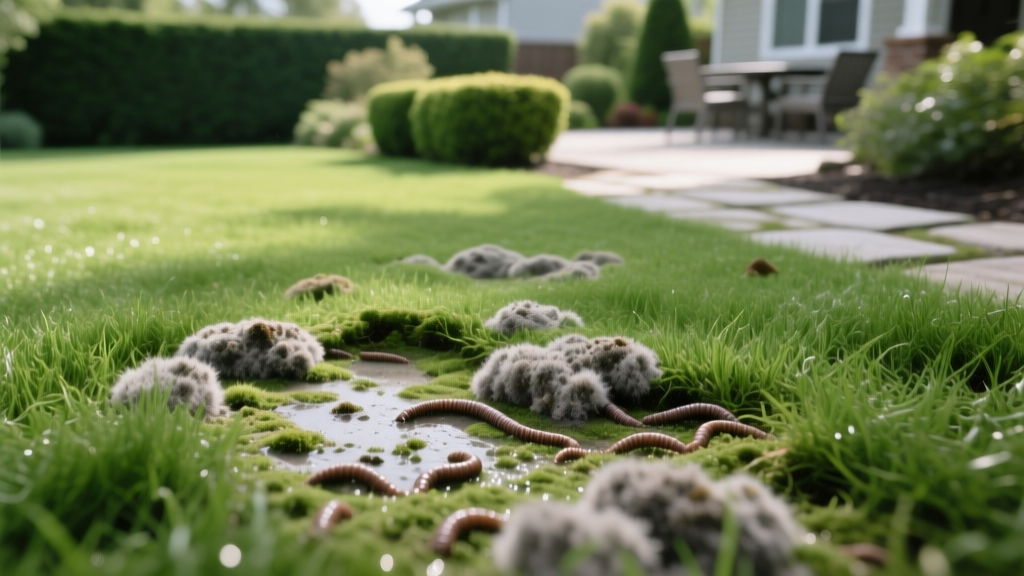
Earthworm Mold & Mildew Stain Treatment: Diagnosis and Rescue Fixes
The Real Culprit: Why Earthworms Trigger Mold and Mildew Stains
Earthworms are indispensable for soil aeration and nutrient cycling, but their surface activity can create localized micro-environments that foster fungal growth. When earthworms deposit castings (excrement) on hardscapes like concrete, pavers, or stone, or when heavy casting activity mats down turfgrass, these nutrient-dense mounds act as moisture sponges. In shaded or poorly drained areas, this trapped moisture combined with the organic matter in the castings creates an ideal breeding ground for secondary mold, mildew, and algae.
Homeowners often misdiagnose these dark, slimy, or powdery patches as chemical burns, pet damage, or primary turf diseases. However, effective earthworm mold & mildew stain treatment requires addressing both the fungal stain and the underlying casting accumulation without resorting to harsh chemicals that destroy the beneficial soil ecology. According to turf management specialists at the University of Minnesota Extension, earthworm castings are highly beneficial for soil structure, meaning eradication of the worms is never the goal; rather, managing the surface moisture and organic buildup is the key to stain prevention.
Symptom Diagnosis Matrix: Identifying the Stain
Before applying any treatment, you must confirm that the stain is indeed driven by earthworm activity rather than a primary pathogen or environmental hazard. Use the diagnostic matrix below to differentiate earthworm-induced mold from other common lawn and hardscape anomalies.
| Symptom Profile | Earthworm Mold & Mildew | Slime Mold (Fuligo septica) | Turf Snow Mold |
|---|---|---|---|
| Primary Location | Hardscape joints, shaded concrete, matted turf | Mulch beds, decaying wood, occasionally turf | Turfgrass (appears post-snowmelt) |
| Texture & Appearance | Dark brown/black slimy spots with a central granular mound (casting) | Bright yellow, crusty, or powdery scrambled-egg appearance | Gray or pink web-like mycelium, matted grass blades |
| Underlying Cause | Moisture trapped by nutrient-dense earthworm castings | Saprophytic fungi feeding on decaying organic matter | Prolonged snow cover and cold-temperature fungi |
| Odor | Earthy, musty, or stagnant water smell | Faintly fungal or odorless | Sour, decaying vegetation odor |
Hardscape Rescue: Step-by-Step Stain Treatment
When earthworm castings accumulate on pavers or concrete, the resulting mold and mildew can penetrate the porous surface. Many homeowners reach for chlorine bleach (sodium hypochlorite), which is a critical mistake. Chlorine bleach strips paver sealants, degrades polymeric sand in joints, and leaches into adjacent soil beds, killing the very earthworms and microbes you want to preserve.
⚠️ WARNING: Avoid Chlorine Bleach
Chlorine bleach does not lift organic stains from porous concrete; it merely bleaches the surface color while leaving the fungal roots (hyphae) intact. Furthermore, the National Pesticide Information Retrieval System (NPIC) notes that oxygen-based alternatives break down into harmless natural compounds, making them vastly superior for outdoor ecological safety.
Chlorine bleach does not lift organic stains from porous concrete; it merely bleaches the surface color while leaving the fungal roots (hyphae) intact. Furthermore, the National Pesticide Information Retrieval System (NPIC) notes that oxygen-based alternatives break down into harmless natural compounds, making them vastly superior for outdoor ecological safety.
Step 1: Mechanical Removal and Drying
Do not attempt to wash wet, slimy castings. Wait for a dry spell, then use a stiff poly-bristle push broom to sweep the dried, granular castings off the hardscape and back into the soil beds. This removes 80% of the organic matter feeding the mold.
Step 2: Sodium Percarbonate (Oxygen Bleach) Application
Sodium percarbonate is the gold standard for earthworm mold & mildew stain treatment on hardscapes. When activated by warm water, it releases hydrogen peroxide and sodium carbonate, which aggressively oxidize organic stains and kill fungal spores without leaving toxic residue.
- Mixing Ratio: Dissolve 4 ounces of bulk sodium percarbonate powder (or a commercial equivalent like OxiClean Outdoor) per 1 gallon of hot water (minimum 100°F).
- Application: Apply using a 2-gallon pump sprayer directly to the stained joints and concrete pores.
- Dwell Time: Allow the solution to foam and dwell for 15 to 20 minutes. Do not let it dry on the surface; mist lightly with water if it begins to dry.
- Agitation: Scrub stubborn joints with a stiff-bristled detail brush to break the surface tension of the mildew biofilm.
- Rinse: Rinse thoroughly with a standard garden hose. Avoid high-pressure power washing, which can blow out polymeric joint sand.
Step 3: Enzymatic Deep Clean for Sealed Pavers
If your pavers are sealed with an acrylic or urethane topcoat, mold can sometimes become trapped beneath failing sealant layers due to the enzymatic breakdown caused by decomposing castings. If oxygen bleach fails to lift the stain, apply a bio-enzymatic cleaner (such as Simple Green Oxy Solve or a dedicated paver enzyme wash). These enzymes specifically target the proteins and complex carbohydrates in earthworm castings, breaking down the food source that allows mildew to persist under the sealant.
Turf Rescue: Treating Mildewy Casting Mats on Grass
On the lawn itself, heavy earthworm activity in early spring or late fall can create a thick layer of castings that mats down the turf canopy. This restricts airflow and traps humidity against the grass blades, leading to secondary mildew and localized turf yellowing.
Mechanical Disruption
Use a flexible lawn rake or a specialized turf sweeper to break apart dried casting mounds. Dragging the rake lightly across the surface distributes the nutrient-rich castings evenly across the soil profile, acting as a natural top-dressing rather than a localized smothering agent.
Biological Fungicide Application
If the grass blades beneath the castings show signs of active mildew (white/gray powdery residue or water-soaked lesions), apply a biological fungicide containing Bacillus subtilis (strain QST 713, commonly found in products like Serenade Garden). This beneficial bacterium colonizes the leaf surface, outcompeting the mildew for space and nutrients. Apply at a rate of 2 to 4 ounces per gallon of water, spraying the affected turf canopy in the early morning when dew is present to help the bacteria spread across the leaf tissue.
Long-Term Prevention: Moisture and Ecology Management
You cannot—and should not—eliminate earthworms from your property. Instead, effective long-term earthworm mold & mildew stain treatment relies on altering the surface environment so that castings dry out before mold can colonize them.
💡 PRO TIP: Core Aeration Timing
Schedule core aeration during periods of active earthworm surface casting. The aeration tines pull soil plugs to the surface, which naturally breaks up and integrates the earthworm castings into the turf canopy, preventing the localized moisture traps that cause mildew outbreaks.
Schedule core aeration during periods of active earthworm surface casting. The aeration tines pull soil plugs to the surface, which naturally breaks up and integrates the earthworm castings into the turf canopy, preventing the localized moisture traps that cause mildew outbreaks.
Irrigation Calibration
Mold requires prolonged surface moisture. Transition your irrigation schedule from frequent, shallow watering to deep, infrequent cycles. Watering deeply twice a week allows the surface soil and hardscape joints to dry out completely between sessions, depriving mold spores of the continuous moisture required to germinate on casting mounds.
Shade and Airflow Modification
In heavily shaded areas where earthworm mold is chronic, prune lower tree limbs to a minimum height of 8 feet. This increases cross-breeze airflow and allows dappled UV light to reach the hardscape and turf, naturally inhibiting fungal spore germination without the need for chemical interventions.

