
Pest Control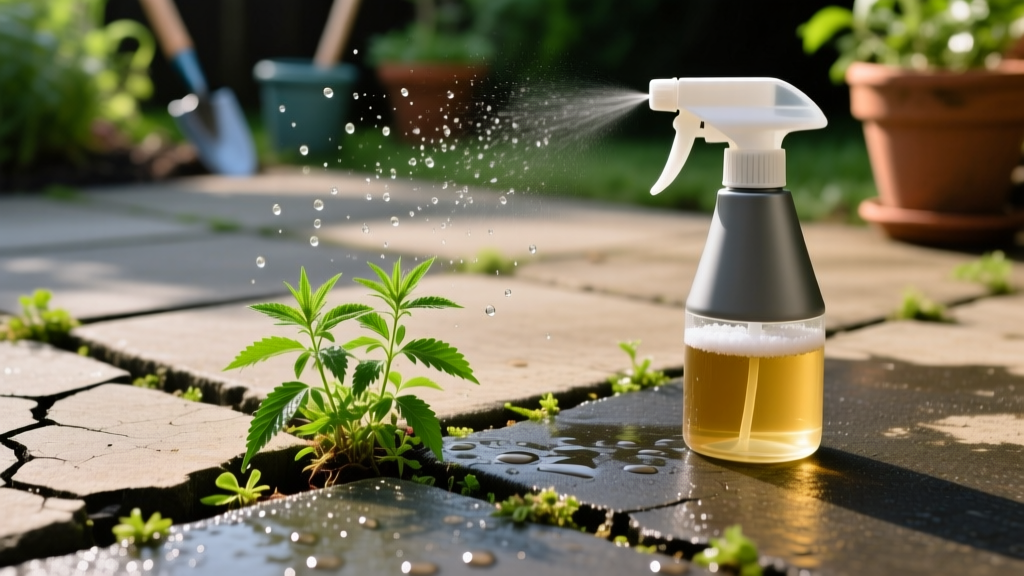
The Ultimate Homemade Weed Killer Formula for Patios and Driveways
The Science (and Danger) Behind DIY Weed Killers
Search for a homemade weed killer formula online, and you will inevitably find recipes combining white vinegar, table salt, and dish soap. While this mixture is highly effective at desiccating plant tissue, applying it blindly across your yard is a catastrophic mistake for your soil ecology. Sodium chloride (table salt) causes severe soil salinization, permanently destroying the osmotic balance required for turfgrass roots to absorb water. Once salt accumulates in your topsoil, nothing will grow there for years.
Therefore, the ultimate homemade weed killer formula must be deployed strategically. We divide organic weed management into two distinct categories: hardscape eradication (driveways, patio cracks, gravel paths) and lawn-safe spot treatments. According to the University of Minnesota Extension, home remedies lack the systemic root-killing power of synthetic herbicides, meaning they are strictly contact-based. Understanding this limitation is the key to setting realistic expectations and achieving success.
⚠️ CRITICAL WARNING: Never use sodium chloride (table salt) or high-concentration vinegar on your lawn or garden beds. These ingredients will permanently alter your soil pH and salinity, killing your turf and beneficial soil microbes. Reserve the heavy-duty formula strictly for concrete, asphalt, and gravel areas.
Formula 1: The Hardscape Crack Eradicator
This formula is engineered for the harsh, unforgiving environment of driveway cracks and patio pavers where soil health is irrelevant. It relies on rapid cellular dehydration to burn weeds down to the crown within hours.
Exact Ingredients & Ratios
- 1 Gallon 30% Horticultural Vinegar: Do not use 5% kitchen vinegar. Kitchen vinegar lacks the acetic acid concentration required to break down the waxy cuticle of mature broadleaf weeds. 30% vinegar costs roughly $25–$35 per gallon but is exponentially more effective.
- 1 Cup Sodium Chloride (Table Salt): Acts as a secondary desiccant and prevents immediate regrowth in the crack by creating a hostile, hyper-saline micro-environment.
- 2 Tablespoons Liquid Castile Soap: Avoid synthetic dish soaps (like Dawn), which contain harsh degreasers and artificial fragrances. Castile soap acts as a non-toxic surfactant, breaking the surface tension of the vinegar so it clings to the leaves rather than beading up and rolling off.
Mixing and Application Protocol
- Pour the 30% horticultural vinegar into a 2-gallon polyethylene pump sprayer. (Never use metal sprayers; the high acetic acid concentration will rapidly corrode aluminum and brass fittings).
- Add the table salt and shake vigorously for 60 seconds until fully dissolved.
- Add the Castile soap last to prevent excessive foaming, then gently swirl to integrate.
- Apply directly to the weed foliage and crown until dripping. Do not spray on windy days to prevent drift onto adjacent desirable plants.
Formula 2: The Lawn-Safe Organic Spot Treatment
If you need to kill a dandelion or creeping charlie in the middle of your Kentucky Bluegrass or Bermuda lawn, the salt-based formula above will leave a dead, yellow halo in your turf. For lawn-safe organic control, you must abandon DIY kitchen chemistry and rely on thermal or iron-based treatments.
The Boiling Water Method (For Taproot Weeds)
For isolated dandelions or dock weeds with deep taproots, pouring 2 cups of actively boiling water (212°F) directly into the center of the weed's crown cooks the plant tissue and destroys the meristem (growth point) without leaving chemical residues. This is 100% free, entirely organic, and leaves your surrounding soil microbiome completely intact.
The Chelated Iron Upgrade (For Broadleaf Weeds)
When homemade formulas fail on lawns, the scientifically backed organic alternative is FeHEDTA (Chelated Iron). While technically a commercial product rather than a 'homemade' kitchen mix, it is the active ingredient in all OMRI-listed organic lawn weed killers. Broadleaf weeds absorb iron in toxic quantities, causing cellular necrosis, while monocot grasses naturally regulate iron uptake and remain unharmed. As noted by the EPA's guidelines on organic pest control, minimum-risk pesticides utilizing iron are highly effective and exempt from stringent federal registration due to their safety profile.
Efficacy & Cost Comparison Matrix
Understanding the financial and biological trade-offs of different organic weed control methods ensures you do not waste money on ineffective kitchen staples.
| Method / Active Ingredient | Cost per Gallon (Approx.) | Root Kill Efficacy | Lawn Safety | Best Use Case |
|---|---|---|---|---|
| 5% White Vinegar (Kitchen) | $3.00 | Very Low (Top-growth only) | Moderate (Burns grass) | Seedling weeds on hardscapes |
| 30% Horticultural Vinegar + Salt | $30.00 | Moderate (Kills crowns) | Zero (Destroys soil) | Driveway cracks, gravel paths |
| Boiling Water (Thermal) | $0.05 (Energy cost) | High (Cooks taproot) | Low (Scalds adjacent grass) | Isolated dandelions in turf |
| FeHEDTA (Chelated Iron) | $45.00 | High (Systemic necrosis) | Excellent (Feeds grass) | Broadleaf weeds in active lawns |
The Surfactant Factor: Why Soap Matters
The most common reason a homemade weed killer formula fails is the omission of a proper surfactant. Water and vinegar have a high surface tension (approximately 72 mN/m). Weed leaves, particularly mature plantains and thistles, are coated in a hydrophobic waxy cuticle designed to repel moisture. When you spray pure vinegar, it beads up and rolls off the leaf onto the soil, where it is rapidly neutralized by soil buffers.
Adding 2 tablespoons of Castile soap drops the surface tension of your mixture to roughly 30 mN/m. This allows the acetic acid to spread into a microscopic, uniform film across the leaf surface, penetrating the stomata and destroying the cell membranes from the inside out.
Application Timing & Weather Constraints
Because organic contact herbicides lack systemic translocation (the ability to travel down to the roots via the plant's phloem), environmental conditions dictate your success rate. Follow these strict parameters:
- Temperature: Apply only when ambient temperatures exceed 80°F. Heat accelerates the desiccation process. Spraying at 60°F will yield a 50% lower kill rate.
- Sunlight: Spray between 10:00 AM and 2:00 PM. UV radiation and peak solar heat work synergistically with the acetic acid to rapidly dry out the plant tissue.
- Moisture: Ensure zero rainfall is forecasted for at least 12 hours post-application. Rain will wash the acid off the foliage before it can penetrate the cuticle.
- Weed Size: Target weeds when they are young (under 4 inches tall). Mature weeds with extensive root systems will simply resprout from the roots a week after the top growth is burned off.
Troubleshooting Common Failures
Problem: The weed turned brown but grew back a week later.
Diagnosis: You only burned the top growth. The taproot survived.
Solution: Reapply the 30% vinegar formula immediately when new shoots emerge, or manually extract the root with a weeding tool. For lawns, switch to an FeHEDTA iron-based herbicide which translocates to the roots.
Problem: The mixture clogged my sprayer nozzle.
Diagnosis: Undissolved salt crystals or soap scum buildup.
Solution: Flush the sprayer tank and wand with warm water and a splash of clear ammonia to break down the fatty acids in the Castile soap. Always dissolve the salt in a small amount of hot water before adding it to the cold vinegar in the tank.
Frequently Asked Questions
Can I use Epsom salt instead of table salt?
No. Epsom salt is magnesium sulfate, not sodium chloride. Magnesium and sulfur are essential plant macronutrients. While a massive overdose can cause osmotic stress, Epsom salt is primarily a fertilizer and will not effectively kill weeds. Stick to cheap, iodized or non-iodized sodium chloride for hardscapes, and omit salt entirely for lawn applications.
Will horticultural vinegar lower my soil pH permanently?
While 30% acetic acid is highly corrosive, it degrades rapidly in the soil. Soil microbes and natural buffering capacity (calcium carbonate) neutralize the acid within a few days to a week. It will not cause long-term soil acidification, unlike the permanent damage caused by sodium chloride accumulation.

