
Pest Control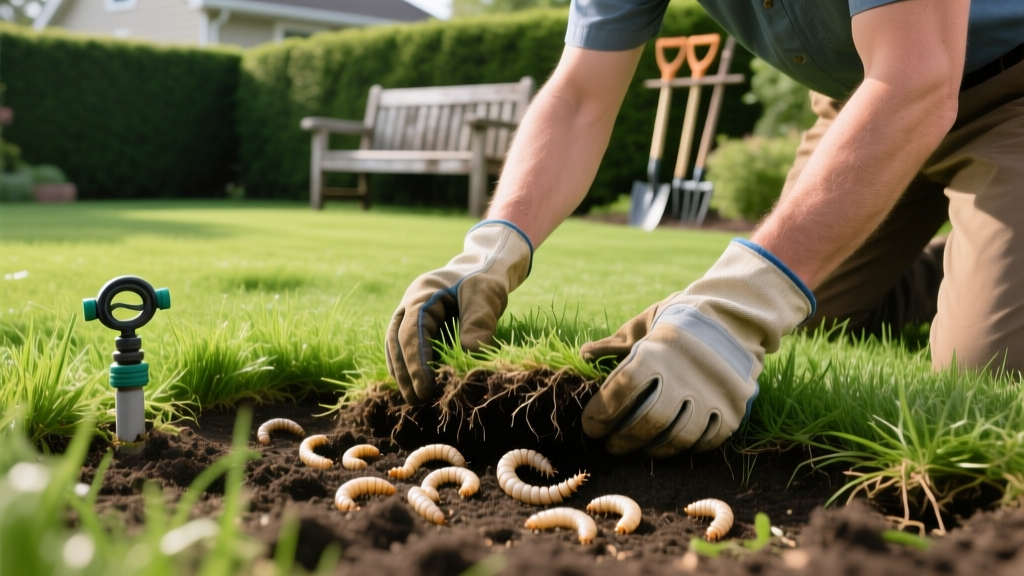
Effective Lawn Care for Grubs: Timing, Products, and Recovery
Understanding the Enemy: White Grubs in Turfgrass
White grubs are the larval stage of scarab beetles, including Japanese beetles, June bugs, and European chafers. These C-shaped, creamy-white pests feed aggressively on grassroots, severing the plant from its water and nutrient supply. If left unchecked, a severe infestation can destroy an entire lawn in a matter of weeks, turning lush green turf into spongy, brown, dead patches that roll back like loose carpet. Effective lawn care for grubs requires moving beyond generic pesticide applications and adopting a strategic, science-backed approach tailored to the insect's life cycle and your specific turfgrass species.
The 2026 Neonicotinoid Shift: Historically, products containing imidacloprid and clothianidin were the gold standard for grub control. However, due to increasing state-level restrictions on neonicotinoids to protect pollinator populations (notably in NY, MD, and ME), the turf management industry has pivoted. Modern lawn care for grubs now heavily relies on anthranilic diamides and biological controls, which we detail below.
The Grub Life Cycle: Why Timing Dictates Success
The single most common failure in grub management is applying the wrong product at the wrong time. According to UMass Extension Turf Program, grubs follow a strict annual cycle that dictates your treatment window:
- Mid-Summer (July-August): Adult beetles lay eggs in the soil. These hatch into first-instar larvae.
- Late Summer to Fall (August-October): Grubs are young, small, and feeding voraciously near the soil surface. This is when the most visible turf damage occurs and when curative treatments are highly effective.
- Late Fall to Winter (November-March): Grubs migrate deep into the soil profile (below the frost line) to overwinter. Chemical treatments applied now are entirely useless.
- Spring (April-May): Grubs return to the surface to feed briefly before pupating into adult beetles. Spring feeding causes minimal damage, and treating them now is a waste of resources.
Diagnostic Matrix: Grub Damage vs. Drought Stress
Because grub damage typically peaks in late summer—the exact same time lawns experience drought stress—homeowners frequently misdiagnose the problem. Use this diagnostic matrix to confirm the presence of grubs before spending money on treatments.
| Diagnostic Indicator | Grub Infestation | Drought / Heat Stress |
|---|---|---|
| The Pull Test | Turf pulls up easily with no resistance; roots are sheared off. | Turf is difficult to pull; roots remain firmly anchored in dry soil. |
| Soil Texture | Soil feels spongy underfoot due to severed root zones. | Soil is hard, compacted, and hydrophobic. |
| Wildlife Activity | Skunks, raccoons, or crows digging small craters in the lawn. | No unusual animal digging activity. |
| Visual Soil Inspection | More than 5-10 C-shaped white larvae per square foot. | No larvae present; soil is bone dry. |
Preventative vs. Curative Lawn Care for Grubs
Choosing between preventative and curative chemical strategies depends on your lawn's history and the current calendar month. Michigan State University Extension emphasizes that these two chemical classes are not interchangeable.
1. Preventative Strategy (The Long Game)
Preventatives target young, newly hatched grubs in late summer. They must be applied before the damage occurs, typically between late May and mid-July.
- Active Ingredient: Chlorantraniliprole (e.g., Scotts GrubEx1).
- Mechanism: Slow-acting; takes 60 to 90 days to fully translocate into the root zone where hatching grubs ingest it.
- Cost: Approximately $28 for a 5,000 sq. ft. bag.
- Pros: Extremely low toxicity to mammals and pollinators; provides season-long control.
- Cons: Will not kill large, mature grubs already destroying your lawn in September.
2. Curative Strategy (The Emergency Rescue)
If you discover an active infestation in August or September, preventatives will not work fast enough. You need a curative contact insecticide.
- Active Ingredient: Trichlorfon (e.g., BioAdvanced 24-Hour Grub Killer Plus).
- Mechanism: Rapid knockdown; kills actively feeding grubs within 24 hours but degrades in the soil within 2 to 3 weeks.
- Cost: Approximately $24 for a 5,000 sq. ft. bag.
- Pros: Stops active damage immediately.
- Cons: Short residual activity; requires precise timing and immediate watering to move the chemical past the thatch layer.
3. Biological Controls (The Organic Route)
For homeowners seeking organic lawn care for grubs, beneficial nematodes and bacterial spores are the primary options, though they require strict environmental adherence.
- Heterorhabditis bacteriophora (Hb) Nematodes: These microscopic worms actively hunt and infect grubs. They must be applied in late summer when soil temperatures are consistently above 60°F. Crucial detail: The lawn must be kept moist for 10 days post-application, or the nematodes will desiccate and die. Cost: ~$45 for 10 million nematodes (covers ~3,000 sq. ft.).
- Milky Spore (Paenibacillus popilliae): A bacterium specifically targeting Japanese beetle grubs. It takes 2 to 5 years to build up in the soil to effective levels, making it a poor choice for immediate rescue, but excellent for long-term, multi-year estate management.
Secondary Yard Defense: Deterring Grub-Hunting Wildlife
Often, the most severe damage to a lawn is not caused by the grubs themselves, but by the rodents and mammals that hunt them. Skunks, raccoons, and armadillos will tear up large sections of turf to access the protein-rich larvae beneath.
Pro-Tip for Animal Deterrence: While treating the grubs is the ultimate fix, you can protect your turf overnight by applying a castor oil-based repellent (like Bonide Mole & Gopher Repellent) or spreading Milorganite fertilizer. The strong scent masks the grubs and deters foraging mammals while you wait for your curative insecticide to take effect.
Step-by-Step Turf Recovery Protocol
Once the grub population is eradicated, the severed grassroots will not magically reattach. You must execute a recovery protocol to restore the lawn before winter dormancy or spring weed germination takes over.
- Rake and Remove: Vigorously rake out all dead, brown turf and debris to expose the bare soil.
- Core Aeration: Rent a core aerator to relieve soil compaction caused by animal digging and heavy summer foot traffic. Leave the soil plugs on the lawn to break down naturally.
- Overseed Immediately: Apply a high-quality, weed-free turfgrass seed blend at a rate of 6 to 8 lbs per 1,000 sq. ft. For northern lawns, use a mix of Kentucky Bluegrass and Tall Fescue. For southern lawns, lay fresh Bermuda or Zoysia sod on heavily damaged patches.
- Apply Starter Fertilizer: Use a high-phosphorus starter fertilizer (e.g., a 10-18-10 NPK ratio) to aggressively stimulate new root development. Standard lawn fertilizers lack the phosphorus necessary for rapid seedling establishment.
- Hydration Schedule: Water the newly seeded areas lightly 2 to 3 times daily for the first 14 days to keep the top inch of soil perpetually moist. Transition to deep, infrequent watering once seedlings reach 2 inches in height.
By aligning your chemical or biological interventions with the exact biological windows of the scarab beetle life cycle, you transform lawn care for grubs from a frustrating guessing game into a predictable, highly effective science.

