
Pest Control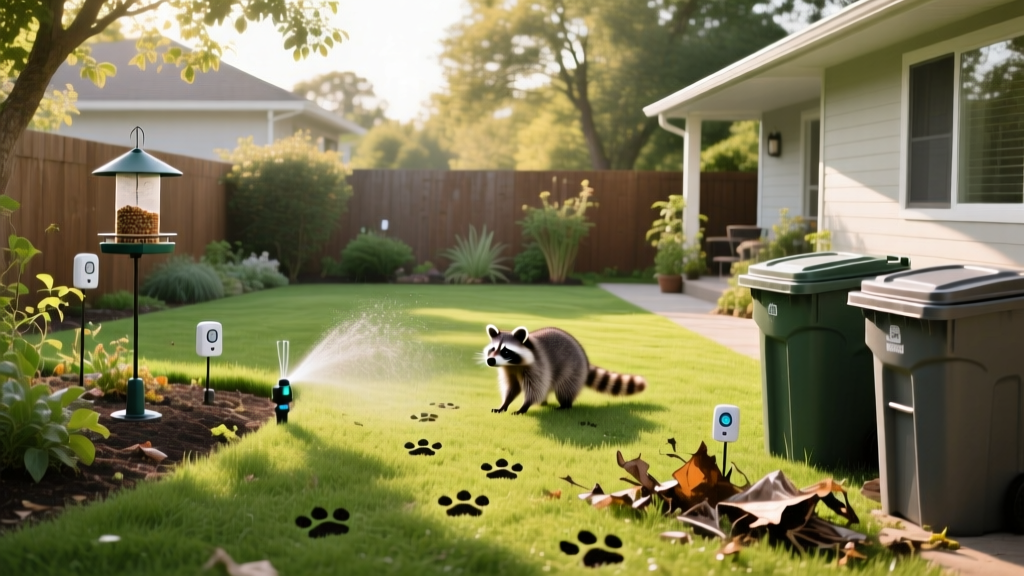
Raccoon Repellent Guide: What Actually Works in Your Yard
The Reality of Raccoon Intelligence and Deterrence
Raccoons (Procyon lotor) possess cognitive abilities and spatial memory comparable to primates. When evaluating any raccoon repellent, homeowners must understand one critical biological fact: raccoons habituate rapidly to static deterrents. Fake owls, ultrasonic sound emitters, and stationary predator decoys might work for 48 hours, but once a raccoon realizes the threat is static and non-lethal, they will completely ignore it. Effective mammal deterrence requires dynamic responses, sensory irritation, or physical exclusion. According to the Internet Center for Wildlife Damage Management, integrated pest management combining habitat modification with active deterrents yields the only long-term success.
Evaluating Scent and Chemical Raccoon Repellents
Chemical repellents rely on irritating a raccoon's highly sensitive olfactory and trigeminal nerve systems. However, not all active ingredients are created equal, and some commonly recommended DIY methods are both ineffective and illegal. Below is a comparison matrix of the most common chemical and scent-based repellents available on the market.
| Active Ingredient | Product Example | Mechanism of Action | Efficacy & Longevity | Estimated Cost |
|---|---|---|---|---|
| Capsaicin / Piperine | Critter Ridder (Model 3141) | Irritates trigeminal nerve receptors in the nose and mouth. | High. Must be reapplied every 30 days or after heavy rain. | $15 - $22 |
| Predator Urine (Coyote) | Shake-Away Predator Urine | Triggers instinctual fear response via kairomones. | Low in urban areas. Urban raccoons rarely encounter coyotes and quickly habituate. | $20 - $30 |
| Garlic / Peppermint Oil | Nature's Mace Mammal Repellent | Creates an overpowering scent barrier masking food odors. | Moderate. Effective for garden beds, but fails against highly motivated foragers. | $18 - $25 |
| Naphthalene (Mothballs) | Generic Mothballs | Toxic fumigant. | Extremely Low. Evaporates rapidly outdoors. Highly illegal for outdoor use. | $5 - $10 |
Application Protocol for Capsaicin-Based Repellents
If you choose a capsaicin-based granular or liquid repellent, application placement is more important than volume. Raccoons use their front paws to investigate objects. Apply granular repellents in a 24-inch wide band directly in their travel corridors—typically along the top of wooden fences, the base of downspouts, and the perimeter of your trash enclosure. Liquid sprays should be applied to vertical surfaces at a height of 12 to 18 inches off the ground, targeting the exact height of a foraging raccoon's face.
Sensory Deterrents: Breaking the Habituation Cycle
Because raccoons are highly adaptable, sensory deterrents must be unpredictable. The most reliable tool in a wildlife management professional's arsenal is the motion-activated sprinkler. These devices exploit a raccoon's natural aversion to sudden, unpredictable physical stimuli.
Setting Up the Orbit Motion-Activated Sprinkler
The Orbit 62100-YM Motion-Activated Sprinkler (typically priced between $45 and $60) utilizes a Passive Infrared (PIR) sensor to detect the heat signature of a warm-bodied mammal. To prevent habituation, you must configure the device correctly:
- Sensor Placement: Mount the unit on a sturdy stake at a 10-degree downward tilt. Raccoons have a low center of gravity; a high-angle sensor will miss them until they are already inside your garden.
- Crossfire Configuration: For high-traffic areas like trash pad enclosures, use two units positioned at 90-degree angles to each other. This eliminates the blind spot directly in front of the sensor.
- Night Mode Calibration: Set the sensitivity dial to maximum and restrict the operating hours to dusk-through-dawn (typically 8:00 PM to 6:00 AM) to conserve the 9V battery and prevent false triggers from daytime wind or passing cars.
- Water Volume: The device uses only 2 to 3 cups of water per 3-second burst, meaning it will not waterlog your lawn while effectively startling the intruder.
Legal and Safety Warning Regarding Mothballs and Ammonia:
Many outdated online guides recommend using mothballs (naphthalene) or ammonia-soaked rags to repel raccoons from attics or yards. The Environmental Protection Agency (EPA) strictly prohibits using mothballs outdoors. Naphthalene is a recognized carcinogen that contaminates soil and groundwater, and it poses severe toxicity risks to children and domestic pets. Ammonia evaporates within hours in outdoor environments, rendering it useless, and can cause severe respiratory damage to non-target wildlife.
Biological Hazards: Managing Raccoon Latrines
Raccoons are fastidious about their waste and will repeatedly use the same site, known as a latrine, often located on flat surfaces like roofs, large stumps, or hay bales. These latrines are primary vectors for Baylisascaris procyonis (raccoon roundworm). The Centers for Disease Control and Prevention (CDC) notes that the microscopic eggs in raccoon feces are incredibly resilient, surviving in soil for years and resisting standard household disinfectants.
If you find a latrine, standard repellents will not solve the biological hazard. You must remediate the site before applying deterrents:
- Don an N95 respirator, rubber gloves, and disposable coveralls.
- Do not sweep or use a leaf blower, as this aerosolizes the eggs.
- Carefully scoop the feces and the top 1 inch of underlying soil into a heavy-duty trash bag.
- Douse the contaminated surface with boiling water. While bleach does not kill the eggs, a 10% bleach solution can be used to remove the sticky outer coating, allowing the eggs to be washed away into the soil where they are less likely to be ingested by humans or pets.
- Once clean, apply a heavy layer of capsaicin-based repellent to the exact spot to prevent the raccoon from reclaiming its latrine.
Physical Exclusion: The Only Permanent Solution
No chemical or sensory raccoon repellent will work if the caloric reward is high enough. A raccoon will endure a blast of hot pepper or a spray of water if it knows a secure, high-calorie food source is waiting. Physical exclusion is non-negotiable.
- Trash Can Securing: Bungee cords are easily defeated by raccoon opposable thumbs. Invest in mechanical lid locks like the Animal Stopper Trash Can Lid Lock (approx. $15), which requires human-level dexterity and leverage to open.
- Garden Bed Protection: Chicken wire is useless; raccoons will simply pull it apart. Use 1/4-inch galvanized hardware cloth, buried 6 inches deep and bent outward in an L-shape at the bottom to prevent digging under the perimeter.
- Structural Entry Points: Install 16-gauge steel chimney caps and seal soffit vents with heavy-duty steel mesh. Raccoons can easily tear through aluminum flashing and standard window screens.
Frequently Asked Questions
Will leaving a radio on in my yard keep raccoons away?
No. While a talk-radio station might startle a raccoon for the first few nights, they quickly realize the sound poses no physical threat. Within a week, they will habituate to the noise and forage directly next to the speaker. Dynamic, unpredictable stimuli (like water or physical barriers) are required.
Are ultrasonic pest repellers effective against raccoons?
Scientific studies consistently show that ultrasonic devices are highly ineffective against raccoons. The high-frequency sound waves degrade rapidly over distance, are blocked by solid objects like fences and shrubs, and raccoons quickly learn to ignore the frequencies once they realize no physical harm follows the sound.
What time of year are raccoons most difficult to repel?
Late summer and early autumn (August through October) are the most challenging months. During this period, raccoons enter a state of hyperphagia, aggressively foraging to build fat reserves for winter. Their drive to consume calories during this window will often override their aversion to chemical and sensory repellents, making physical exclusion and trash securing absolutely critical during these months.

