
Pest Control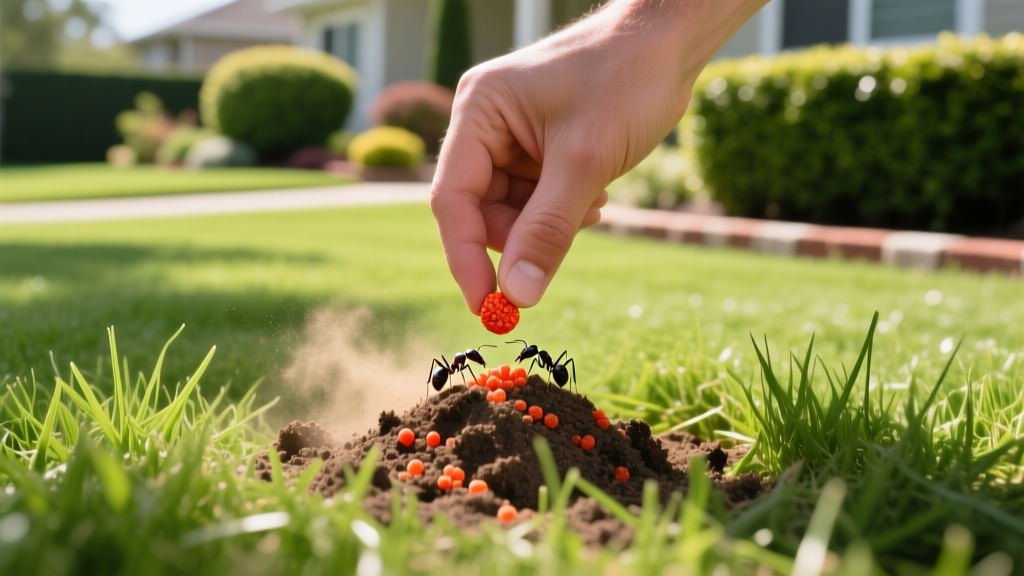
The Ultimate Treatment for Fire Ants: Baits, Mound Drenches & Timing
Red imported fire ants (Solenopsis invicta) are not merely a nuisance; they are an aggressive ecological and structural threat capable of delivering painful stings, damaging electrical equipment, and displacing native wildlife. When searching for a reliable treatment for fire ants, most homeowners default to over-the-counter contact sprays, inadvertently worsening the infestation. Effective yard defense requires a strategic, biology-driven approach rather than a reactive chemical assault.
According to the Texas A&M Fire Ant Project, the most successful eradication strategies rely on understanding the colony's social structure and foraging habits. This guide details the exact products, application rates, and environmental timing required to eliminate fire ant colonies permanently.
The Biology of Failure: Why Contact Sprays Backfire
Before selecting a treatment for fire ants, you must understand the phenomenon of 'budding.' When a mature, polygynous fire ant colony (containing multiple queens) is exposed to fast-acting, repellent contact insecticides like permethrin or bifenthrin, the colony experiences acute stress. Instead of dying, the workers fracture the colony into multiple satellite mounds, each taking one or more queens with them.
Critical Warning: Never use aerosol sprays, boiling water, or gasoline on active mounds. These methods only kill the top 20% of the workers and force the queens deeper into the soil, triggering budding that turns one manageable mound into five aggressive satellites.
The Two-Step Method: The Gold Standard for Eradication
The most scientifically validated approach to fire ant management is the Two-Step Method. This protocol combines area-wide broadcast baiting with targeted individual mound treatments, achieving 90% to 95% long-term suppression.
Step 1: Broadcast Baiting (Area-Wide Control)
Broadcast baits consist of a toxicant embedded in a soybean oil carrier on a corn grit base. Worker ants forage for the grit, carry it back to the mound, and distribute it to the larvae and queens via trophallaxis (food sharing).
- Top Product: Advion Fire Ant Bait (0.04% Indoxacarb).
- Mechanism: Indoxacarb is a pro-insecticide that requires bioactivation. The ant's gut enzymes convert it into a more toxic form after ingestion. This delayed action is crucial, allowing time for the bait to be shared with the queen before the forager dies.
- Application Rate: 1.5 pounds per acre (approximately 1 to 4 tablespoons per individual mound if treating locally).
- Cost: Approximately $42 for a 20-pack of 1.5 oz tubes, or $125 for a 7.5 lb bag for large properties.
Alternative IGR Bait: Extinguish Plus (Hydramethylnon + Methoprene). Methoprene is an Insect Growth Regulator (IGR) that sterilizes the queen and prevents larvae from molting. It takes 4 to 6 weeks to see full results but provides excellent long-term population collapse.
Step 2: Individual Mound Treatments (Targeted Knockdown)
While baits handle the broader population, high-traffic mounds near patios, play areas, or HVAC units require immediate elimination. Step 2 involves applying a fast-acting or non-repellent liquid drench directly to nuisance mounds 7 to 10 days after the broadcast bait application.
| Treatment Method | Active Ingredient | Speed of Control | Est. Cost Per Mound |
|---|---|---|---|
| Liquid Drench | Alpine WDG (Dinotefuran) | 24 - 48 Hours | $0.15 - $0.25 |
| Granular Contact | Bifen L/P (Bifenthrin) | Minutes to Hours | $0.05 - $0.10 |
| Injectable Aerosol | Fipronil / Pyrethrins | Instant to 24 Hours | $1.50 - $3.00 |
Pro Tip for Drenching: Mix Alpine WDG at a rate of 0.75 oz per gallon of water. Use a watering can to gently apply 1.5 to 2 gallons of the solution over and around the mound. The gentle pour prevents the colony from detecting the disturbance and fleeing before the non-repellent dinotefuran takes effect.
Organic and Biological Treatments for Fire Ants
For homeowners managing pets, livestock, or organic vegetable gardens, synthetic neurotoxins may be unacceptable. The EPA's guidelines on safe pest control emphasize integrating biological controls where possible.
Spinosad Baits
Spinosad is a natural substance derived from soil-dwelling bacteria (Saccharopolyspora spinosa). Products like Conserve SC or organic-certified spinosad baits disrupt the insect's nervous system. While highly effective against foraging workers, spinosad breaks down rapidly in sunlight, requiring more frequent reapplication (every 3 to 4 weeks) compared to synthetic indoxacarb.
Beneficial Nematodes
Applying Steinernema feltiae or Heterorhabditis bacteriophora nematodes to the soil introduces microscopic worms that seek out and infect fire ant pupae and queens. This method requires precise soil moisture management—the soil must remain consistently damp for 7 to 14 days post-application to allow the nematodes to survive and migrate. Expect a 60% to 70% suppression rate, making this a supplementary tactic rather than a standalone cure.
Timing, Triggers, and Avoiding Application Failures
The most expensive treatment for fire ants will fail entirely if applied under the wrong environmental conditions. Fire ant foraging behavior is strictly dictated by soil temperature and moisture.
- The Temperature Window: Fire ants forage optimally when soil temperatures are between 70°F and 85°F. In the heat of mid-summer (soil temps above 90°F), ants forage only at night or retreat deep underground. In winter (below 60°F), they become dormant. Apply baits in early Spring (April/May) and early Fall (September/October).
- The Rain Rule: Never broadcast bait if rain is forecast within 4 to 6 hours. The soybean oil carrier absorbs moisture, turning rancid and unpalatable to the ants within hours of getting wet.
- The Potato Chip Forage Test: Before laying bait, verify the colony is actively foraging. Place a greasy potato chip or a dab of peanut butter on a small piece of cardboard next to an active mound. If the bait is not covered in foraging ants within 15 to 20 minutes, the colony is not foraging. Delay your application.
Long-Term Yard Defense Strategy
Complete eradication of fire ants in the southern United States is ecologically impossible due to continuous nuptial flights (mating swarms) from neighboring untreated properties. The goal of a professional-grade treatment for fire ants is suppression.
Establish a bi-annual broadcast bait schedule using an IGR like Extinguish Plus in the spring to sterilize incoming queens, followed by a spot-treatment protocol using Alpine WDG drenches for any mounds that establish near your home's foundation. By combining delayed-action toxicants with precise environmental timing, you can maintain a fire ant-free lawn without triggering the destructive budding response that plagues amateur treatments.

