
Pest Control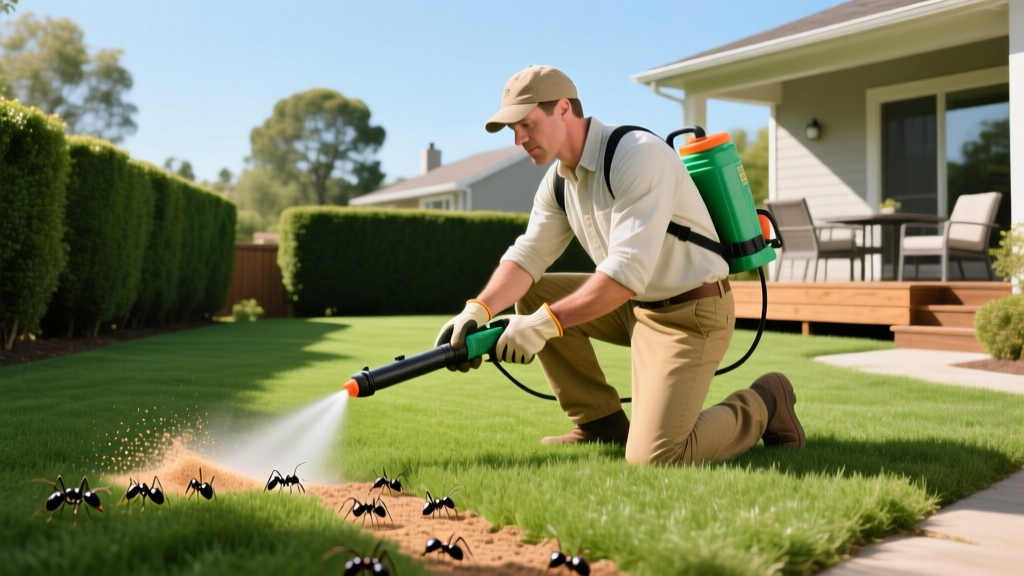
How to Eliminate Fire Ants in Yard: The Two-Step Broadcast Strategy
The Biology of the Mound: Why Surface Treatments Fail
The red imported fire ant (Solenopsis invicta) constructs complex subterranean networks that extend up to three feet below the soil surface and several feet laterally. The visible dirt mound is merely an excavation byproduct and a thermal regulation dome. When homeowners attempt to eliminate fire ants by spraying the mound surface with over-the-counter aerosol contact killers, they trigger a survival mechanism known as colony budding. The stress causes the colony to fracture into multiple satellite colonies, effectively multiplying the infestation across your lawn.
To achieve total eradication, the treatment must bypass the worker caste and target the reproductive engine: the queen. According to the Texas A&M Imported Fire Ant Research and Management Project, a mature colony can contain over 300,000 workers and multiple queens, requiring a systemic approach rather than a localized contact kill.
The Two-Step Method: Industry Standard for Eradication
Entomologists universally recommend the "Two-Step Method" for large-scale yard defense. This protocol combines a broadcast bait application to suppress the overall population with targeted mound treatments for immediate elimination of nuisance colonies near high-traffic areas.
Step 1: Broadcast Bait Application (The Colony Killer)
Broadcasting a slow-acting granular bait across the entire lawn exploits the ants' natural foraging behavior. Worker ants collect the lipid-coated granules, carry them deep into the subterranean galleries, and feed them to the larvae. The larvae metabolize the bait and regurgitate it to the queens and the rest of the colony. This trophallaxis ensures the active ingredient reaches the reproductive core.
⚠️ Critical Timing Rules for Baiting:
- Soil Temperature: Apply only when soil temperatures are between 65°F and 85°F. Ants cease foraging in extreme heat or cold.
- Moisture: Never apply bait if rain is expected within 24 hours. Water dissolves the soybean oil carrier, rendering the bait rancid and unattractive to foragers.
- Foraging Test: Place a potato chip or a small piece of hot dog near a mound. If ants do not swarm the food within 15 minutes, they are not actively foraging. Delay application.
Step 2: Individual Mound Drench (The Knockout Punch)
Seven to ten days after the broadcast bait application, inspect the yard for surviving mounds, particularly those located near patios, play areas, or foundation perimeters. Treat these specific mounds with a fast-acting liquid contact insecticide drench to provide immediate relief while the broadcast bait completes its slow-kill cycle.
Product Matrix: Comparing Top Fire Ant Baits and Drenches
Selecting the correct active ingredient dictates the speed of control and the mechanism of colony collapse. Below is a comparison of professional-grade products available to homeowners.
| Product | Active Ingredient | Role | Kill Speed | Est. Cost |
|---|---|---|---|---|
| Syngenta Advion | Indoxacarb (0.04%) | Broadcast Bait | 7–14 Days | $24 / 1.5 lbs |
| Martin's Extinguish Plus | Hydramethylnon + S-Methoprene | Broadcast Bait (IGR) | 2–4 Weeks | $32 / 1.5 lbs |
| Bifen IT | Bifenthrin (7.9%) | Liquid Mound Drench | 15–30 Minutes | $28 / 16 oz |
| Demon WP | Cypermethrin | Barrier / Drench | 20–40 Minutes | $35 / 10 packets |
Note on Indoxacarb: Advion's active ingredient is a pro-insecticide. It requires metabolic activation by the ants' own enzymes to convert into the active toxin DCIT. This biological delay prevents foragers from dying before they can transport the bait to the queen, solving the primary failure mode of faster-acting baits.
Execution Guide: Exact Measurements and Application Rates
Calibrating Your Spreader for Broadcast Bait
Fire ant baits are applied at incredibly low rates—typically 1.0 to 1.5 pounds per acre. This translates to roughly 0.35 to 0.55 ounces per 1,000 square feet. Over-application wastes money and can lead to bait rejection due to excessive chemical concentration.
- Weigh out exactly 1 ounce of bait on a digital kitchen scale.
- Set your handheld rotary spreader (e.g., Scotts Wizz or Earthway) to the lowest setting that allows granules to flow.
- Walk at a normal, steady pace over a pre-measured 1,000 sq ft area of your lawn.
- Collect the dispensed bait in a bucket or catch-bag to verify the output. Adjust the dial until exactly 1 ounce is dispersed over the 1,000 sq ft test area.
Mound Drenching Protocol
For Step 2, mix a liquid pyrethroid like Bifen IT at a rate of 1 ounce per gallon of water. To properly drench a mound:
- Mix 2 to 3 gallons of the solution in a pump spraker.
- Use a wooden dowel or shovel handle to poke a hole directly into the center of the mound, penetrating the thatch layer.
- Slowly pour the mixture into the hole and around the perimeter of the mound, saturating the soil to a depth of 12 inches.
- Do not disturb or shovel the mound prior to drenching; agitation triggers immediate evacuation and budding.
Common Failure Modes and Edge Cases
Even with professional-grade chemicals, environmental variables can derail an eradication effort. Understanding these edge cases is critical for long-term yard defense.
"The most common reason fire ant bait programs fail is moisture degradation. If the soybean oil carrier gets wet from morning dew or irrigation before the ants can harvest it, the bait turns rancid within 48 hours. Always apply bait in the late afternoon after the dew has dried, and suspend automated irrigation zones for at least 24 hours post-application."
— Adapted from University of Florida IFAS Entomology Guidelines
Edge Case: Multi-Queen (Polygyne) Colonies
In regions like Texas and Florida, polygyne fire ant populations feature multiple queens per colony and higher mound densities (up to 1,000 mounds per acre). For polygyne infestations, standard hydramethylnon baits may fail to sterilize all reproductives. Switch to an IGR (Insect Growth Regulator) bait containing S-Methoprene or Pyriproxyfen, which specifically targets the ovaries of the queens, rendering them sterile over a 4-to-6-week period.
Environmental and Pet Safety Considerations
While fire ant baits contain less than 1% active ingredient suspended on a corn grit and soybean oil carrier, pet owners must exercise caution. Dogs and cats are attracted to the lipid scent of the bait. To mitigate risk:
- Apply bait when pets are indoors.
- Allow 24 hours for the foraging ants to clear the surface granules before releasing pets back into the yard.
- If using a liquid mound drench (Bifenthrin), keep pets off the treated soil until the liquid has completely dried into the soil matrix (usually 2-4 hours).
By strictly adhering to the two-step protocol, calibrating application rates to the square foot, and respecting the biological foraging windows of Solenopsis invicta, homeowners can transition from reactive mound-chasing to proactive, colony-level eradication.

