
Pest Control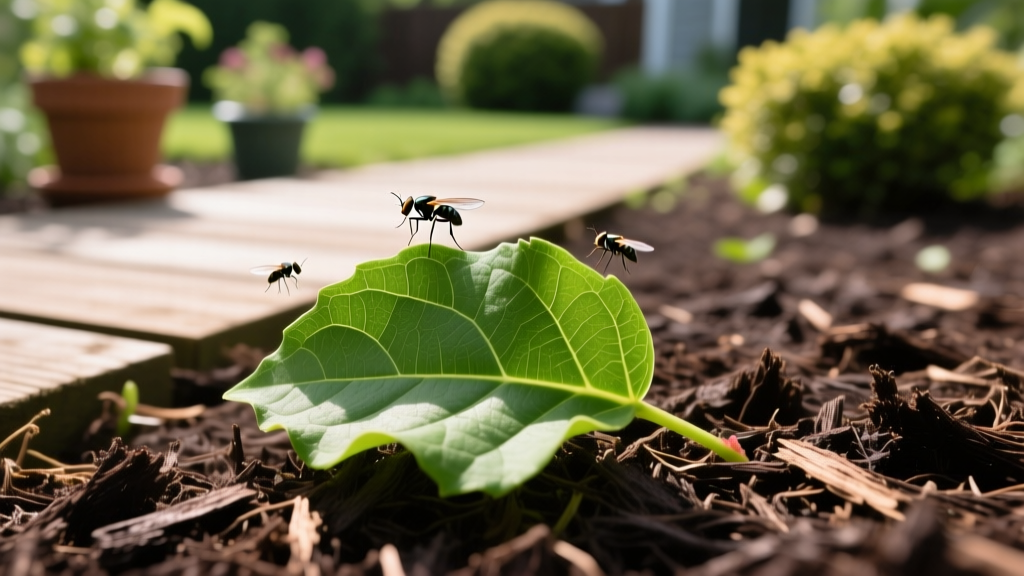
How to Get Rid of Gnats Outside in Leaves and Mulch Beds
The Biology of Outdoor Leaf-Litter Gnats
Finding swarms of gnats outside in leaves is almost always a symptom of excess moisture and decaying organic matter. The vast majority of these pests are fungus gnats (families Sciaridae and Mycetophilidae). Unlike biting midges or mosquitoes, adult fungus gnats do not bite humans or pets; however, their larvae can cause significant damage to the fine root hairs of ornamental plants, vegetables, and turfgrass.
Female fungus gnats lay up to 200 eggs in the top 1 to 2 inches of moist soil or damp leaf litter. The eggs hatch in 3 to 6 days, releasing translucent, black-headed larvae that feed on soil fungi, algae, and decaying plant roots. When leaf litter remains perpetually damp and unturned, it creates an anaerobic fungal mat—the perfect incubator for a massive gnat population explosion. According to the UC Statewide IPM Program, managing the moisture level in this topsoil layer is the single most critical factor in breaking their life cycle.
Identification Matrix: Fungus Gnats vs. Lookalikes
Before purchasing treatments, confirm you are dealing with fungus gnats. Misidentification leads to wasted money on ineffective mosquito or fruit fly traps. Use this diagnostic matrix to verify your pest:
| Feature | Fungus Gnats | Biting Midges (No-See-Ums) | Mosquitoes |
|---|---|---|---|
| Size | 1/16 to 1/8 inch | 1/32 to 1/8 inch | 1/8 to 3/8 inch |
| Color | Dark gray to black | Grayish-brown | Brown, gray, or black |
| Flight Pattern | Weak, erratic, hovering near ground | Fast, swarming at dawn/dusk | Direct, hovering, persistent |
| Habitat Focus | Damp leaves, mulch, potted soil | Mud flats, marshes, damp sand | Standing water, birdbaths |
| Biting? | No | Yes (painful welts) | Yes (itchy welts) |
The 4-Step Yard Defense Protocol
Eliminating an active infestation requires a multi-pronged approach targeting both the adult flyers and the subterranean larvae. Follow this exact sequence for maximum efficacy.
Step 1: Cultural Disruption (Moisture and Debris Management)
Fungus gnats cannot survive in dry organic matter. Rake out compacted, soggy leaf piles to a depth of no more than 2 inches. If you have dense shade where leaves stay wet for days, remove the organic layer entirely down to the mineral soil. Allow the top 2 inches of your mulch beds to dry out completely between waterings. Adjust your drip irrigation emitters so they do not discharge directly onto leaf litter; route them under the mulch layer directly to the root zone.
Step 2: Biological Warfare with BTI
Bacillus thuringiensis israelensis (BTI) is a naturally occurring bacterium that specifically targets the digestive systems of gnat, midge, and mosquito larvae. It is completely safe for earthworms, pets, and beneficial pollinators.
- Product: Summit Mosquito Bits (granular formulation).
- Application Rate: 1/2 cup per 100 square feet of leaf/mulch bed.
- Method: Broadcast the granules evenly over the damp leaves. Water the area lightly immediately after application to wash the BTI spores down into the top 2 inches of soil where the larvae are feeding.
- Frequency: Reapply every 14 days until the adult swarm dissipates.
Step 3: Nematode Soil Drench for Heavy Infestations
If BTI fails to knock back the population, deploy beneficial nematodes (Steinernema feltiae). These microscopic worms actively hunt and infect gnat larvae in the soil.
Expert Tip: Nematodes are living organisms. They will die if exposed to UV light or dry soil. Apply them in the early evening or on a cloudy day. Ensure the soil temperature is between 60°F and 70°F, and keep the leaf bed consistently moist (but not waterlogged) for 7 days post-application to allow them to establish.
- Product: Scanmask or NemaShield (10 million nematode count).
- Cost: Approximately $35 to $45 per 10 million count.
- Mixing: Empty the sponge or powder into a 2-gallon watering can. Stir gently (do not use a high-pressure hose sprayer, which will sheer and kill the nematodes).
- Coverage: 10 million treats roughly 1,000 square feet of garden beds.
Step 4: Adult Population Suppression
While biological controls kill the larvae, you must trap the adults to stop them from laying more eggs. Standard yellow sticky cards are ineffective outdoors due to wind and debris. Instead, use targeted pyrethrin sprays (like PyGanic Gardening) as a spot treatment on foliage at dusk when gnats are most active. Spray only the immediate perimeter of the infested beds to avoid harming daytime pollinators.
Product Cost and Efficacy Breakdown
Budgeting for yard-wide gnat control requires understanding the cost-per-square-foot of different active ingredients. The Penn State Extension recommends rotating active ingredients to prevent localized resistance and address different life stages.
| Active Ingredient | Target Life Stage | Avg. Cost (2026) | Coverage | Reapplication Interval |
|---|---|---|---|---|
| BTI (Granular) | Larvae | $22 / 30 oz | ~2,000 sq ft | 14 Days |
| S. feltiae Nematodes | Larvae & Pupae | $38 / 10 Million | ~1,000 sq ft | Single Application (usually) |
| Azadirachtin 4.5% (Neem) | Larvae (Growth Regulator) | $45 / 16 oz | ~4,000 sq ft (diluted) | 7 to 10 Days |
| Pyrethrin (Organic Spray) | Adults | $28 / 16 oz | Spot treatment | As needed at dusk |
Common Failure Modes: Why Your Treatment Failed
Homeowners frequently report that gnat treatments 'don't work.' In 90% of cases, the failure is due to one of these specific application errors:
- Applying Nematodes to Dry Mulch: Nematodes require a film of water to move through the soil pores. If your leaf litter is dry on top, they will desiccate and die within minutes. Always pre-water the beds 2 hours before application.
- Ignoring the Source Potted Plants: Often, the gnats outside in leaves are actually migrating from adjacent patio containers. If your potted tropicals are infested, treating the yard mulch will yield zero results. You must drench the patio pots with BTI simultaneously.
- Using Apple Cider Vinegar Traps Outdoors: Vinegar traps catch fruit flies (Drosophila), not fungus gnats. Fungus gnats are attracted to the scent of damp soil and decaying roots, not fermenting sugars. Do not waste time setting out mason jars of vinegar in the garden.
- Over-Mulching (The 'Mulch Volcano' Effect): Piling mulch 6+ inches deep against tree trunks creates a permanently soggy, acidic environment that breeds gnats and invites root rot. Keep mulch layers at 2 to 3 inches maximum.
Preventative Landscaping for Gnat Resistance
Long-term yard defense requires altering the physical environment to make it inhospitable to Sciaridae species. Transitioning away from moisture-retentive organic mulches in heavily shaded areas is the most effective permanent fix.
Replace decaying hardwood bark with inorganic alternatives like river rock, pea gravel, or calcined clay (Turface) in the lowest, wettest zones of your yard. For garden beds that require organic matter, use composted pine bark fines rather than shredded cedar or dyed hardwood mulch; pine bark dries out significantly faster and resists the specific fungal growth that gnat larvae require for sustenance. Ensure your yard grading directs surface runoff away from foundational plantings, and aerate compacted clay soils annually to improve subsurface drainage.

