
Pest Control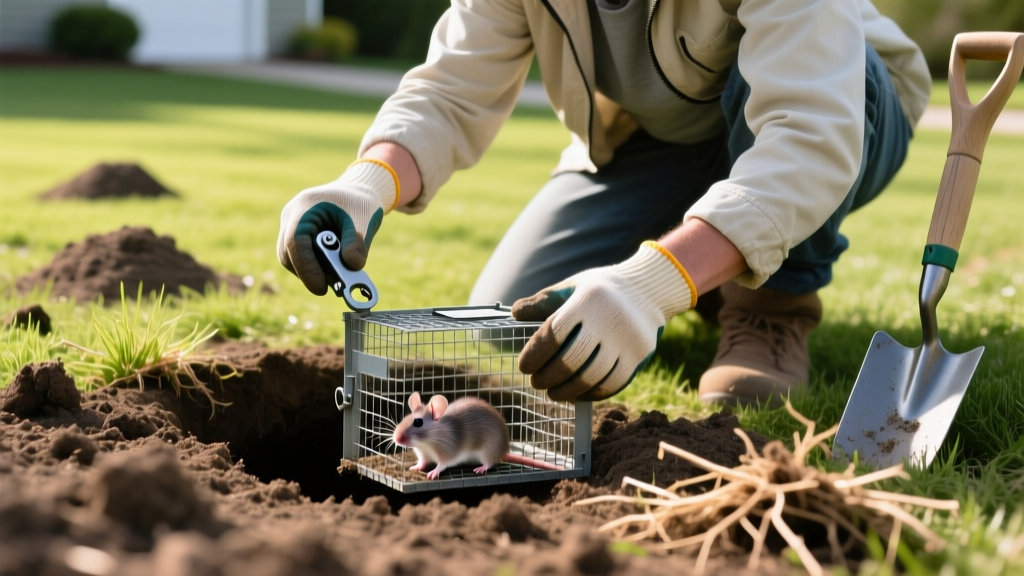
How to Eliminate Gophers: Proven Trap, Bait, and Gas Strategies
Identifying the Enemy: Gophers vs. Moles vs. Voles
Before deploying lethal or non-lethal controls, accurate identification is critical. Misidentifying a mole or vole infestation as a pocket gopher problem leads to wasted money on incorrectly placed traps and baits. Pocket gophers (Thomomys, Geomys, and Cratogeomys species) are strict herbivores that spend 99% of their lives underground, feeding on roots, tubers, and buried irrigation lines.
According to the University of California Integrated Pest Management (IPM) program, the most reliable indicator of a gopher is the shape of the surface mound. Gophers push dirt to the surface at an angle, creating a distinct fan or crescent shape, and they plug the lateral exit hole with fresh soil. Moles, conversely, create symmetrical, volcano-shaped mounds and leave the exit hole open.
| Feature | Pocket Gopher | Mole | Vole |
|---|---|---|---|
| Mound Shape | Fan or crescent-shaped | Symmetrical volcano | No mounds; small exit holes |
| Exit Hole | Plugged with dirt off to one side | Open, centered on mound | Open, golf-ball sized |
| Diet | Roots, tubers, bulbs | Earthworms, grubs, insects | Grass blades, bark, seeds |
| Main Tunnel Depth | 8 to 12 inches deep | 3 to 12 inches deep | 1 to 3 inches deep |
The Decision Framework: Lethal vs. Non-Lethal Elimination
Choosing the right elimination strategy depends on your property size, soil composition, and local regulations. Use this framework to select your primary attack vector:
- Small Infestation (1-5 mounds) + Soft Soil: Use mechanical traps (Macabee or Gophinator). Highly effective, zero chemical risk, immediate confirmation of elimination.
- Large Infestation (10+ mounds) + Rocky/Clay Soil: Use toxic baits (Zinc Phosphide) or exhaust gas. Trapping is too slow and physically exhausting in hardpan soil.
- High-Value Garden Beds + Non-Lethal Preference: Use physical exclusion (gopher baskets) and sonic deterrents. Note: sonic spikes have a documented failure rate of over 80% in university trials and should only be used as a supplementary measure.
Step-by-Step Guide to Macabee and Gophinator Trapping
Trapping remains the gold standard for residential gopher control. The two most effective models on the market are the Macabee 2-Wire Trap ($12-$15 per pair) and the Gophinator Trap ($20-$25 per pair). The Gophinator is constructed from heavier-gauge steel and is specifically recommended for larger gopher species (over 140 grams) found in the Midwest and South.
Probing the Main Runway
Gophers construct a complex network of lateral tunnels branching off a main runway. Traps placed in lateral tunnels have a 40% lower success rate. You must locate the main runway.
- Locate the Plug: Find the freshest fan-shaped mound. Look for the circular dirt plug (about 2-3 inches in diameter) located 6 to 12 inches away from the mound's center.
- Probe the Soil: Insert a 3/8-inch steel rebar probe 8 to 12 inches into the ground, angling slightly toward the plug.
- Feel the Drop: Push the probe down. When the probe suddenly drops 2 to 4 inches with minimal resistance, you have intersected the main runway, which is typically 4 to 6 inches wide.
- Excavate: Use a narrow trowel to dig a hole down to the tunnel. Clear the dirt from the tunnel floor to ensure the trap sits flush.
Setting and Securing the Trap
Pinch the springs of the Macabee trap together until the catch hooks over the release lever. Place the trap deep into the tunnel. Critical step: Always tie a 3-foot piece of bright flagging tape or paracord to the trap's anchor ring and stake it to the surface. Gophers will occasionally drag unset traps deeper into their burrows, and without a tether, you will lose the trap and leave steel debris in your soil.
Safety Warning: Never place your fingers inside a set trap. The closing force of a Macabee trap exceeds 30 pounds of pressure, which is sufficient to crush a fingernail or break a small finger. Always use a trap-setting tool or heavy leather gloves.
Toxic Baits: When Trapping Fails
When soil conditions make probing impossible, or when dealing with a massive agricultural infestation, toxic baits are the next line of defense. The Environmental Protection Agency (EPA) strictly regulates rodenticides, and availability varies by state.
Zinc Phosphide vs. Anticoagulants
Zinc Phosphide (e.g., Amdro Gopher Bait, $15/lb): This is an acute toxicant. A single feeding is usually lethal within 24 hours. It produces phosphine gas in the gopher's stomach, which also acts as a secondary deterrent to scavengers. It is the preferred bait for quick knockdown.
Anticoagulants (e.g., JT Eaton Answer Gopher Bait, $25/lb): These require multiple feedings over 3 to 5 days to cause lethal internal bleeding. While effective, they carry a higher risk of secondary poisoning if a hawk or owl consumes a dying gopher. Due to recent state-level ecological mandates (particularly in California and Washington), many anticoagulant baits are now restricted to licensed pest control operators.
Application Technique: Never scatter bait on the surface. Use a specialized bait probe to inject 1 to 2 tablespoons of bait directly into the main runway, then cover the probe hole with a rock or sod to prevent sunlight from entering and non-target animals from accessing the poison.
Carbon Monoxide and Exhaust Gas Treatments
Exhaust gas machines, such as the professional-grade Burrow RX ($650+) or DIY leaf-blower exhaust adapters ($40-$80), pump carbon monoxide (CO) directly into the tunnel system. CO binds to hemoglobin in the gopher's blood, causing rapid asphyxiation.
For this method to work, the soil must be moderately moist to seal the tunnel walls; dry, cracked soil will allow the gas to escape to the surface. Run the machine for 3 to 5 minutes per mound. Watch for smoke or gas escaping from adjacent mounds and plug them immediately with dirt to pressurize the tunnel network.
Exclusion and Long-Term Deterrence
If you are planting high-value fruit trees, roses, or ornamental shrubs, elimination is only a temporary fix. Neighboring gophers will eventually recolonize the vacant tunnels. Physical exclusion is the only permanent solution.
- Material: Use 1/2-inch, 19-gauge galvanized hardware cloth. Do not use chicken wire; gophers can easily chew through or squeeze past 1-inch hexagonal gaps.
- Installation Depth: Dig a trench around the planting bed. Bury the hardware cloth 18 inches deep.
- The Outward Bend: Bend the bottom 6 inches of the mesh outward (away from the plants) at a 90-degree angle. When a gopher tunnels upward and hits the mesh, it will not know to dig deeper to bypass the barrier.
- Surface Clearance: Extend the mesh 6 inches above the soil line to prevent gophers from climbing over the top during heavy rains or floods.
By combining precise tunnel probing with the correct mechanical traps or targeted baits, you can systematically eradicate pocket gophers and restore the structural integrity of your lawn and garden beds.

