
Pest Control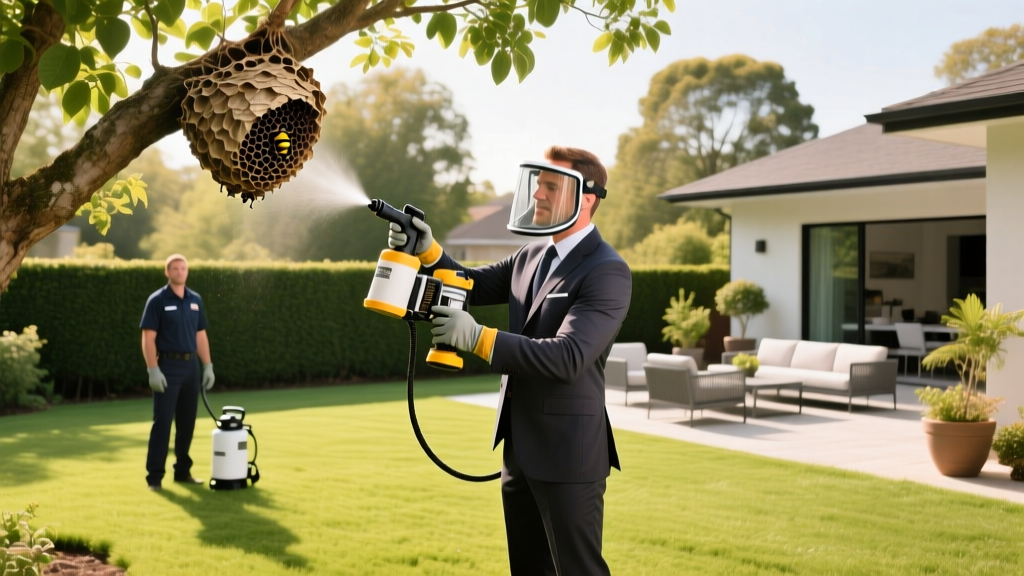
How to Eliminate a Hornets Nest: Safe Yard Defense
The Biological Reality of Yard Hornet Defense
Attempting to remove a stinging insect colony from your property is not a standard gardening chore; it is a tactical operation. When researching how to eliminate a hornets nest, most homeowners underestimate the defensive radius and swarm mechanics of the colony. A mature bald-faced hornet (Dolichovespula maculata) nest in late summer can house between 400 and 700 workers. Unlike solitary wasps, hornets release an alarm pheromone (2-methyl-3-buten-2-ol) when crushed or threatened, triggering a mass defensive response that can pursue a target for up to 300 feet.
Effective yard defense requires precise timing, the correct chemical knockdown agents, and an understanding of nest architecture. According to the University of Minnesota Extension, bald-faced hornets are actually a type of aerial yellowjacket, building distinctive gray, papery, football-shaped nests in trees, shrubs, and under the eaves of homes. Misidentifying the species or applying the wrong treatment at the wrong time of day is the primary cause of eradication failure and subsequent stings.
Assess the Threat: Identifying True Hornets vs. Imposters
Before purchasing any chemicals, you must accurately identify the nest structure and insect behavior. Treatment protocols vary drastically between aerial paper nests and subterranean ground nests.
- Bald-Faced Hornets: Build aerial, enclosed paper nests with a single bottom-facing opening. Nests are typically gray or brown and can reach the size of a basketball. They are highly defensive of the nest but rarely aggressive when foraging away from it.
- European Hornets (Vespa crabro): The only true hornet species in North America. They are larger (up to 1.5 inches), feature brown and yellow striping, and typically nest in hollow trees, wall voids, or attics. They are significantly more aggressive and often require professional foam-injection treatments.
- Yellowjackets (Vespula spp.): Frequently mistaken for hornets, these build massive subterranean nests in abandoned rodent burrows or landscape timbers. They are highly aggressive and easily provoked by ground vibrations from lawnmowers.
The Arsenal: Choosing the Right Eradication Products
Standard fly sprays or multi-purpose insect killers will not penetrate a hornet nest's outer envelope or provide the necessary reach. You need a specialized Wasp & Hornet aerosol featuring a jet-stream nozzle and a fast-acting pyrethroid active ingredient like Prallethrin, which causes immediate nervous system failure in the insects before they can take flight.
| Product | Active Ingredient | Spray Distance | Price Range | Best Application |
|---|---|---|---|---|
| Spectracide Wasp & Hornet 3 | Prallethrin (0.05%) | Up to 27 ft | $6 - $8 | High aerial nests (eaves, tall branches) |
| Raid Wasp & Hornet 33 | Prallethrin (0.05%) | Up to 22 ft | $5 - $7 | Standard aerial nests (shrubs, low roofs) |
| Syngenta Demon WP | Cypermethrin (40%) | N/A (Pump Sprayer) | $35 - $45 | Residual perimeter defense & barrier sprays |
| Delta Dust Insecticide | Deltamethrin (0.05%) | N/A (Hand Duster) | $20 - $25 | Subterranean yellowjacket nests & wall voids |
Critical Safety Note: Never use water-based hose-end sprayers or attempt to burn a nest. Water will only enrage the colony, and fire poses a severe risk to your home's siding and surrounding landscaping. The Environmental Protection Agency (EPA) strongly advises using targeted, EPA-registered aerosol formulations specifically labeled for stinging insects.
Step-by-Step: How to Eliminate an Aerial Hornets Nest
Execution is everything. Follow this protocol to neutralize an aerial bald-faced hornet nest safely.
1. Time the Attack for Dusk or Dawn
Hornets are diurnal. At dusk, all foraging workers have returned to the nest, and their metabolic rate drops significantly as temperatures cool. Wait until the ambient temperature falls below 60°F (15°C). At this temperature, hornets become sluggish and their flight response is severely delayed.
2. Gear Up Properly
Do not rely on thick winter coats. Hornet stingers can be 1/4 inch long and easily penetrate standard clothing. Invest in a professional-grade suit, such as the VEVOR 3-Layer Mesh Beekeeper Suit (approx. $55), which provides ventilation and sting-proof spacing. Pair this with thick, elbow-length goatskin leather gauntlet gloves. Use silver duct tape to seal the gap between your glove cuffs and the suit's sleeves, as well as your pant legs to your boots.
3. Use Red-Spectrum Lighting
Hornets and wasps possess photoreceptors that are largely insensitive to long-wavelength red light. If you use a standard white LED flashlight, the beam will act as a beacon, drawing guard hornets directly to your face. Equip a headlamp with a red-lens filter, or tape a piece of red theater gel over your flashlight.
4. The Spray Technique
- Approach the nest slowly from the side, avoiding standing directly underneath it.
- Stand at least 12 to 15 feet away—well within the 27-foot range of the Spectracide jet stream, but far enough to avoid the immediate drop-zone of falling, dying insects.
- Aim the nozzle directly at the single entrance hole at the bottom of the paper envelope.
- Press the trigger and hold it for a continuous 10 to 15 seconds. You must force the aerosol deep into the internal comb structure to coat the queen and the brood.
- Immediately retreat to a closed structure (garage or house). Do not linger to watch the insects fall.
Warning: The Ladder Trap
Never attempt to spray a hornet nest while standing on a ladder. If the initial spray misses the opening, or if guard hornets emerge before the Prallethrin takes effect, the defensive swarm will cause you to lose your balance, resulting in severe fall injuries combined with multiple stings. If a nest is out of reach from the ground, hire a licensed pest control professional.
Never attempt to spray a hornet nest while standing on a ladder. If the initial spray misses the opening, or if guard hornets emerge before the Prallethrin takes effect, the defensive swarm will cause you to lose your balance, resulting in severe fall injuries combined with multiple stings. If a nest is out of reach from the ground, hire a licensed pest control professional.
Tactical Adjustments for Ground-Nesting Yellowjackets
If your yard defense issue involves a ground nest (often mistaken for a hornet nest), aerosol sprays are useless. The nest may be three feet underground, connected to the surface by a narrow tunnel.
For ground nests, utilize Delta Dust applied via a JT Eaton Hand Duster. At dusk, locate the entrance hole. Puff 3 to 4 heavy clouds of the waterproof dust directly into the opening. Do not plug the hole with dirt or a rock. The foraging yellowjackets will track the dust deep into the subterranean galleries, coating the queen and larvae. The colony will typically collapse within 48 to 72 hours.
Post-Elimination: Nest Removal and Yard Defense
Do not knock down an aerial nest immediately after spraying. Wait a minimum of 48 hours. Foraging hornets that were away from the nest during treatment will return over the next two days, crawl inside, and be killed by the residual chemical on the paper envelope.
Once you are certain the colony is dead, use a long wooden broom handle to knock the nest down. Submerge the nest in a bucket of soapy water for 24 hours before disposing of it in your municipal yard waste bin. To prevent future colonies from claiming the same eave or branch, spray the area with a residual insecticide like Syngenta Demon WP (mixed at 1 packet per gallon of water) every 30 days during the spring and early summer nesting seasons.

