
Pest Control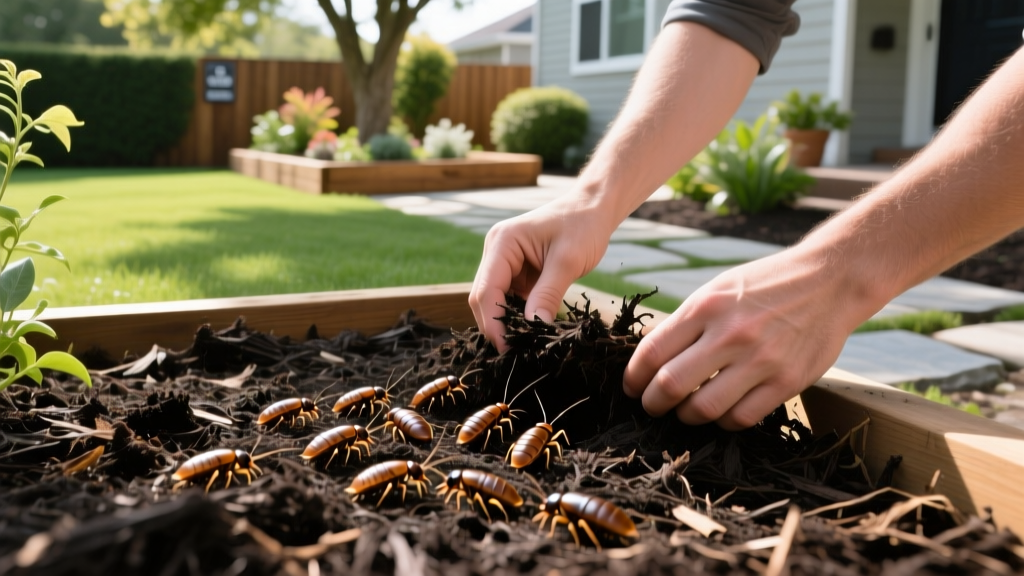
How to Eliminate Outside Roaches From Your Yard and Mulch Beds
The Peridomestic Threat: Why Outside Roaches Invade Your Yard
When homeowners spot cockroaches in the garden, they are rarely dealing with the indoor-dwelling German cockroach. Instead, you are likely facing peridomestic species—outside roaches that thrive in the damp, decaying organic matter of your landscaping before eventually migrating indoors. Understanding the specific biology of these pests is the first step in reclaiming your yard.
Warning: Identify Before You Treat
Applying indoor baits to an outdoor perimeter is a waste of money. Outside roaches require weather-resistant formulations and specific placement strategies. Misidentifying an American cockroach for a Smokybrown cockroach can lead to treating the wrong micro-habitats.
The Big Three Outdoor Offenders
- American Cockroach (Periplaneta americana): Often called 'sewer roaches' or 'palmetto bugs,' these large (1.5 to 2 inches), reddish-brown insects prefer wet environments. They nest in municipal sewer systems, storm drains, and damp crawlspaces, emerging at night to forage in yard debris.
- Smokybrown Cockroach (Periplaneta fuliginosa): Uniformly dark brown to black and strong fliers, Smokybrowns are canopy dwellers. They nest in tree holes, roof gutters, and thick mulch beds, making them a primary nuisance in heavily wooded suburban lots.
- Oriental Cockroach (Blatta orientalis): Shiny black and sluggish, these roaches cannot fly and prefer cooler, ground-level dampness. They are notorious for invading basements and ground-floor garages from adjacent soil and leaf litter.
According to the Clemson University Home & Garden Information Center, peridomestic roaches are primarily driven by two factors: moisture and harborage. Eliminating one without addressing the other will result in treatment failure.
Step 1: Cultural Controls and Moisture Management
Outside roaches require high humidity to survive; they desiccate quickly in dry environments. Before spending a dime on chemicals, alter the yard's microclimate to make it inhospitable.
- Fix Grading and Drainage: Ensure soil slopes away from the foundation at a minimum grade of 6 inches over the first 10 feet. Install downspout extensions that discharge water at least 4 feet away from the house.
- Clear the Perimeter: Rake away dead leaves, pine needles, and organic debris from the immediate foundation. Maintain a 12-inch bare dirt, gravel, or concrete perimeter around the entire house.
- Prune Vegetation: Trim tree branches and shrubs so they do not touch the exterior walls. This eliminates 'bridges' that Smokybrown roaches use to bypass ground-level chemical barriers and access rooflines.
Step 2: Chemical Defense – Non-Repellents and IGRs
The biggest mistake homeowners make when treating outside roaches is using over-the-counter pyrethroid sprays (like Bifenthrin or Cypermethrin). These are repellents. They kill on contact but cause surviving roaches to scatter deeper into the yard or push them inside your home to escape the treated zone.
As of 2026, the professional standard for outdoor roach control relies on non-repellent transfer sprays combined with Insect Growth Regulators (IGRs).
The Transfer Effect Strategy
Non-repellent active ingredients, such as Dinotefuran, are undetectable to roaches. The insects walk across the treated soil or foundation, pick up a lethal dose, and return to their harborage. Through coprophagy (eating feces) and emetophagy (eating vomit), the poison transfers to nymphs and other adults that never directly contacted the spray, collapsing the colony from the inside out.
Product Selection and Pricing Matrix
| Product | Active Ingredient | Role | Est. Cost (2026) |
|---|---|---|---|
| Alpine WSG | Dinotefuran | Non-repellent transfer spray | $45 - $55 / box |
| NyGuard IGR | Pyriproxyfen | Juvenile hormone mimic (sterilizer) | $60 - $70 / 100ml |
| Advion Cockroach Gel | Indoxacarb | Targeted outdoor baiting | $25 - $30 / 4 tubes |
Pro Application Tip: Mix Alpine WSG and NyGuard in the same pump sprayer. Apply the solution to the foundation wall (1 foot up) and the adjacent soil (3 feet out). The EPA notes that Pyriproxyfen is highly stable in outdoor environments, providing up to 210 days of growth regulation in shaded soil.
Step 3: Mulch and Woodpile Management
Landscaping mulch is the primary harbor for outside roaches in suburban yards. Hardwood and pine bark mulches retain massive amounts of moisture and provide a food source (decaying cellulose) for detritivores and omnivores like the American and Smokybrown cockroaches.
Mulch Best Practices
- Depth Limit: Never apply mulch deeper than 2 to 3 inches. Deeper layers create an impenetrable, highly humid canopy where sprays cannot reach and roaches breed unchecked.
- Material Swap: If roach pressure is severe, replace hardwood mulch within 3 feet of the foundation with inorganic options like river rock, pea gravel, or cedar mulch (which contains natural, albeit mild, repellent oils like thujone).
- Firewood Storage: Never stack firewood directly on the soil or against the house. Use a metal rack to elevate wood at least 18 inches off the ground, and keep the pile a minimum of 5 feet away from the exterior walls.
Troubleshooting Common Treatment Failures
Even with professional-grade products, outdoor treatments can fail if environmental variables are ignored. Here is how to diagnose and fix common issues:
Failure 1: 'The Gel Bait Dried Out and They Ignored It'
The Cause: Outdoor UV exposure and heat rapidly desiccate gel baits like Advion, turning them into a hard, unpalatable crust within 48 hours.
The Fix: Never apply gel bait in direct sunlight or on open soil. Inject the gel deep into weep holes, under the lips of concrete retaining walls, or inside specialized plastic bait stations staked into the mulch.
Failure 2: 'I Sprayed, but Now I See More Roaches Inside'
The Cause: You used a repellent pyrethroid concentrate (e.g., Tempo SC, Talstar P) on the exterior perimeter.
The Fix: Stop using repellents immediately. Wait 14 days for the residual to degrade, then apply a non-repellent like Alpine WSG to allow the remaining population to track the chemical back to their outdoor nests.
Frequently Asked Questions
Do outside roaches carry diseases?
Yes. While they do not bite, peridomestic roaches frequently traverse sewers, animal feces, and decaying matter. According to UC Agriculture and Natural Resources, they can mechanically transmit pathogens like Salmonella and E. coli to outdoor dining surfaces, children's play areas, and eventually your kitchen if they migrate indoors.
Will lawn fertilizer attract outside roaches?
Standard synthetic NPK fertilizers do not attract roaches. However, organic fertilizers containing manure, bone meal, or composted food waste can draw them in. If using organics, incorporate them deeply into the soil rather than leaving them on the surface.
How often should I treat the perimeter for outside roaches?
For non-repellent and IGR combinations, a full perimeter treatment every 60 to 90 days during the active season (spring through late fall) is sufficient. Gel baits should be inspected and replenished monthly in high-pressure zones.

