
Pest Control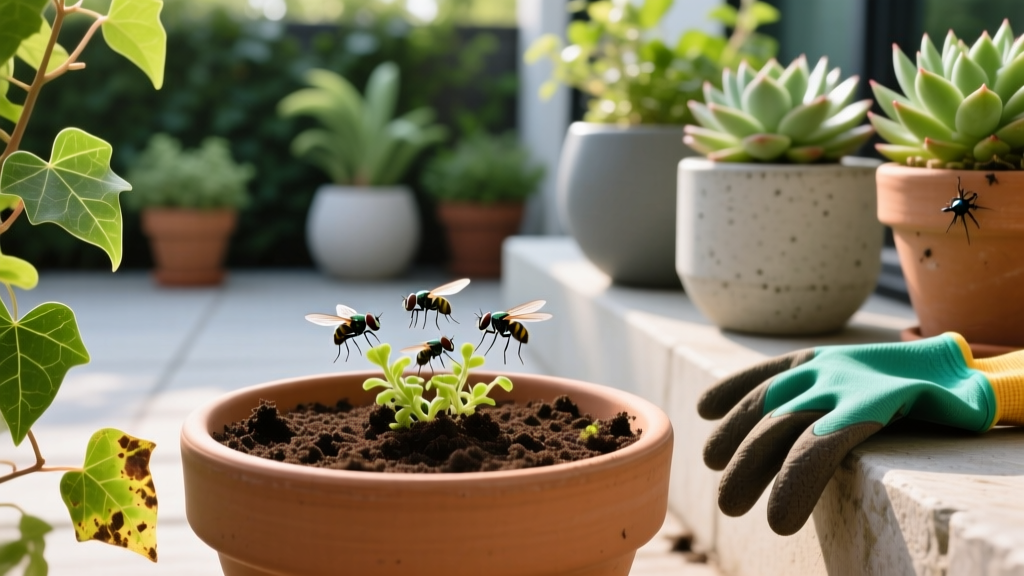
How to Get Rid of Plant Gnats Fast in Outdoor Patio Containers
The Outdoor Fungus Gnat Problem: Beyond the Windowsill
Fungus gnats (Bradysia species) are frequently mischaracterized as strictly indoor houseplant pests. However, when these insects colonize your outdoor patio containers, greenhouse benches, or shaded yard beds, they become a significant yard defense issue. Unlike indoor environments, outdoor patio pots are subject to fluctuating humidity, irrigation runoff, and decaying organic mulch, creating an ideal breeding ground for gnat larvae. To understand how to get rid of plant gnats fast, you must target the 21-to-28-day life cycle. Killing the flying adults is merely cosmetic; the real battle is won in the top two inches of your potting mix where the larvae feed on fine root hairs and organic matter. According to UC Agriculture and Natural Resources, severe larval feeding can stunt plant growth and introduce soil-borne pathogens like Fusarium and Pythium into your patio flora.
The 72-Hour Eradication Protocol
For rapid elimination in outdoor containers, you need a synchronized attack that halts reproduction while trapping the existing adult population. Follow this exact sequence for patio and yard-bound potted plants.
Step 1: Moisture Deprivation (Hours 1-24)
Fungus gnat eggs and early-instar larvae require constant moisture to survive. Allow the top 1.5 to 2 inches of your potting mix to dry out completely. For large half-barrels or deep patio planters, use a wooden dowel to test moisture depth. If the soil clings to the dowel, the gnat habitat is still active. Elevate pots on pot feet or risers to ensure drainage holes are not blocked by patio decking, which traps water at the soil base.
Step 2: The BTI Drench (Hours 24-48)
The most effective biological larvicide for outdoor use is Bacillus thuringiensis subsp. israelensis (BTI). Unlike chemical insecticides that harm beneficial yard pollinators, BTI specifically targets the digestive systems of gnat and mosquito larvae.
Pro-Mixing Technique: Do not just drop solid BTI dunks on the soil surface. Crush one BTI dunk (e.g., Mosquito Dunks) into a powder and steep it in 1 gallon of water for 30 minutes. Stir vigorously, then use this suspension to water your patio pots. This ensures the BTI spores penetrate the entire root zone where late-stage larvae pupate.
Step 3: Adult Population Crash (Hours 48-72)
While the BTI works on the larvae, you must intercept the adults before they lay new eggs. Deploy 3x5 inch yellow sticky cards. Insert the stakes directly into the soil so the trap sits just above the plant canopy. The color yellow mimics the spectral reflectance of young, stressed foliage, which adult gnats are naturally drawn to. Replace these cards every 7 days until no new gnats appear.
Biological vs. Chemical Controls: What Actually Works Outdoors?
When defending your yard and patio, choosing the right treatment prevents collateral damage to local ecosystems. Below is a decision matrix for the most common gnat treatments available in 2026.
| Control Method | Active Agent | Target Stage | Speed & Efficacy | Approx. Cost |
|---|---|---|---|---|
| BTI Dunks/Bits | B. thuringiensis israelensis | Larvae | High / 3-5 days | $10 / 6 dunks |
| Beneficial Nematodes | Steinernema feltiae | Larvae & Pupae | Very High / 7-10 days | $32 / 5M count |
| Neem Oil Soil Drench | Azadirachtin | Larvae (Growth Regulator) | Moderate / 14+ days | $15 / 16 oz |
| Pyrethrin Sprays | Pyrethrins | Adults only | Low (Rebounds fast) | $12 / 14 oz |
Warning: Avoid using aerosol Pyrethrin sprays on patio plants where wind can carry the drift to nearby flowering garden beds. Pyrethrins are highly toxic to foraging bees and aquatic life. As noted by the Environmental Protection Agency (EPA), BTI remains the safest and most targeted alternative for outdoor residential use.
Yard Defense: Preventing Gnat Migration from Garden Beds
If you treat your patio pots but ignore the surrounding yard, adult gnats will simply migrate back to your containers. Fungus gnats thrive in yard beds with excessive organic decay and poor drainage. Implement these perimeter defenses:
- Audit Your Mulch: Thick layers of fine woodchip or composted manure retain massive amounts of moisture. Rake back mulch so it sits at least 3 inches away from the base of your patio pots and foundation plantings. Opt for coarse arborist chips, which allow the soil surface to dry out between rain events.
- Fix Drip Irrigation Leaks: A single leaking 1/4-inch drip emitter can keep a 2-foot radius of soil permanently saturated. Inspect your yard's irrigation lines at dawn when water pressure is highest and leaks are most visible.
- The Sand Cap Method: For highly prized outdoor container specimens (like Japanese maples or rare alocasias), apply a 0.5-inch layer of coarse horticultural sand over the potting mix. Gnats cannot penetrate the sand to lay eggs, and larvae cannot chew through it to reach the surface to pupate.
Troubleshooting: Why Your Gnats Keep Coming Back
According to Penn State Extension, recurring gnat infestations are almost always the result of misidentifying the pest or failing to complete the treatment cycle. If you still see swarms after 14 days of BTI treatments, evaluate these failure modes:
- You used the wrong BT strain: Check your product label. It must specify Bacillus thuringiensis subsp. israelensis (BTI). Products containing B.t. kurstaki (BTK) are designed for caterpillars and will have zero effect on gnat larvae.
- Soil temperatures are too low for Nematodes: If you opted for Steinernema feltiae nematodes instead of BTI, they require soil temperatures above 50°F (10°C) to remain active. Applying nematodes to cold, shaded patio pots in early spring will result in total treatment failure.
- Hidden Breeding Grounds: Check the saucers beneath your pots. Even a quarter-inch of stagnant water mixed with fallen potting soil is enough to sustain hundreds of larvae. Remove saucers entirely or elevate the pots so they drain freely onto the patio surface.
By combining strict moisture management with targeted BTI soil drenches, you can break the breeding cycle and reclaim your outdoor living spaces without resorting to broad-spectrum chemical pesticides.

