
Pest Control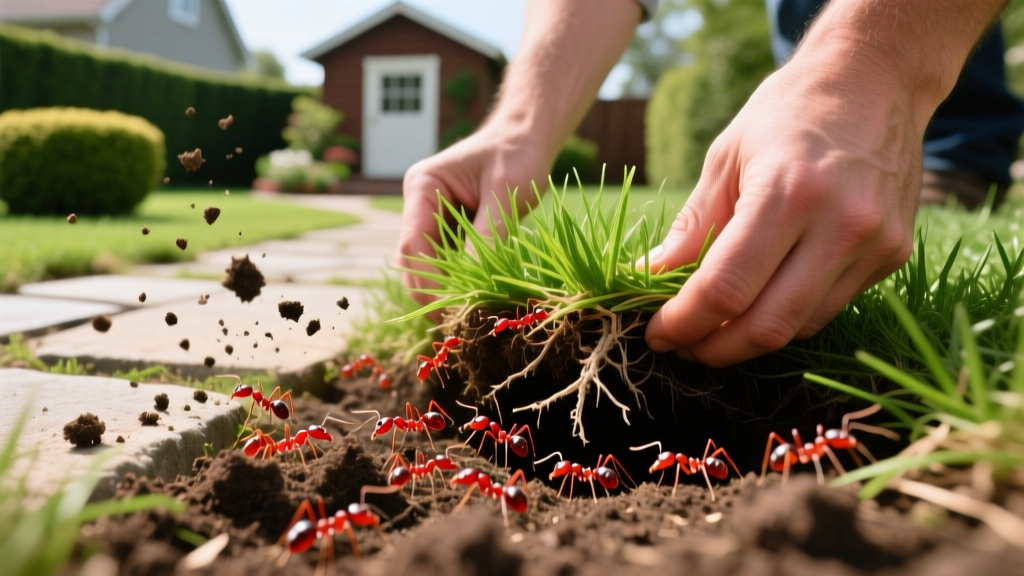
How to Get Rid of Red Ants in Yard: The Complete Guide
When homeowners search for how to get rid of red ants in yard spaces, they are usually battling the Red Imported Fire Ant (RIFA, Solenopsis invicta). These aggressive invaders construct massive, fluffy soil mounds that ruin turfgrass root systems and deliver painful, venomous stings. A single mature colony can contain over 400,000 workers and multiple queens, making superficial DIY sprays entirely ineffective. To achieve total eradication, you must target the colony's reproductive core using a scientifically backed strategy.
Identify the Invader: Red Imported Fire Ants vs. Natives
Before purchasing chemical treatments, verify the species. Not all red ants are destructive yard pests. Native red harvester ants (Pogonomyrmex barbatus) are common in western states, clear vegetation around their nests, and generally avoid human interaction. RIFA, prevalent across the southern United States from Texas to the Carolinas, build dome-shaped mounds with no visible central entrance hole. When a RIFA mound is disturbed, hundreds of workers swarm the surface within seconds, exhibiting highly aggressive behavior.
⚠️ Medical Warning: RIFA stings inject piperidine alkaloids (solenopsin), causing raised, itchy white pustules. Approximately 1% to 2% of the population experiences severe anaphylactic reactions to these stings. Always wear closed-toe shoes and thick leather gloves when inspecting mounds.
The Gold Standard: The Two-Step Eradication Protocol
The most effective framework for long-term control is the "Two-Step Method," extensively researched and recommended by Texas A&M AgriLife Extension. This protocol combines broadcast baiting to suppress overall populations with targeted contact drenches to eliminate nuisance mounds in high-traffic areas.
Phase 1: Broadcast Baiting (The Colony Killer)
Fire ant baits consist of a toxicant mixed with a soybean oil attractant applied to a corn grit carrier. Worker ants forage for the bait, carry it back to the nest, and distribute it to the queens and larvae through a sharing process called trophallaxis. Because the active ingredients are slow-acting, the colony does not recognize the threat until the queens are sterilized or killed.
Application Rate: Apply 1.5 pounds of bait per acre (approximately 4 to 5 tablespoons per individual mound if treating spot areas). Use a handheld rotary spreader for even distribution.
| Product Brand | Active Ingredient | Avg. Cost (1.5 lbs) | Kill Speed | Best Use Case |
|---|---|---|---|---|
| Advion Fire Ant Bait | Indoxacarb (0.04%) | $32 - $38 | 2-4 Weeks | High-efficacy professional grade |
| Extinguish Plus | Hydramethylnon + Methoprene | $28 - $34 | 3-6 Weeks | Long-term IGR queen sterilization |
| Amdro Fire Ant Bait | Hydramethylnon (0.73%) | $18 - $22 | 2-3 Weeks | Budget-friendly residential use |
Phase 2: Targeted Mound Drenching (The Knockout Punch)
Seven to ten days after broadcasting the bait, inspect high-traffic zones (near patios, mailboxes, and garden beds). For any surviving or newly formed mounds, apply a liquid contact insecticide drench. This provides immediate knockdown while the bait handles the broader population.
Mixing & Application: Use a non-repellent liquid like Termidor SC (Fipronil 9.1%). Mix 0.8 fluid ounces of Termidor SC per gallon of water. Slowly pour 1.5 to 2 gallons of the mixed solution directly over the mound, starting from the outer edges and working inward to prevent the ants from escaping. The liquid must penetrate at least 18 inches into the soil to reach the deep queen chambers.
Organic and Pet-Safe Yard Defense
For homeowners managing yards with free-ranging chickens, pets, or organic vegetable gardens, synthetic pyrethroids and fipronil may not be acceptable. Organic control requires more frequent applications but can achieve an 80% reduction in mound density over a single season.
- Spinosad Baits (e.g., Monterey Garden Insect Spray): Derived from soil-dwelling bacteria (Saccharopolyspora spinosa), Spinosad disrupts the insect nervous system. Apply as a liquid drench at a rate of 2 fluid ounces per gallon of water per mound. It breaks down rapidly in sunlight, making it safe for pets once dry (usually 2-4 hours).
- Botanical Oils (Orange Oil / d-Limonene): Products containing high concentrations of d-Limonene destroy the waxy exoskeleton of ants. While effective for immediate contact kills on individual mounds (mix 2 oz per gallon of water), it does not reliably kill deep-seated queens and requires repeated weekly applications.
- Diatomaceous Earth (DE): Food-grade DE acts as a desiccant. However, it is largely ineffective as a standalone mound treatment because fire ants simply tunnel around it or wait for rain to wash it away. Use DE only as a dry perimeter barrier around the foundation of your home to prevent indoor foraging.
Seasonal Timing & Soil Temperature Matrix
Applying bait when foraging activity is low is the most common reason DIY treatments fail. Fire ants forage based on soil heat, not ambient air temperature. Use a soil probe thermometer to check conditions at a 2-inch depth before treating.
| Soil Temperature | Ant Behavior | Recommended Action |
|---|---|---|
| Below 60°F | Deep winter clustering; minimal surface foraging. | Do not apply bait. Wait for spring warm-up. |
| 65°F - 85°F | Peak foraging activity; workers actively seeking proteins and oils. | Ideal window. Apply broadcast baits in late afternoon. |
| 86°F - 95°F | Foraging shifts to early morning and late evening to avoid heat. | Apply bait at dusk. Ensure no rain is forecast for 24 hours. |
| Above 95°F | Colony retreats deep underground; surface foraging ceases. | Rely strictly on deep liquid mound drenches; baits will fail. |
Common Application Mistakes That Guarantee Failure
Even with professional-grade chemicals, poor execution will result in a rapid rebound of the ant population. Avoid these critical errors:
- Drenching Before Baiting: If you spray a mound with a fast-acting contact killer (like Raid or permethrin) before the colony has consumed a slow-acting bait, the surviving queens will trigger "budding." The colony splits into multiple satellite mounds, multiplying your problem.
- Applying Wet Bait: Soybean oil-based baits become rancid and unappealing to ants if exposed to moisture. Never apply bait if rain is expected within 24 hours, and do not apply to wet grass following morning dew.
- Using Boiling Water or Gasoline: While pouring boiling water will kill the top 6 inches of a mound, the queen resides up to 3 feet underground in thermal refuge chambers. Gasoline is illegal, highly dangerous, and will permanently sterilize your soil, killing your turfgrass.
According to NC State Extension, successful fire ant management is not about achieving total eradication—which is ecologically impossible in the Southeast—but rather suppressing populations below the threshold where they interfere with human recreation and lawn health. Consistent bi-annual baiting is the key to maintaining this balance.
Long-Term Yard Defense Strategy
To maintain a red ant-free yard, establish a bi-annual treatment calendar. Apply a broadcast IGR bait (like Extinguish Plus) in mid-April when soil temperatures consistently hit 65°F, and apply a second round in late September to suppress colonies before winter. By combining strategic timing, slow-acting trophallaxis baits, and targeted fipronil drenches for stubborn mounds, you can reclaim your lawn from these aggressive invaders without wasting money on ineffective hardware store sprays.

