
Pest Control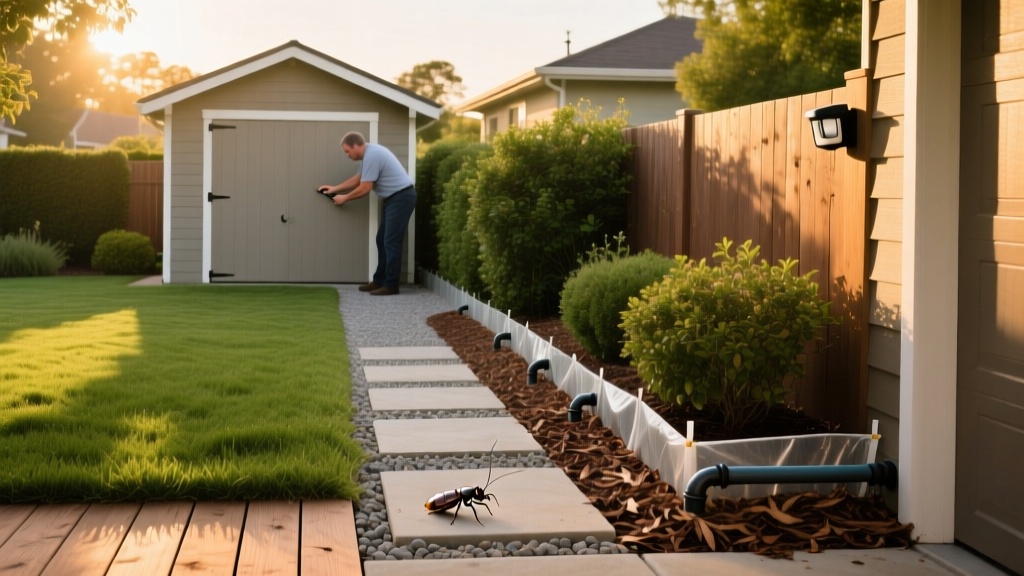
How to Get Rid of Roaches in Home by Securing Your Yard Perimeter
The Perimeter Breach: Why Indoor Sprays Fail
Most homeowners attempting to figure out how to get rid of roaches in home environments make a critical tactical error: they treat the kitchen while ignoring the yard. While German cockroaches (Blattella germanica) are strictly indoor pests, the large, intimidating roaches that invade homes—such as the American (Periplaneta americana), Oriental (Blatta orientalis), and Smokybrown (Periplaneta fuliginosa) cockroaches—are peridomestic. They breed in exterior mulch, leaf litter, sewer drains, and woodpiles, migrating indoors only when outdoor populations peak or weather conditions shift.
If you spray baseboards indoors but leave the exterior perimeter untreated, you are merely mopping up a flood without turning off the faucet. Effective eradication requires a defensive perimeter strategy that intercepts these insects before they cross the threshold.
Entomologist Insight: Peridomestic roaches require high moisture. According to the University of California Statewide Integrated Pest Management Program, modifying the outdoor habitat to reduce moisture and harborage is the single most effective long-term control method, outperforming chemical barriers alone.
Phase 1: Yard Sanitation and Habitat Disruption
Chemical treatments will fail if the yard provides unlimited shelter and water. Before applying any product, execute these structural and landscaping modifications.
The 12-Inch Mulch-Free Zone
Mulch is a primary breeding ground for Oriental and Smokybrown roaches due to its moisture retention. Rake all mulch, pine straw, and leaf litter back to create a strict 12-inch bare soil or gravel gap between your foundation and the mulch bed. If you must use ground cover near the house, switch to inorganic gravel or crushed stone, which drains rapidly and offers no organic food source.
Moisture and Grading Corrections
- Fix Negative Grading: Ensure soil slopes away from the foundation at a minimum drop of 6 inches over the first 10 feet. Pooling water against the slab creates the exact humid microclimate roaches seek.
- Clear Weep Holes: Brick weep holes allow moisture to escape but also serve as roach highways. Stuff them with Stuf-Fit Copper Mesh (approx. $12 per roll). Unlike steel wool, copper will not rust and stain your brickwork, and roaches cannot chew through it.
- Seal Conduit Penetrations: Use Pur Black Foam (a polyurethane expanding foam specifically designed for pest exclusion, ~$28 per can) to seal gaps around HVAC lines, plumbing chases, and electrical conduits entering the exterior walls.
Phase 2: Exterior Chemical Barrier and Baiting
Once the habitat is disrupted, deploy a dual-action chemical defense. The goal is to use non-repellent transfer agents and targeted baits, avoiding common repellent sprays that scatter roaches into your home.
The Danger of Repellent Sprays
Over-the-counter pyrethroid sprays (like those containing Bifenthrin or Deltamethrin) act as repellents. When applied to the foundation, they do not kill the colony; they agitate the roaches, driving them inside through cracks to escape the chemical. Furthermore, repellents ruin the efficacy of advanced baits by preventing foraging.
Recommended Exterior Arsenal
| Product | Active Ingredient | Application & Role | Est. Cost |
|---|---|---|---|
| Alpine WSG | Dinotefuran (Non-repellent) | Mix 0.15 oz per gallon of water. Spray 3 feet up the foundation and 3 feet out on the soil. Roaches walk through it, absorb it, and transfer it to the colony. | $45 - $55 / 200g |
| Advion Roach Bait Arenas | Indoxacarb | Weather-resistant plastic stations. Place every 3 to 5 feet along the exterior perimeter, near AC units, and by sewer cleanouts. | $25 / 30 stations |
| Maxforce FC Magnum Gel | Fipronil | Apply pea-sized drops in exterior cracks, crevices, and under deck railings where spray cannot reach. Highly attractive matrix. | $35 / 33g tube |
Phase 3: Interior Targeted Gel Baiting (The Cleanup)
While the exterior perimeter handles the bulk of the population, a few scouts will inevitably make it inside. To get rid of roaches in home interiors without contaminating living spaces with broadcast sprays, use targeted gel baits.
Warning: Never use aerosol foggers or 'bug bombs' indoors. The Environmental Protection Agency (EPA) warns that foggers fail to reach deep harborage areas, expose humans to unnecessary pesticide residues, and push roaches deeper into wall voids, exacerbating the infestation.
Interior Baiting Protocol
- Clean and Dry: Wipe down cabinet interiors with a degreaser. Roaches will ignore gel bait if competing food sources (grease, crumbs) are present.
- Micro-Dosing: Apply Maxforce FC Magnum or Advion Cockroach Gel Bait in pea-sized drops (approx. 0.1g each). Do not draw continuous lines.
- Strategic Placement: Focus on high-humidity, tight harborage zones: behind the refrigerator compressor, under the dishwasher, inside cabinet hinges, and where plumbing penetrates the drywall under sinks.
- Rotation: If bait consumption slows after 60 days, rotate to a different active ingredient (e.g., switch from Fipronil to Indoxacarb or Abamectin) to prevent behavioral resistance and bait aversion.
Troubleshooting Common Roach Control Failures
If you are still seeing large roaches indoors after 14 days of implementing this protocol, review these common failure points:
- Cross-Contamination: Did you or a previous exterminator spray a repellent (like Ortho Home Defense or Talstar P) near the bait placements? Repellent residues will render the bait stations useless. Wash the area with soap and water, let it dry, and reapply bait.
- Over-Mulching: If your mulch depth exceeds 2 inches, the chemical spray cannot penetrate to the soil where the roaches harbor. Rake it thin before treating.
- Ignoring the Sewer Lines: American cockroaches frequently breed in municipal sewer systems and migrate up through dry P-traps. Pour a gallon of water down rarely used floor drains and guest bathroom sinks monthly to maintain the water barrier in the P-trap.
- Gutter Debris: Clogged gutters filled with wet, rotting leaves are prime Smokybrown roach nurseries. Clean gutters bi-annually and ensure downspouts discharge at least 4 feet away from the foundation.
Expert FAQs on Perimeter Roach Defense
How long does it take for perimeter baiting to clear an indoor infestation?
When utilizing non-repellent transfer agents like Alpine WSG combined with Indoxacarb baits, expect a 70% reduction in indoor sightings within 7 to 10 days. Complete colony collapse and cessation of indoor migration typically takes 21 to 30 days, depending on the severity of the exterior breeding population.
Can I use diatomaceous earth (DE) outside instead of chemical sprays?
Food-grade Diatomaceous Earth can desiccate roaches by damaging their waxy exoskeleton cuticle. However, DE is entirely ineffective outdoors once it gets wet. In a yard environment, rain and irrigation will neutralize it instantly. It is best reserved for dry, indoor voids like behind baseboards or inside wall cavities.
Do ultrasonic pest repellents work for yard and home defense?
No. Peer-reviewed entomological studies consistently show that ultrasonic devices do not alter cockroach behavior, feeding, or harborage. Investing in these devices diverts funds away from proven, science-backed integrated pest management (IPM) strategies like habitat modification and targeted baits.

