
Pest Control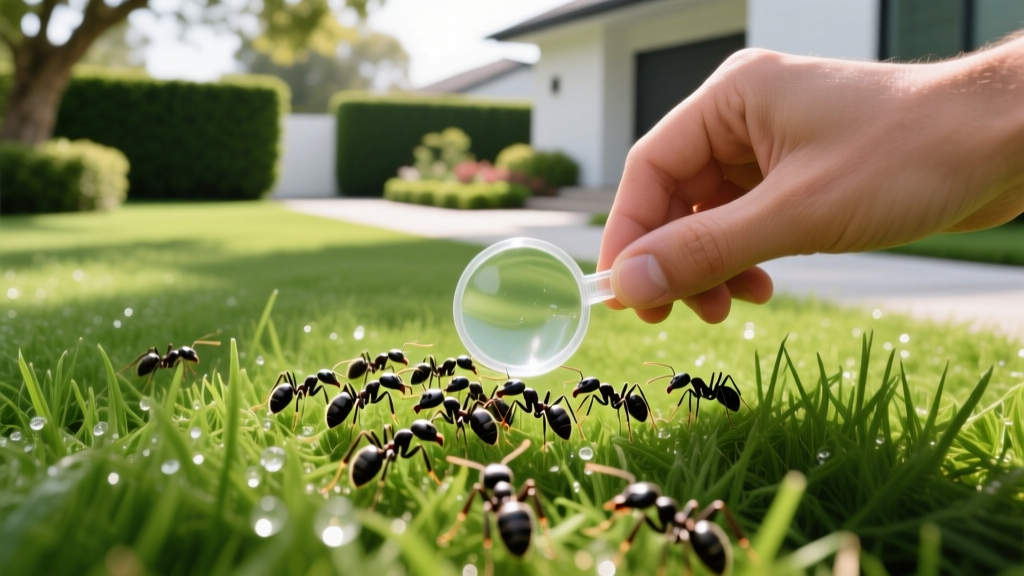
How Do You Get Rid of Small Ants in Your Yard? Proven Defense Tactics
The Hidden Threat of Small Yard Ants
When homeowners ask, "how do you get rid of small ants," they are usually dealing with one of three notorious species: pavement ants, odorous house ants, or Argentine ants. While these tiny insects (measuring just 1/16 to 1/8 inch) may seem like a mere nuisance on your patio, their presence in the yard signals a larger ecological imbalance. Small ants actively farm aphids and mealybugs on your ornamental plants to harvest honeydew, indirectly causing severe foliage damage. Furthermore, their extensive subterranean tunneling undermines paver patios, retains walls, and exposes turfgrass roots to drought stress.
Eliminating these colonies requires abandoning outdated, reactive spray methods in favor of a strategic, multi-tiered yard defense protocol. According to the University of California Integrated Pest Management (UC IPM) program, successful outdoor ant management relies on toxicant transfer and habitat modification rather than localized contact killing.
Identify Your Invader: The Big Three Small Ants
Before deploying treatments, accurate identification dictates your bait selection and barrier strategy. Different species have distinct dietary preferences and nesting behaviors that change with the seasons.
| Species | Key Identifier | Primary Nesting Zone | Dietary Preference |
|---|---|---|---|
| Pavement Ant (Tetramorium caespitum) | Dark brown/black, parallel lines on head, aggressive swarming | Under pavers, driveway cracks, mulch edges | Proteins and greases (early summer); sweets (late summer) |
| Odorous House Ant (Tapinoma sessive) | Dark brown, emits rotten coconut smell when crushed | Shallow soil, under flat stones, debris piles | Strictly sweets and honeydew |
| Argentine Ant (Linepithema humile) | Uniform light to dark brown, moves in distinct single-file trails | Moist soil near irrigation lines, shallow mulch | Sweets (summer); proteins/fats (winter/spring) |
Why Contact Sprays Fail: The Budding Phenomenon
The most common mistake in outdoor ant control is using over-the-counter repellent sprays (containing bifenthrin or permethrin) directly on visible trails. As noted by Penn State Extension, small ants—particularly Argentine and odorous house ants—exhibit a survival mechanism called "budding." When a colony detects a toxic chemical threat, it fragments into multiple smaller sub-colonies that scatter across your yard. Instead of eliminating the problem, repellent sprays multiply the number of active nests, making future eradication exponentially more difficult.
⚠️ Critical Rule of Ant Defense: Never apply liquid barrier sprays and ant baits in the same area at the same time. Repellent residues will deter foragers from picking up the bait, rendering your colony-elimination strategy useless.
Phase 1: Toxicant Transfer (The Baiting Strategy)
To destroy the colony, you must trick the scout ants into carrying a slow-acting toxicant back to the queens. This process, known as trophallaxis, ensures the poison is distributed throughout the entire nest, including the brood.
Top Active Ingredients for Yard Baiting
- Indoxacarb (0.05%): Found in professional gels like Advion Ant Gel (~$30 per 30g tube). Indoxacarb is a pro-insecticide that only becomes lethal after the ant's internal enzymes metabolize it, allowing ample time for sharing. Highly effective for protein and sweet-feeding cycles.
- Dinotefuran (0.5%): Available in granular baits like Optigard Ant Bait. Granular formulations are superior for outdoor use in lawns because they resist melting in morning dew and light rain compared to liquid gels.
- Borax / Sodium Tetraborate (5.4%): The active ingredient in Terro Liquid Ant Baits. While highly effective for sweet-loving odorous house ants, liquid stations must be placed inside weather-proof plastic bait stations outdoors to prevent evaporation and soil contamination.
Strategic Bait Placement Protocol
- Locate Foraging Trails: Inspect your yard at dusk (between 7:00 PM and 9:00 PM) when small ant foraging activity peaks.
- Deploy Micro-Doses: If using gel, apply pea-sized drops (about 0.25 grams) every 12 to 18 inches along the trail. Do not draw continuous lines; ants will bypass large globs of gel.
- Protect from Elements: Place bait drops inside inverted plastic solo cups with a small notch cut in the rim, or use commercial plastic bait stations staked into the soil. This protects the bait from UV degradation and rain.
- Monitor and Replenish: Check baits every 48 hours. If the bait is consumed, reapply. A sudden drop in bait consumption usually indicates the colony has collapsed or shifted its dietary needs from carbohydrates to proteins.
Phase 2: Non-Repellent Perimeter Barriers
Once the primary interior and immediate patio colonies are suppressed via baiting, establish a non-repellent chemical barrier around the perimeter of your home and hardscaping to intercept migrating sub-colonies.
The Fipronil Transfer Effect
Products containing Fipronil (9.1%), such as Termidor SC (~$70 for a 20 oz bottle), or Dinotefuran (40%), like Alpine WSG, are non-repellent. Ants cannot detect these chemicals, meaning they will freely walk through the treated zone. Fipronil exhibits a "transfer effect," where treated ants physically rub against untreated nestmates, spreading the lethal dose through the colony.
Mixing and Application Specifications
- Mix Rate: Combine 0.8 fluid ounces of Termidor SC per gallon of water in a pump spraker.
- Application Zone: Spray a continuous band 12 inches up the foundation wall and 12 inches out into the adjacent soil or mulch.
- Volume: Apply exactly 1 gallon of finished solution per 1,000 square feet of barrier area. Over-watering the soil will push the active ingredient too deep, bypassing the shallow ant foraging zone.
- Curing Time: Allow 4 to 6 hours for the liquid to dry completely before allowing pets or children back into the treated perimeter.
Phase 3: Cultural Controls & Habitat Modification
Chemical controls will fail long-term if your yard's environment actively invites colonization. Implement these landscaping modifications to make your turf and garden beds inhospitable.
Break the Aphid-Ant Symbiosis
Small ants act as bodyguards for aphids, scale insects, and mealybugs, protecting them from ladybugs in exchange for sugary honeydew excretions. Inspect the undersides of leaves on your roses, hibiscus, and fruit trees. If you find aphids, treat the plants with a 2% solution of insecticidal soap or neem oil applied in the early evening. Eliminating the honeydew food source forces the ants to forage further away, increasing their likelihood of encountering your perimeter baits.
Thatch and Moisture Management
Argentine ants thrive in the shallow, moist microclimate created by excessive lawn thatch. If your thatch layer exceeds 0.5 inches, perform core aeration and dethatching in the early fall. Additionally, audit your irrigation system; a single weeping drip emitter or leaky hose bib provides the exact moisture profile odorous house ants need to establish a satellite nest.
Quick-Reference Decision Matrix: What to Use When
| Scenario | Primary Action | Secondary Action |
|---|---|---|
| Ants swarming patio pavers | Advion Gel in crevices | Polymeric sand sealing |
| Ants trailing up tree trunks | Tanglefoot sticky barrier | Treat canopy for aphids |
| Massive trails on lawn edges | Optigard Granular Bait | Alpine WSG perimeter spray |
| Ants emerging from mulch beds | Rake mulch to dry it out | Switch to cedar/cypress mulch |
Frequently Asked Questions
How long does it take for outdoor ant baits to work?
Expect to see a 50% reduction in visible foraging within 5 to 7 days, but complete colony collapse via trophallaxis typically takes 14 to 28 days. Patience is mandatory; killing the visible scouts too quickly with sprays halts the bait transfer process.
Are outdoor ant baits safe for pets and pollinators?
When used correctly, yes. The concentration of active ingredients in commercial gels (like 0.05% Indoxacarb) is extremely low and requires ingestion of massive quantities to harm a medium-sized dog. However, always place gels inside secured bait stations to prevent direct consumption by pets. To protect pollinators, never apply liquid barrier sprays directly to blooming flowers or weed blossoms; restrict applications strictly to the foundation and soil interfaces.
Does mulch type affect small ant populations?
Absolutely. Hardwood and pine bark mulches retain high moisture levels and degrade into organic matter that attracts odorous house ants. Switching to cedar or cypress mulch introduces natural repellent oils (thujone) that deter nesting, though these oils degrade after 6 to 8 months and require raking or replenishment to maintain efficacy.

