
Pest Control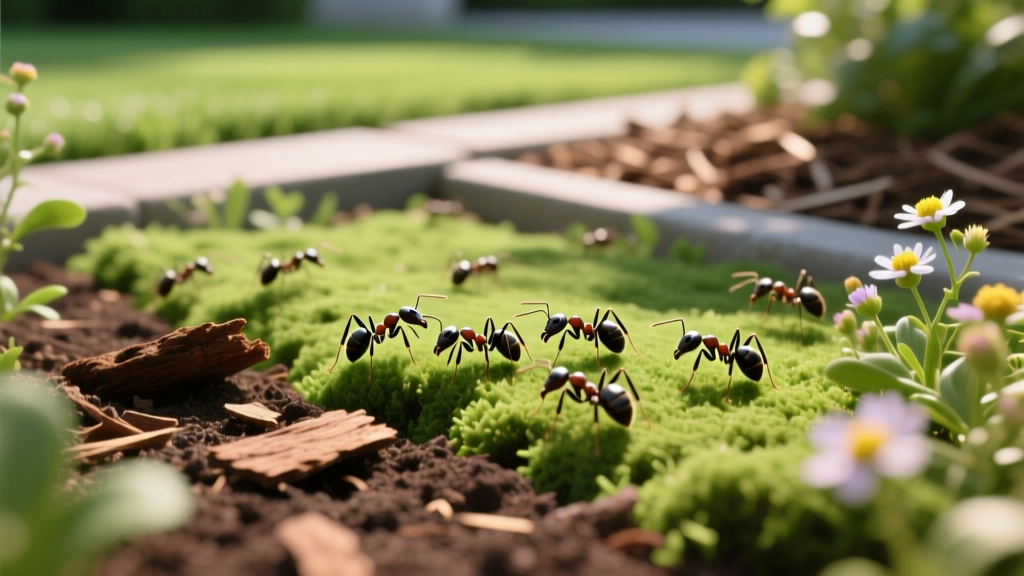
How to Eliminate Small Ants in Your Yard and Garden Beds
Identifying the Invaders: Which Small Ant is in Your Yard?
When homeowners ask how to eliminate small ants, the first critical step is accurate species identification. The term 'small ant' usually refers to three specific outdoor invaders that thrive in garden beds, lawns, and foundation perimeters: Argentine ants (Linepithema humile), odorous house ants (Tapinoma sessile), and pavement ants (Tetramorium caespitum). Misidentifying the species leads to incorrect bait selection and inevitable treatment failure.
Quick Diagnostic Guide
- Argentine Ants: 1/16 to 1/8 inch long, dark brown, travel in massive, wide trails. They do not have a distinct odor when crushed and form multi-queen 'supercolonies' across entire neighborhoods.
- Odorous House Ants: 1/16 to 1/8 inch long, brown to black. When crushed, they emit a distinct scent resembling rotting coconuts or blue cheese. They nest shallowly under mulch and stones.
- Pavement Ants: 1/8 inch long, dark brown to blackish, with parallel lines on the head and thorax. They excavate soil from under driveways and pavers, leaving distinct dirt mounds.
The Biology of Supercolonies and the 'Budding' Trap
The most common mistake DIYers make when attempting to eliminate small ants in the yard is using over-the-counter repellent sprays (like permethrin or bifenthrin aerosols). According to Penn State Extension entomologists, Argentine and odorous house ants exhibit a survival behavior called 'budding'. When a colony detects a fast-acting, repellent toxin, the queens and workers split the colony into multiple satellite nests, effectively multiplying the infestation across your garden beds.
To achieve total eradication, you must use a combination of non-repellent liquid barriers and slow-acting rotational baits that exploit the ants' trophallaxis (food-sharing) behavior. This allows the toxin to reach the hidden queens deep within the soil profile.
The 3-Step Yard Eradication Protocol
Step 1: Establish a Non-Repellent Liquid Barrier
For perimeter defense and foundation treatments, Fipronil-based non-repellent termiticides/insecticides are the industry standard. Products like Taurus SC or Termidor SC (Fipronil 9.1%) are undetectable to foraging ants. They walk through the treated soil, pick up the active ingredient, and carry it back to the nest.
- Dilution Rate: Mix 0.8 fluid ounces of Taurus SC per gallon of water.
- Application Method: Dig a trench 6 inches wide and 6 inches deep directly against the foundation or around the perimeter of the infested garden bed.
- Volume: Apply 10 gallons of the finished solution per 10 linear feet of trench.
- Cost: A 20 oz bottle of Taurus SC costs approximately $45 in 2026 and yields up to 100 gallons of finished solution, enough to treat the perimeter of an average suburban home twice.
Warning: The EPA strictly regulates Fipronil applications. Do not apply Fipronil products directly to vegetable gardens, fruit-bearing trees, or areas where surface water runoff may occur. Keep applications strictly to the structural perimeter and non-edible ornamental beds.
Step 2: Deploy Rotational Gel and Granular Baits
Liquid barriers stop new ants from entering, but baits are required to collapse existing nests in the middle of your lawn or garden beds. Small ants have shifting dietary needs; they seek carbohydrates (sugars) in the spring and early summer, and proteins/fats in the late summer and fall.
To ensure you meet their current nutritional demands, deploy a dual-bait strategy:
- Sweet Gel Bait: Optigard Ant Bait Gel (Thiamethoxam 0.01%) or Alpine WSG (Dinotefuran). Apply 3-to-6-inch dabs directly onto ant trails, under stones, or inside plastic bait stations to protect the gel from rain and irrigation. Cost: ~$35 for a 4-tube pack.
- Protein Granular Bait: Advance 375A (Abamectin 0.01%) or Maxforce Fleet. Broadcast at a rate of 1.5 to 2.0 ounces per 1,000 square feet over lawn areas and mulch beds. Cost: ~$25 for a 2lb shaker can.
Rotate the active ingredients every 30 to 45 days to prevent the colony from developing bait aversion, a documented issue with long-term Argentine ant management.
Step 3: Cultural and Habitat Modification
Chemical controls will fail if the yard environment remains highly conducive to nesting. Small ants require high moisture and proximity to food sources.
- Mulch Management: Pull mulch back at least 12 inches from the home's foundation. Keep mulch depth in garden beds to a maximum of 2 to 3 inches; deeper mulch retains excessive moisture and creates ideal nesting microclimates.
- Irrigation Audits: Fix dripping hose bibs and misaligned sprinkler heads that create localized muddy zones. Pavement ants specifically target the damp soil beneath irrigated paver stones.
- Honeydew Reduction: Small ants 'farm' aphids and scale insects on ornamental shrubs for their honeydew excretions. Treat aphid infestations on nearby plants with insecticidal soap or horticultural oil to cut off the ants' food supply.
Product Comparison Matrix: Yard Ant Control
| Method | Active Ingredient | Best Application Scenario | Time to Kill | Est. Cost |
|---|---|---|---|---|
| Liquid Barrier | Fipronil (Taurus SC) | Foundation perimeter, retaining walls | 3 to 7 days | $45 / 20oz |
| Gel Bait | Thiamethoxam (Optigard) | Active trails, crevices, bait stations | 5 to 14 days | $35 / 4 tubes |
| Granular Bait | Abamectin (Advance 375A) | Broadcast over lawns and deep mulch | 7 to 21 days | $25 / 2lb |
| Non-Repellent Spray | Dinotefuran (Alpine WSG) | Spot treatments on ornamental foliage | 3 to 5 days | $65 / box |
Common Eradication Failures and Edge Cases
Even with professional-grade products, homeowners frequently encounter setbacks. University of Kentucky Entomology highlights several edge cases that cause small ant treatments to stall:
The 'Clean-Up' Mistake
When ants swarm a gel bait, the natural instinct is to spray them or wipe them away. This destroys the foraging chain. You must allow the ants to consume the bait and carry it back to the nest uninterrupted. If the bait dries out, reapply it, but never kill the ants actively feeding on it.
Polydomous Nesting Structures
Argentine ants do not have a single central nest; they have polydomous (multi-site) networks connected by underground tunnels. A single bait placement will only collapse a local node. You must grid-bait the entire yard, placing bait stations every 10 to 15 feet along the perimeter and near all visible trail origins.
Moisture Magnets in Hardscaping
If small ants persist under concrete pavers or stone patios despite chemical treatments, the issue is structural. The sand base beneath the pavers is likely retaining water. In these edge cases, chemical control is a temporary bandage. The permanent fix requires lifting the pavers, re-grading the base with crushed gravel for drainage, and resetting the stones.
Frequently Asked Questions
Can I use vinegar or boiling water to eliminate small ants in the garden?
Boiling water will kill the ants it directly contacts, but it will also destroy plant root systems and beneficial soil nematodes. Vinegar disrupts pheromone trails temporarily but offers no residual colony-killing power. For supercolonies, these home remedies only treat the symptoms, not the source.
How much does professional yard ant treatment cost compared to DIY?
Hiring a licensed pest control operator for a comprehensive exterior ant program typically costs between $250 and $450 per quarter for a standard suburban lot. A highly effective DIY protocol using Taurus SC, Optigard, and Advance 375A requires an initial investment of about $105, but requires strict adherence to dilution rates, trenching, and monthly bait rotation.
Will treating the yard for ants harm my lawn or pollinators?
When applied correctly to the soil surface or in trenches, Fipronil and Abamectin baits pose minimal risk to established turfgrass. To protect pollinators, never spray liquid insecticides directly onto blooming flowers or weeds like clover and dandelions. Use enclosed plastic bait stations for gels to prevent exposure to bees and foraging wildlife.

