
Pest Control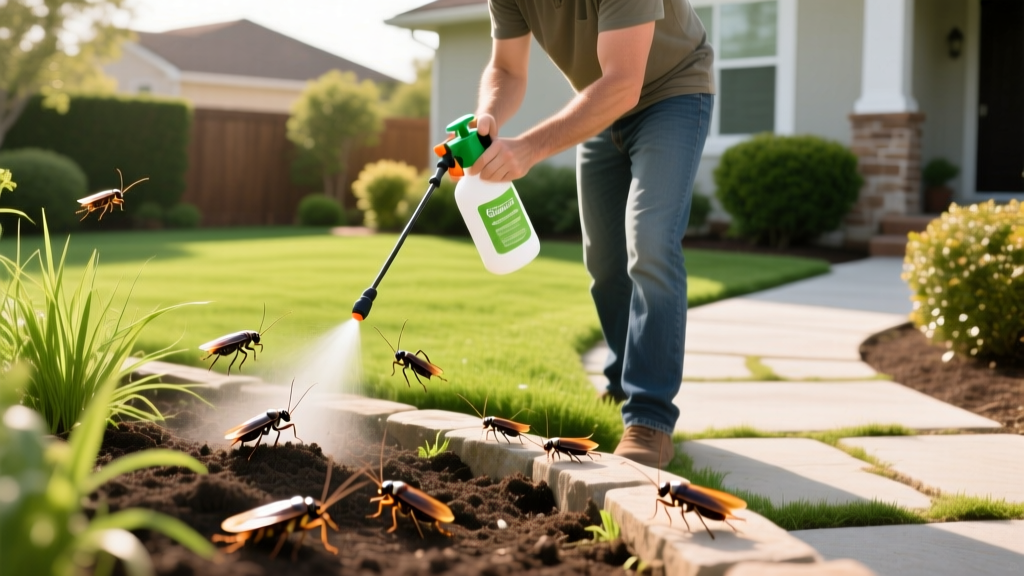
How to Eliminate Small Cockroaches in Your Yard and Perimeter
Small cockroaches in the yard are often a precursor to a severe indoor infestation. While German cockroaches (Blattella germanica) are strictly indoor pests, their outdoor lookalikes—specifically Asian cockroaches (Blattella asahinai) and early-instar Smokybrown cockroaches (Periplaneta fuliginosa)—thrive in exterior harborage zones. When populations explode in your mulch beds, leaf litter, and woodpiles, the overflow inevitably migrates indoors through foundation cracks and weep holes.
Learning how to eliminate small cockroaches in your yard requires a multi-tiered perimeter defense strategy. Relying solely on indoor traps ignores the root cause. A professional-grade exterior protocol combines aggressive habitat modification, microencapsulated barrier sprays, and weather-proof exterior bait stations to break the outdoor-to-indoor migration pipeline.
The Outdoor Threat: Identifying Small Yard Cockroaches
Differentiating the species dictating your treatment protocol. Misidentifying an Asian cockroach as a German cockroach leads to ineffective outdoor treatments and wasted chemical budgets.
Species Comparison Matrix
| Species | Primary Yard Habitat | Key Behavior | Recommended Treatment |
|---|---|---|---|
| Asian Cockroach | Shaded mulch, damp leaf litter | Flies toward porch lights, migrates indoors at dusk | Perimeter spray + outdoor gel bait in stations |
| Smokybrown Nymph | Tree holes, woodpiles, deep mulch | Nocturnal forager, climbs vertical surfaces and downspouts | Microencapsulated spray + granular bait |
| German Cockroach | Indoor kitchens, appliances, pantries | Rarely outdoors, strictly indoor pest, avoids sunlight | Indoor gel bait + IGR (Ignore for yard defense) |
Asian cockroaches are virtually identical to German cockroaches in appearance—light brown with two dark parallel stripes on the pronotum—but possess fully functional wings and are strongly attracted to light. Smokybrown nymphs are small, dark brown to black, and lack the pronotal stripes, preferring elevated damp areas like tree canopies and stacked firewood.
Phase 1: Habitat Modification & Yard Sanitation
Cockroaches require high humidity, physical cover, and decaying organic matter to establish exterior colonies. Chemical treatments will fail if the yard environment remains highly conducive to breeding.
- The 2-Inch Mulch Rule: Keep pine bark or hardwood mulch under 2 inches deep. Deeper mulch traps excessive moisture and creates an impenetrable canopy for roaches. Rake mulch away from the foundation, leaving a strict 6-inch bare soil or gravel buffer.
- Leaf Litter Eradication: Remove oak leaves and decaying organic matter weekly during peak autumn months. Asian cockroaches breed exponentially in damp, shaded leaf piles.
- Firewood Elevation: Elevate firewood at least 18 inches off the ground using metal racks. Never store wood directly against the home's siding or on top of landscape timbers.
- Irrigation Audits: Fix leaky hose bibs and adjust sprinkler heads that overspray onto the foundation. Constant moisture against the stucco or brick creates a prime harborage zone.
Phase 2: Perimeter Chemical Defense (Barrier Sprays)
Liquid residual sprays form the first line of chemical defense. Standard off-the-shelf aerosols and basic pyrethrins fail outdoors because UV light and rain degrade the active ingredient within days. Instead, use a microencapsulated pyrethroid like Syngenta Demand CS (Lambda-cyhalothrin 9.7%).
The microscopic polymer capsules protect the active ingredient from UV degradation and adhere to the cockroaches' tarsi (feet) as they walk across treated soil. The delayed kill allows the roach to return to the nest and spread the toxin.
Exact Application Specifications
- Mix Rate: 0.4 fluid ounces of Demand CS per gallon of water.
- Cost & Yield: As of 2026, an 8-ounce bottle retails for approximately $48. This single bottle yields enough solution to treat over 10,000 square feet of perimeter, making the cost per application roughly $5 for an average home.
- Application Band: Apply a continuous band 3 feet up the foundation wall and 3 feet outward into the soil. Focus heavily on weep holes, pipe penetrations, and door thresholds.
- Reapplication: Reapply every 60 to 90 days, or immediately after heavy rainfall exceeding 2 inches.
⚠️ Environmental Warning: Never apply liquid pyrethroids directly to water features, koi ponds, or blooming pollinator plants. Lambda-cyhalothrin is highly toxic to aquatic life and bees when wet. Allow the spray to dry completely before allowing pets into the treated yard zone.
Phase 3: Targeted Outdoor Baiting Strategies
While sprays kill on contact and provide a repellent barrier, baits exploit the cockroaches' coprophagic (feces-eating) and emetic (vomit-eating) behaviors to trigger a secondary kill within the hidden nest. For exterior use, broadcast gel baits wash away in the rain and degrade in the sun.
Granular Bait Deployment
Use Advion Insect Granular Bait (Indoxacarb 0.22%) placed exclusively inside tamper-resistant outdoor bait stations. A 1.5 lb shaker of Advion granular bait retails for around $35 and lasts an entire season for an average quarter-acre lot.
Pro-Tip: Space bait stations 10 to 15 feet apart along the foundation, specifically targeting areas where mulch meets hardscaping (driveways, patios). Do not place bait stations directly next to areas you have just sprayed with Demand CS; the repellent nature of the spray will deter roaches from entering the bait station.
Common Mistakes That Ruin Yard Roach Control
- Cross-Contamination: Spraying liquid insecticide on or near bait stations renders the bait unpalatable. Always bait first, or leave a 2-foot buffer zone around stations when spraying the perimeter.
- Ignoring Weep Holes: Brick veneer homes have weep holes to allow moisture to escape. These are direct highways for Smokybrown nymphs. Stuff them with copper mesh or specialized weep hole covers, but never seal them completely with caulk, which traps moisture inside the wall cavity.
- Over-Mulching Landscape Beds: Adding fresh mulch on top of old, decomposing mulch creates a multi-layered, moisture-rich roach hotel. Strip old mulch before adding new layers.
Frequently Asked Questions
Will rain wash away my perimeter spray?
Once a microencapsulated product like Demand CS dries (usually within 2 to 4 hours), it becomes highly resistant to rain wash-off. The polymer capsules bind to porous surfaces like concrete and brick. However, prolonged UV exposure and soil microbial activity will eventually break it down, necessitating a 60 to 90-day reapplication cycle.
Are granular baits safe for dogs and wildlife?
Advion granular bait contains a very low concentration of Indoxacarb, which requires specific enzymes found in the insect gut to become lethal. However, to prevent secondary poisoning or gastrointestinal upset in dogs, never broadcast granular bait openly on the lawn. Always deploy it inside locked, tamper-resistant bait stations anchored to the ground.
For more comprehensive guidelines on pesticide safety and integrated pest management, refer to the EPA Safe Pest Control guidelines and the Texas A&M AgriLife Extension cockroach management resources.

