
Pest Control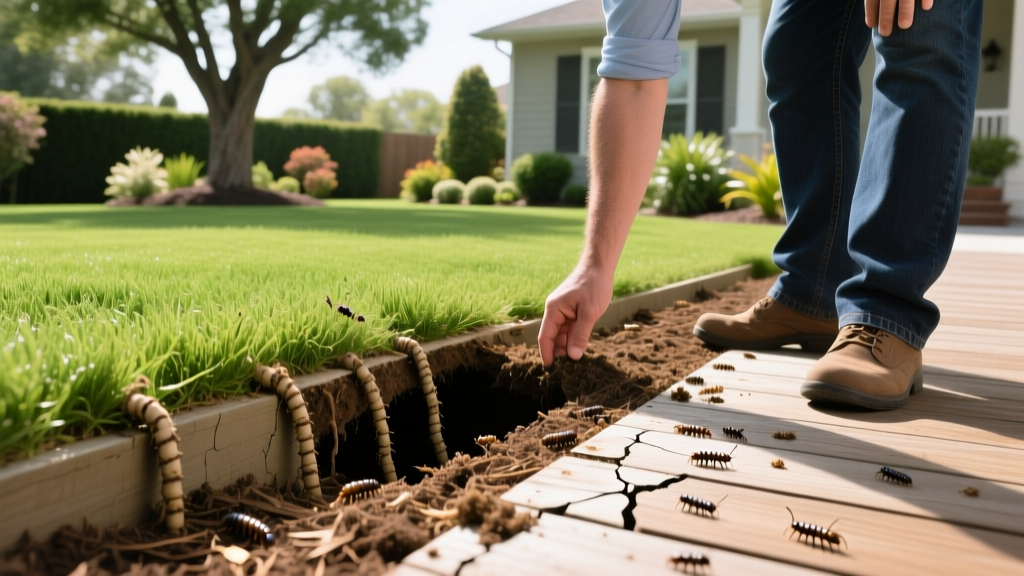
How to Eliminate Termites in Your Yard: Perimeter Defense Guide
The Hidden Threat: Subterranean Termites in the Landscape
When homeowners discover termite damage, the focus immediately shifts to the house. However, the battle is often lost or won in the yard. Subterranean termites (Reticulitermes spp.) build massive underground colonies that use your landscape soil as a staging ground to attack wooden structures. Learning how to eliminate termites in your yard requires shifting your perspective from reactive indoor treatments to proactive perimeter defense. By intercepting foraging workers before they reach your foundation, you can starve the colony and protect your home's structural integrity.
According to the Environmental Protection Agency (EPA), termites cause billions of dollars in structural damage annually, and standard homeowner insurance policies rarely cover it. Establishing a chemical and physical barrier in your yard is the most cost-effective insurance policy available.
Identifying Yard Termite Activity: Mud Tubes vs. Wood Damage
Before deploying treatments, you must confirm the presence of subterranean termites. A common mistake is confusing subterranean termites with drywood termites. Drywood termites leave behind distinct, hexagonal fecal pellets (frass). Subterranean termites do not leave external frass; instead, they pack their feeding galleries with soil and fecal matter to maintain humidity.
Key Yard Indicators
- Exploratory Mud Tubes: Look for pencil-sized (1/4 to 1 inch wide) tunnels made of packed soil and saliva on foundation walls, tree stumps, and retaining walls. These tubes protect foragers from desiccation and predators.
- Swarmers (Alates):strong> In early spring or after heavy rains, reproductive termites emerge from the soil. Finding discarded, translucent wings near patio doors, mulch beds, or yard lights indicates a mature, nearby colony.
- Soil-Packed Wood: If you break open a decaying tree stump or fence post in your yard and find the hollowed galleries lined with a muddy, soil-like substance, subterranean termites are actively feeding.
Step-by-Step Liquid Termiticide Trenching Protocol
Liquid termiticides create a continuous, lethal chemical barrier in the soil. Non-repellent active ingredients like Fipronil are the industry standard because termites cannot detect the chemical, allowing them to tunnel through it, pick up a lethal dose, and transfer it to the colony via trophallaxis (grooming and food sharing).
Step 1: Calculate Your Linear Footage and Volume
Measure the total linear footage of your home's foundation, including attached structures like patios and garages. For an average 150-linear-foot perimeter, the standard application rate is 4 gallons of finished solution per 10 linear feet. This means you will need 60 gallons of mixed solution.
Step 2: Mix the Termiticide
Using a professional-grade product like Termidor SC (9.1% Fipronil) or Taurus SC, the standard mixing ratio for subterranean termite control is 0.8 fluid ounces of concentrate per gallon of water. For 60 gallons of finished solution, you will need exactly 48 ounces of concentrate. Purchase accordingly, as a single 20-ounce bottle will only yield 25 gallons of finished solution.
Step 3: Trenching and Roding
Using a trenching shovel, dig a continuous trench 6 inches wide and 6 inches deep directly against the foundation wall. If you encounter concrete slabs (like a patio) abutting the house, you must use a hammer drill with a 1/2-inch masonry bit to drill holes every 12 inches, penetrating through the slab to the soil beneath, and inject the solution into these voids.
Step 4: Application and Backfilling
Apply the mixed solution evenly into the trench using a low-pressure sprayer or watering can. Once applied, backfill the trench with the excavated soil to create a sloped grade that directs water away from the foundation.
Bait Station Deployment: A Slower, Targeted Approach
If trenching is impossible due to extensive hardscaping, well systems, or environmental concerns regarding soil saturation, termite bait systems offer a highly effective alternative. Systems like Sentricon Always Active utilize Noviflumuron, an insect growth regulator (IGR) that disrupts the molting process of termites.
Bait stations are installed in the soil every 10 feet around the perimeter. Foraging workers consume the cellulose bait matrix laced with the IGR and share it with the colony. Because termites must molt to survive, the colony collapses when the workers and soldiers fail to shed their exoskeletons. While liquid treatments provide immediate barrier protection, bait systems typically take 3 to 6 months to achieve complete colony elimination.
Liquid Termiticides vs. Bait Systems: Cost and Efficacy Matrix
| Method | Active Ingredient | DIY Material Cost (Avg Home) | Professional Cost | Time to Colony Impact | Soil Disruption |
|---|---|---|---|---|---|
| Liquid Trenching | Fipronil (9.1%) | $225 - $350 | $1,200 - $2,500 | Immediate barrier; 30-90 days for colony | High (Trenching/Drilling) |
| Bait Stations | Noviflumuron | $600 - $900 (Stations + Bait) | $800 - $1,500 (Annual Monitor) | 3 to 6 months | Low (Small auger holes) |
| Foam Injection | Imidacloprid/Fipronil | $80 - $150 (Spot treatment) | $400 - $800 | Immediate (Spot only) | Minimal (Drill holes) |
Landscaping Modifications to Starve and Block Termites
Chemical treatments will fail if your landscaping continuously invites termite foragers. The North Carolina State Extension emphasizes that moisture and food source management are critical components of integrated pest management (IPM).
The Mulch Mandate
Wood mulch provides both food and moisture retention for termites. If you use organic wood mulch, maintain a strict 6-inch gap between the mulch edge and your home's siding or brick weep holes. Consider substituting wood mulch near the foundation with termite-resistant alternatives:
- Cedar Mulch: Contains natural resins and oils that repel termites, though its efficacy degrades after 2-3 years as it breaks down.
- Rubber Mulch: Made from recycled tires, it provides zero nutritional value to termites and retains no moisture.
- Crushed Stone or Gravel: Creates a dry, inhospitable zone that makes mud tube construction easily visible.
Grading and Moisture Control
Subterranean termites require high soil moisture to survive. Ensure your yard grading slopes away from the foundation at a minimum rate of 1/4 inch per foot for the first 6 feet. Extend downspout discharge pipes at least 5 feet away from the house to prevent localized soil saturation, which acts as a termite attractant.
Decision Framework: DIY vs. Professional Intervention
When to DIY: If you are establishing a preventative perimeter barrier on a home with no history of termite activity, or treating an isolated, detached wooden structure like a shed or fence line, DIY liquid trenching or baiting is highly effective and saves thousands of dollars.
When to Call a Pro: If you find active mud tubes entering the home above the foundation, notice structural sagging, or if your property has a well, cistern, or high water table that makes soil trenching an environmental risk, hire a licensed pest control operator. Professionals have access to specialized roding equipment and transferable warranties that protect your real estate transaction.
Maintaining Your Yard Defense Perimeter
Eliminating termites in your yard is not a one-time event; it is an ongoing management protocol. Liquid Fipronil barriers typically remain effective in the soil for 5 to 10 years, but soil erosion, landscaping renovations, and root growth can breach the barrier. Inspect your foundation perimeter bi-annually. If you have installed bait stations, they must be inspected every 90 days to replace consumed bait matrices and ensure the stations have not been compromised by moisture or fungal growth. By maintaining a hostile yard environment, you ensure that foraging termites bypass your property in search of easier targets.

