
Pest Control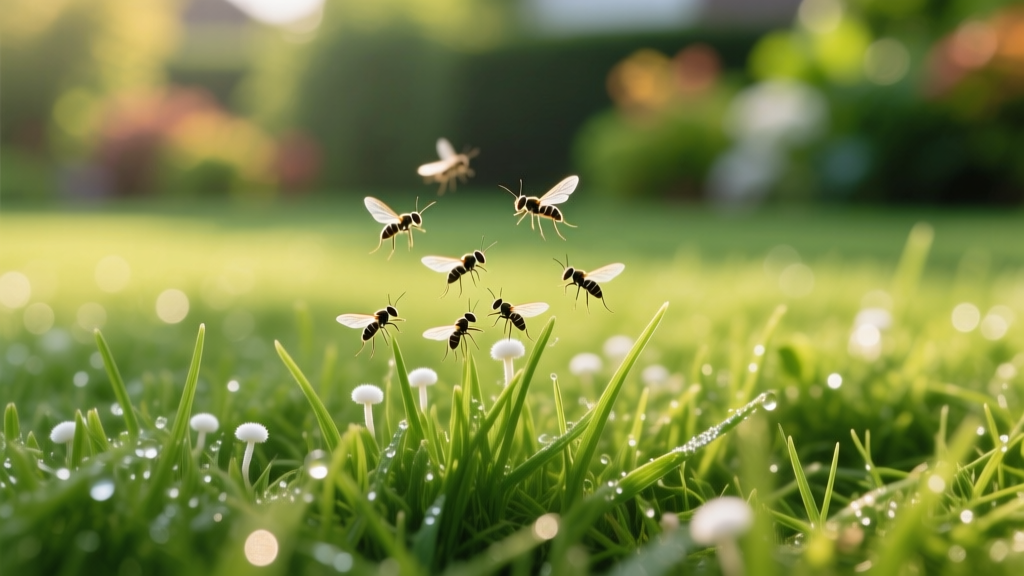
How to Identify and Eliminate Tiny White Bugs That Fly in Your Yard
The 'Cloud' Effect: Identifying Tiny White Bugs That Fly
When you brush past your ornamental shrubs or vegetable garden and a sudden cloud of minuscule white insects erupts from the foliage, you are dealing with a specific class of sap-sucking pests. Homeowners searching for 'tiny white bugs that fly' are almost always encountering one of two primary yard invaders: Whiteflies (Aleyrodidae family) or Woolly Aphids (Eriosomatinae subfamily). While they share a similar visual profile in flight, their biology, host preferences, and treatment protocols differ significantly.
Accurate identification is the mandatory first step in yard defense. Misidentifying a woolly aphid as a whitefly can lead to ineffective chemical applications and wasted budget. Below is a diagnostic matrix to help you pinpoint the exact species invading your landscape.
| Diagnostic Feature | Whiteflies (e.g., Silverleaf, Greenhouse) | Woolly Aphids (e.g., Apple, Elm) | Male Mealybugs (Rare fliers) |
|---|---|---|---|
| Scientific Classification | Bemisia tabaci / Trialeurodes vaporariorum | Eriosoma lanigerum / Eriosoma americanum | Pseudococcidae (winged males only) |
| Size & Shape | 1-2mm; triangular, moth-like wings held roof-like | 2-3mm; oval, covered in dense, fluffy white wax filaments | 1mm; delicate, clear wings, elongated body |
| Flight Behavior | Erupts in massive swarms when foliage is disturbed | Slow, floating flight; resembles drifting cotton swabs | Erratic, weak flight; rarely seen in large numbers |
| Primary Yard Hosts | Tomatoes, peppers, hibiscus, lantana, poinsettias | Apple trees, elm, ash, serviceberry, cotoneaster | Citrus, succulents, tropical houseplants moved outdoors |
| Overwintering Stage | Nymphs and eggs on lower leaf surfaces | Eggs in bark crevices or root zones | Soil-dwelling nymphs |
Damage Mechanics: Beyond the Nuisance Factor
These tiny white bugs that fly are not merely cosmetic nuisances; they are aggressive vectors for plant pathogens and catalysts for secondary fungal infections. Both whiteflies and aphids feed by piercing plant phloem with specialized stylets, extracting nutrient-rich sap and excreting the excess sugars as a sticky substance known as honeydew.
⚠️ The Sooty Mold Chain Reaction
Honeydew coats the upper surfaces of leaves and stems, creating an ideal breeding ground for Capnodium fungi (sooty mold). This black, powdery fungus blocks photosynthesis, causing premature leaf drop, stunted growth, and reduced fruit yields. If your plant leaves look like they have been dusted with charcoal, you have a severe honeydew-secreting pest infestation.
Furthermore, whiteflies are notorious vectors for over 100 distinct plant viruses, most notably the Begomovirus genus, which includes the devastating Tomato Yellow Leaf Curl Virus (TYLCV). According to the University of California Statewide IPM Program, a single infected whitefly can transmit TYLCV to a healthy tomato plant in less than 15 minutes of feeding.
The 4-Stage Yard Defense Eradication Protocol
Eliminating these pests requires a phased approach that disrupts their life cycle. Relying solely on broad-spectrum aerosol sprays will fail, as these chemicals rarely penetrate the dense wax coatings of the pests or reach the underside of the leaves where nymphs congregate.
Stage 1: Population Monitoring and Mechanical Trapping
Before deploying chemical defenses, establish baseline population metrics. Whiteflies are highly attracted to the yellow light spectrum (specifically 500-600 nanometers). Purchase commercial yellow sticky traps (e.g., Catchmaster 904B, approx. $12 for a 10-pack) and place one trap per 500 square feet of garden space, positioning them 2 inches above the plant canopy. This will not eradicate the colony but will trap emerging adults and provide a visual metric of your infestation's severity.
Stage 2: Biological and Physical Disruption
For localized infestations on sturdy ornamentals, use a high-pressure nozzle on your garden hose to physically blast nymphs and eggs off the undersides of leaves. Do this early in the morning so foliage dries quickly, preventing secondary fungal diseases like powdery mildew. Simultaneously, introduce biological controls. The parasitic wasp Encarsia formosa is highly effective against greenhouse whiteflies. You can order live pupae from commercial insectaries (approx. $25 for 1,000 pupae) and hang them directly in the infested plant canopy.
Stage 3: Targeted Organic Sprays (The Knockdown Phase)
When biological controls are overwhelmed, transition to organic contact sprays. These must be applied directly to the undersides of the leaves.
- Neem Oil (70% Clarified Hydrophobic Extract): Products like Bonide Neem Oil ($12/gallon RTU) act as an antifeedant and smother soft-bodied nymphs. Apply every 7 days for three cycles.
- Spinosad: Monterey Garden Insect Spray ($18 for 16 oz concentrate). Mix at a rate of 2 fl oz per gallon of water. Spinosad is derived from soil bacteria and causes rapid nervous system failure in chewing and sucking insects. Crucial timing: Apply only at dusk when bees are no longer foraging, as Spinosad is highly toxic to pollinators until it dries (approx. 3 hours).
- Insecticidal Soaps: Potassium salts of fatty acids (e.g., Safer Brand Insect Killing Soap, $9/32oz). These dissolve the protective waxy cuticle of the whiteflies, causing rapid dehydration.
Stage 4: Systemic Chemical Intervention (Ornamentals Only)
For severe, recurring infestations on non-edible trees and large shrubs (like hibiscus or ficus), soil-applied systemic insecticides provide long-term defense. Imidacloprid (e.g., Bayer BioAdvanced 12 Month Tree and Shrub Protect & Feed II, $25 for 32oz) is absorbed by the roots and translocated to the foliage.
Dosage Framework: Mix 1 oz of concentrate per inch of trunk diameter for trees, or 3 oz per foot of shrub height. Pour the solution in a trench around the drip line. Note: The Clemson University Home & Garden Information Center strictly advises against using imidacloprid on linden, basswood, or any blooming ornamentals that attract heavy bee traffic, due to severe pollinator toxicity risks.
The Hidden Accomplice: Ant Farming
A critical failure point in yard defense against tiny white bugs that fly is ignoring the local ant population. Argentine ants (Linepithema humile) and Carpenter ants actively 'farm' whiteflies and aphids. The ants protect the sap-suckers from natural predators (like ladybugs and parasitic wasps) in exchange for harvesting the sugar-rich honeydew.
If you see ants marching up the trunks of your infested trees, your whitefly treatment will likely fail. Deploy a physical barrier: wrap the tree trunk with a 4-inch band of masking tape, then coat the tape with a sticky resin like Tanglefoot ($14 per 15oz tub). This breaks the ant-to-pest mutualism, allowing natural predators to reclaim the canopy.
Preventative Landscaping Tactics
Once the immediate swarm is eradicated, implement these structural yard defenses to prevent re-infestation:
- Reflective Mulching: Whiteflies navigate by detecting the contrast between green foliage and dark soil. Covering your vegetable beds with 1.5-mil silver polyethylene mulch disorients flying adults, reducing landing rates by up to 70% during peak summer months.
- Nitrogen Management: Sap-sucking pests are drawn to the high amino acid concentrations in rapidly growing, soft new tissue. Avoid high-nitrogen synthetic fertilizers (like 46-0-0 Urea). Switch to slow-release organic options like feather meal (12-0-0) to promote steady, hardened growth that is less palatable to whiteflies.
- Companion Trap Cropping: Plant a perimeter of nasturtiums or calendula 10 feet away from your primary garden beds. These act as highly attractive trap crops, drawing the flying pests away from your high-value tomatoes and ornamentals, where they can be easily managed or destroyed.

