
Pest Control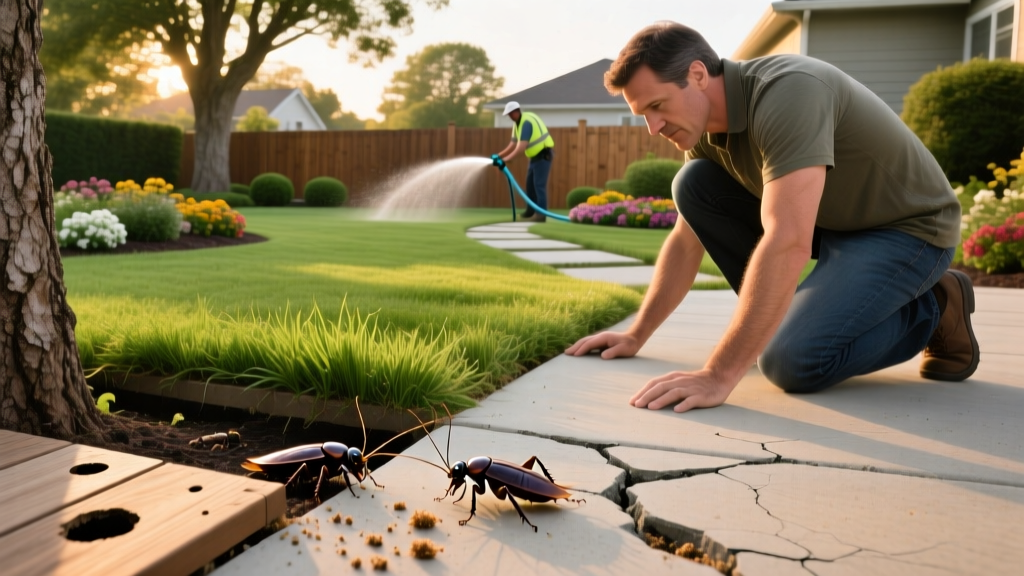
How to Get Rid of Wood Roaches: Yard & Perimeter Defense
Understanding the Wood Roach Threat in Your Yard
Wood roaches, primarily the Pennsylvania wood cockroach (Parcoblatta pennsylvanica), are a unique nuisance compared to their indoor-breeding cousins. Unlike German or American cockroaches that establish colonies inside your walls and pantry, wood roaches are outdoor insects that accidentally wander indoors. They breed in decaying organic matter, leaf litter, and woodpiles. According to Penn State Extension, male wood roaches are strong fliers and are notoriously attracted to exterior lighting, while females are wingless and tend to stay hidden under bark and logs.
Because they do not survive or reproduce indoors, the strategy for learning how to get rid of wood roaches relies entirely on exterior habitat modification, perimeter chemical defense, and physical exclusion. Treating the interior of your home with indoor foggers is a waste of money; the battle must be won in the yard.
Critical Distinction: Wood Roach vs. Indoor Cockroaches
If you find a roach in your living room, examine it closely. Wood roaches are typically chestnut-brown, measure 0.75 to 1.25 inches long, and have a pale, creamy-white stripe along the outer edge of their wings and thorax. If the roach is dark brown/black with two dark parallel stripes running down its head, you have a German cockroach, which requires a completely different indoor eradication protocol.
Sensory Defense: Modifying Exterior Lighting
One of the most overlooked, non-chemical methods for stopping wood roaches is altering your exterior light spectrum. Male wood roaches navigate and hunt using visual cues and are overwhelmingly attracted to the ultraviolet and blue light wavelengths emitted by standard cool-white LEDs (4000K to 5000K) and mercury vapor bulbs.
Actionable Fix: Replace all exterior porch, garage, and yard security bulbs with warm-yellow LEDs (2200K to 2700K) or specialized yellow bug lights. Better yet, switch to motion-activated fixtures so the lights remain off when not needed. This single adjustment, costing roughly $15 to $30 for a multi-pack of 2700K bulbs, can reduce male wood roach landings on your siding by up to 80% during the peak mating months of May and June.
Habitat Modification: Starving and Exposing the Colony
Wood roaches require high moisture and decaying cellulose to thrive. By altering your yard's micro-environment, you force the population to migrate or die off.
- Firewood Storage: Never stack firewood directly against your home's siding. Elevate logs at least 18 inches off the soil using a metal rack, and keep the pile at least 20 feet away from the foundation. Only bring in a 2-day supply of firewood to prevent hitchhikers.
- Mulch Management: Thick layers of organic mulch act as a luxury hotel for wood roaches. Limit cedar or hardwood mulch to a maximum depth of 2 inches. Rake it back to create a 6-inch bare-soil or gravel buffer zone between the mulch bed and your foundation.
- Gutter and Leaf Cleanup: Clogged gutters overflow, creating constantly damp soil at the foundation base. Clean gutters bi-annually and ensure downspout extenders discharge water at least 4 feet away from the house.
Targeted Chemical and Organic Perimeter Treatments
When habitat modification is not enough, targeted perimeter treatments create an invisible barrier. The EPA recommends using localized treatments rather than broad-spectrum broadcast sprays to protect beneficial yard insects and pollinators.
| Product Name | Type | Active Ingredient | Avg. Cost | Best Application Scenario |
|---|---|---|---|---|
| Alpine WSG | Non-Repellent Spray | Dinotefuran (40%) | $45 / box | Foundation perimeter spray; transfers through roach colonies. |
| Maxforce FC Select | Gel Bait | Fipronil (0.01%) | $32 / tube | Cracks, crevices, and weep holes where spraying is unsafe. |
| Essentria IC3 | Organic Spray | Rosemary & Peppermint Oil | $38 / pint | Organic gardens; safe near edible plants and water features. |
| Niban Granular Bait | Granular Bait | Orthoboric Acid (5%) | $25 / 4lb | Broadcasting under decks, sheds, and heavy leaf litter areas. |
Application Protocols for Maximum Efficacy
Alpine WSG (Dinotefuran): This is a non-repellent, meaning wood roaches cannot detect it and will walk directly through the treated zone, picking up a lethal dose and transferring it to others via grooming. Mix one 5-gram packet per 2 gallons of water. Using a pump sprayer, apply a continuous 3-foot wide band on the soil and a 2-foot high band up the foundation wall. One box treats roughly 2,000 linear feet. Reapply every 60 days during the active season.
Essentria IC3 (Organic): If you maintain a pollinator-friendly yard or have pets that roam the perimeter, Essentria IC3 is an FIFRA 25(b) exempt botanical insecticide. It kills on contact and leaves a strong residual repellent barrier. Mix 2 to 4 fluid ounces per gallon of water. Because it is botanical, UV degradation is faster; reapply every 3 to 4 weeks.
Physical Exclusion: Sealing the Perimeter
Even with a treated yard, physical barriers are your last line of defense. Wood roaches can flatten their bodies to squeeze through gaps as small as 1/16th of an inch.
- Weep Holes: Brick veneer homes feature weep holes (small gaps in the mortar) to allow moisture to escape. Do not seal these with caulk. Instead, insert copper mesh or 1/4-inch stainless steel hardware cloth strips into the holes. This blocks roaches while maintaining vital airflow.
- Door Sweeps and Thresholds: Install heavy-duty rubber or silicone door sweeps on all exterior doors. If you can see daylight under your garage door, install a bottom astragal seal.
- Utility Penetrations: Inspect where AC refrigerant lines, gas pipes, and cable wires enter the home. Seal these gaps using expanding polyurethane foam (like Great Stuff Pestblock, which contains a bittering agent to deter rodents that might otherwise chew the foam).
Expert Insight: According to University of Minnesota Extension, ensuring that window screens are intact and that attic soffit vents are fitted with fine wire mesh prevents flying male wood roaches from bypassing your ground-level chemical barriers entirely.
Your 4-Week Eradication Timeline
Follow this structured timeline to systematically collapse the wood roach population around your property.
- Week 1 (Habitat & Sensory): Rake mulch back 6 inches from the foundation. Elevate firewood. Swap all exterior 5000K bulbs for 2700K warm LEDs. Clean out gutter debris.
- Week 2 (Chemical Barrier): Mix and apply Alpine WSG to the foundation perimeter and soil band. Place 1/4-inch dabs of Maxforce FC Select gel bait inside garage corners and around basement window frames.
- Week 3 (Exclusion): Spend a Saturday morning caulking siding gaps, stuffing copper mesh into weep holes, and installing fresh door sweeps on all exterior entry points.
- Week 4 (Evaluation & Maintenance): Inspect the perimeter at night with a flashlight. If male roaches are still clustering on the siding, apply a secondary botanical spray (Essentria IC3) to the upper siding and eaves where the primary spray did not reach.
By combining sensory disruption, targeted non-repellent chemistry, and meticulous physical exclusion, you will effectively eliminate the wood roach threat without resorting to expensive and unnecessary professional exterminator contracts.

