
Pest Control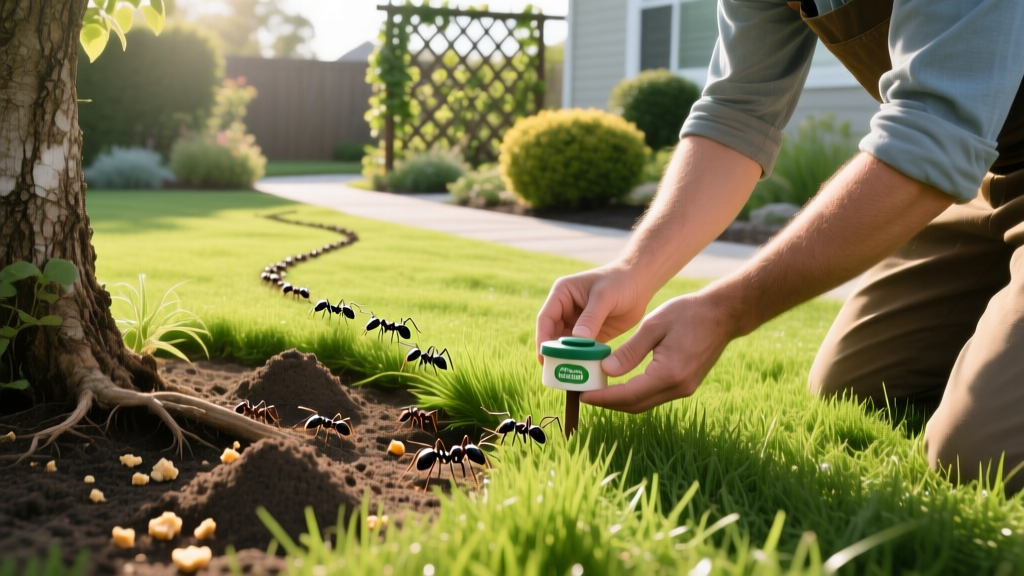
How to Get Rid of Ants in Yard Without Killing Your Grass
Most homeowners view yard ants as a mere nuisance, but unchecked colonies of Solenopsis invicta (Red Imported Fire Ants) or Tetramorium caespitum (Pavement Ants) actively destroy turfgrass root systems. Learning how to get rid of ants in yard environments requires moving beyond surface-level repellent sprays, which often trigger colony budding and exacerbate the infestation. This guide details the exact chemical and biological protocols used by turf management professionals to eradicate colonies while preserving lawn health.
The Hidden Cost of Ant Colonies in Turfgrass
Ants are not just a threat to your ankles; they are a direct threat to your lawn's structural integrity. Subterranean tunneling desiccates grassroots by creating air pockets in the soil profile, preventing roots from accessing moisture and nutrients. Furthermore, the physical soil mounds smother surrounding turf, blocking sunlight and halting photosynthesis.
Beyond physical damage, many ant species engage in mutualistic relationships with sap-sucking insects like aphids and mealybugs. The ants "farm" these pests on nearby ornamentals and weeds, protecting them from predators in exchange for honeydew. This honeydew secretion drips onto turf and hardscapes, fostering the growth of black sooty mold that further degrades your landscape's aesthetic and health.
Species Identification Matrix
Before selecting a treatment, you must identify the specific ant species invading your yard. Misidentification leads to wasted chemicals and failed eradication. Use the matrix below to diagnose your infestation:
| Ant Species | Mound / Nest Characteristics | Turf Threat Level | Recommended Active Ingredient |
|---|---|---|---|
| Red Imported Fire Ant | Fluffy, loose soil mounds; no central entry hole; aggressive when disturbed. | Severe | Indoxacarb (Bait) / Fipronil (Drench) |
| Pavement Ant | Small soil craters and ridges concentrated near driveways, sidewalks, and patios. | Moderate | Dinotefuran / Bifenthrin |
| Carpenter Ant | No soil mounds; nests in decaying wood, tree stumps, or landscape timbers. | Low (to turf) | Bifenthrin (Perimeter Barrier) |
| Argentine Ant | Shallow, diffuse nests in mulch or under debris; massive trailing lines. | Moderate | Thiamethoxam / Boric Acid (Bait) |
The Two-Step Chemical Eradication Protocol
The gold standard for managing severe yard ant infestitions, particularly fire ants, is the Two-Step Method developed and endorsed by the Texas A&M AgriLife Extension. This protocol combines broadcast baiting with targeted mound drenching to achieve 90%+ colony elimination without destroying your turf.
Step 1: Broadcast Baiting (Days 1-10)
Do not treat individual mounds immediately. Instead, apply a slow-acting insect growth regulator or metabolic bait across the entire lawn. The worker ants will carry the bait deep into the colony and feed it to the queen.
- Product Recommendation: Advion Fire Ant Bait (Active ingredient: Indoxacarb 0.04%).
- Cost: Approximately $28 to $32 per 1.5 lb tube.
- Application Rate: 1.5 lbs per acre (roughly 0.5 oz per 1,000 square feet). Use a handheld rotary spreader for even distribution.
- Timing & Conditions: Apply in the late afternoon or early evening when soil temperatures are between 70°F and 85°F, as this is when ants forage most aggressively. Ensure no rain is in the forecast for at least 48 hours, as moisture degrades the bait matrix.
Step 2: Targeted Mound Drenching (Days 11-14)
After 7 to 10 days, the broadcast bait will have severely weakened or eliminated the majority of the colonies. Now, target any remaining active mounds with a fast-acting liquid contact insecticide.
- Product Recommendation: Bifen IT (Active ingredient: Bifenthrin 7.9%) or Alpine WSG (Dinotefuran).
- Mixing Rate: Mix 1 oz of Bifen IT per gallon of water.
- Application: Slowly pour 1 to 2 gallons of the mixed solution directly over and around the base of the remaining active mounds. The goal is to saturate the subterranean galleries without causing surface runoff that could harm surrounding grass roots.
⚠ Warning: The "Budding" Mistake
Never use fast-acting, over-the-counter pyrethroid repellent sprays (like standard aerosol ant killers) directly on a fire ant mound. The immediate chemical stress causes the colony to panic and split into multiple satellite mounds—a process called "budding." This turns a single localized problem into five widespread infestations across your lawn.
Organic and Nematode-Based Biological Controls
For homeowners managing sensitive landscapes, pets, or organic-certified yards, synthetic chemicals may not be viable. According to the University of California Agriculture and Natural Resources (UC ANR) integrated pest management guidelines, biological controls offer a highly effective, non-toxic alternative.
Spinosad Baits
Spinosad is a natural substance derived from soil bacteria (Saccharopolyspora spinosa). Products like Ferti-lome Come and Get It utilize Spinosad to disrupt the ant's nervous system. Apply at a rate of 2 to 4 lbs per acre. While slightly slower-acting than Indoxacarb, it is OMRI-listed and safe for use around vegetable gardens and foraging pollinators once the granules have settled.
Beneficial Nematodes (Steinernema carpocapsae)
Microscopic parasitic worms offer a fascinating biological warfare tactic against subterranean ants. Steinernema carpocapsae actively seeks out ant larvae and pupae in the soil, entering their bodies and releasing bacteria that kill the host within 48 hours.
- Application Rate: 1 million nematodes per 1,000 square feet of lawn.
- Cost: $35 to $45 per million nematodes (requires refrigeration upon delivery).
- Execution: Mix the nematode sponge or powder into a hose-end sprayer or watering can. Critical: Apply only at dusk or on heavily overcast days. UV radiation from direct sunlight will kill the nematodes within minutes. The soil must be pre-watered and kept moist for 7 days post-application to ensure the nematodes can swim through the soil profile to reach the ant brood.
Post-Treatment Lawn Recovery and Soil Remediation
Eradicating the ants is only half the battle; the physical damage left behind requires immediate turf management to prevent weed invasion.
- Mound Flattening: Once a mound is confirmed dead (no activity for 48 hours after drenching), use a steel garden rake to aggressively break apart the hardened soil dome. Leaving dead mounds intact will smother the underlying grass and dull your mower blades.
- Topdressing: The tunneling process leaves voids in the soil. Topdress the raked areas with a 1/4-inch layer of screened compost or a 70/30 sand-to-peat moss mix. This levels the turf canopy and introduces organic matter to stimulate root recovery.
- Overseeding: For cool-season lawns (Tall Fescue, Kentucky Bluegrass), overseed the bare spots at a rate of 3 to 5 lbs per 1,000 square feet. For warm-season lawns (Bermuda, Zoysia), rely on the topdressing and a high-nitrogen fertilizer (e.g., 24-0-6) to encourage lateral stolon spread from the surrounding healthy turf.
When handling any broadcast baits or liquid concentrates, always adhere to the safety guidelines established by the Environmental Protection Agency (EPA), wearing appropriate PPE such as nitrile gloves and long sleeves to minimize dermal exposure. By combining precise species identification with the two-step protocol or targeted biological controls, you can reclaim your yard from ant colonies while maintaining a dense, vibrant turfgrass canopy.

