
Pest Control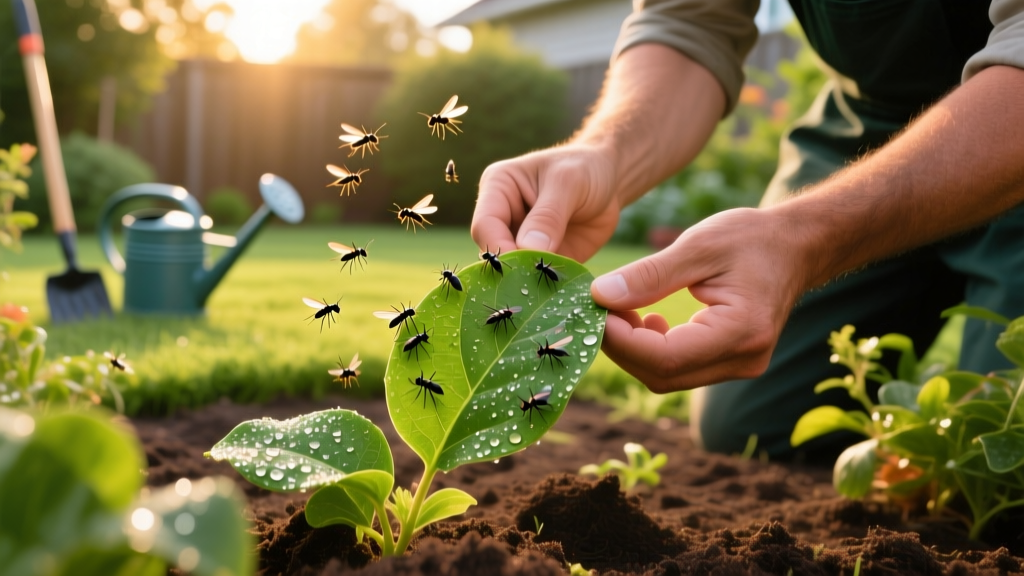
How to Eliminate Gnat Fly Swarms in Your Yard and Garden
The 'Gnat Fly' Identity Crisis: What Is Actually Swarming?
Homeowners frequently use the colloquial term 'gnat fly' to describe the tiny, swarming insects that plague patios, garden beds, and turfgrass. However, from an entomological perspective, there is no single insect called a gnat fly. When you see a swarm hovering over your damp mulch or biting your ankles near the lawn, you are likely dealing with one of three distinct pests. Correctly identifying the culprit is the mandatory first step in any effective yard defense strategy.
| Pest Type | Scientific Name | Habitat & Trigger | Bite Risk |
|---|---|---|---|
| Fungus Gnats | Bradysia spp. | Damp garden beds, potted plants, decaying organic matter, overwatered turf. | None (Nuisance only) |
| Biting Midges | Ceratopogonidae | Moist soil, marshy lawn edges, thatch buildup. Often called 'no-see-ums'. | High (Painful, itchy welts) |
| Fruit Flies | Drosophilidae | Outdoor compost bins, fallen rotting fruit, uncovered patio trash cans. | None (Nuisance only) |
If your 'gnat fly' problem involves itchy bites on your lower legs while mowing the lawn, you are fighting biting midges. If the swarm is hovering harmlessly but annoyingly over your tomato plants and raised beds, you have a fungus gnat infestation. According to Penn State Extension, fungus gnats are primarily a symptom of excess soil moisture and rich, undecomposed organic matter, making cultural yard management just as important as chemical treatment.
Why Your Yard is a Breeding Ground
All three of these pests share a common requirement for reproduction: excess moisture and decaying organics. Fungus gnat larvae feed on fungi and algae in the top 2 inches of soil. Biting midges lay eggs in the damp, shaded thatch layer of turfgrass or in muddy depressions. Fruit flies are drawn to the acetic acid produced by fermenting plant matter in compost piles.
Expert Insight: Many homeowners inadvertently breed fungus gnats by using raw, uncomposted wood chips or fresh manure as mulch. As these materials break down, they cultivate the exact fungi that gnat larvae feed on. Always use aged, hot-composted mulch in garden beds to starve the larval food source.
The 3-Step Yard Defense Protocol
Eliminating a gnat fly swarm requires attacking both the adult flying stage and the soil-dwelling larval stage. Relying solely on bug zappers or aerosol sprays will only provide 24 hours of relief before the next generation hatches.
Step 1: Cultural Moisture Management
Fungus gnats and midges cannot survive in dry soil. Adjust your irrigation system to deliver deep, infrequent watering rather than daily shallow sprinkles. Allow the top 1.5 to 2 inches of your garden beds and lawn to dry out completely between waterings. For lawn thatch, use a core aerator and dethatching rake to remove the damp, matted layer of dead grass where midges breed. If you have an outdoor compost bin, ensure it reaches internal temperatures of at least 135°F to kill fly eggs, and always cap fresh kitchen scraps with a 2-inch layer of dry 'brown' material like shredded leaves.
Step 2: Biological Larvicides (The Bti Tea Method)
The gold standard for gnat fly larval control is Bacillus thuringiensis subspecies israelensis (Bti). Bti is a naturally occurring soil bacterium that produces proteins toxic only to the digestive systems of gnat, midge, and mosquito larvae. It is completely safe for earthworms, pets, and humans, as noted by the University of Minnesota Extension.
The Pro Application Method: While Bti is often sold in solid 'dunk' form for standing water, garden beds require a liquid drench.
- Fill a 5-gallon bucket with water.
- Add 4 tablespoons of granular Bti (such as Summit Mosquito Bits, retailing around $22 for a 30oz jug in 2026).
- Let it steep for 24 hours to create a concentrated 'Bti Tea'.
- Strain the liquid and use it to water your garden beds and potted plants. This delivers the bacteria directly to the root zone where larvae feed.
Step 3: Beneficial Nematode Deployment
For severe infestations, introduce Steinernema feltiae nematodes. These microscopic worms actively hunt down gnat and midge pupae in the soil. Products like Arbico Organics NemaGlobe (approx. $35 for 10 million nematodes) offer excellent coverage. Critical Failure Mode to Avoid: Nematodes are living organisms sensitive to UV light and desiccation. You must apply them at dusk or on a heavily overcast day, and the soil must be pre-moistened and kept damp for 7 days post-application. Applying them at noon on a sunny day will result in 100% mortality and wasted money.
Adult Population Knockdown Matrix
While biologicals handle the larvae, you must reduce the adult flying population to stop immediate egg-laying. Below is a comparison of adult-control strategies for outdoor spaces.
| Method | Active Ingredient / Mechanism | Best Use Case | Estimated Cost |
|---|---|---|---|
| Spinosad Sprays | Spinosad (e.g., Monterey Garden Insect Spray) | Foliage and soil surface drench; targets adults and larvae. | $18 - $25 / pint |
| Yellow Sticky Traps | Adhesive + Yellow Visual Lure | Monitoring and trapping adult fungus gnats in dense garden beds. | $12 / 20-pack |
| Outdoor Air Curtains | High-velocity directional fans | Patio defense against weak-flying midges and fruit flies. | $45 - $90 / fan |
| Botanical Pyrethrins | Pyrethrin (e.g., PyGanic) | Quick knockdown of heavy adult swarms before outdoor events. | $30 / 8oz |
Warning on Broad-Spectrum Chemicals: Avoid using synthetic pyrethroids (like bifenthrin or permethrin) as a broadcast spray for gnat flies. These chemicals will obliterate your soil's natural predatory mite and rove beetle populations, which are essential for keeping gnat and midge larvae in check naturally. Once the chemical degrades, the gnat fly swarm will return worse than before due to the lack of natural predators.
Common Mistakes That Prolong the Swarm
- Over-relying on Bug Zappers: UV light zappers are highly ineffective against fungus gnats and midges, as these insects are not strongly phototactic (attracted to light). You will likely kill more beneficial night-flying moths and beetles than pests.
- Ignoring the Compost Bin: A single uncovered compost bin can produce tens of thousands of fruit flies and gnats daily. Always use a tight-fitting lid and maintain a strict carbon-to-nitrogen ratio.
- Watering in the Evening: Watering your lawn or garden beds at night leaves the soil surface damp for 12+ hours, creating the perfect humid microclimate for midge and gnat egg survival. Always irrigate in the early morning.
By combining precise moisture management, targeted Bti soil drenches, and strategic nematode applications, you can break the reproductive cycle of the gnat fly and reclaim your yard without resorting to toxic, broad-spectrum pesticides.

