
Pest Control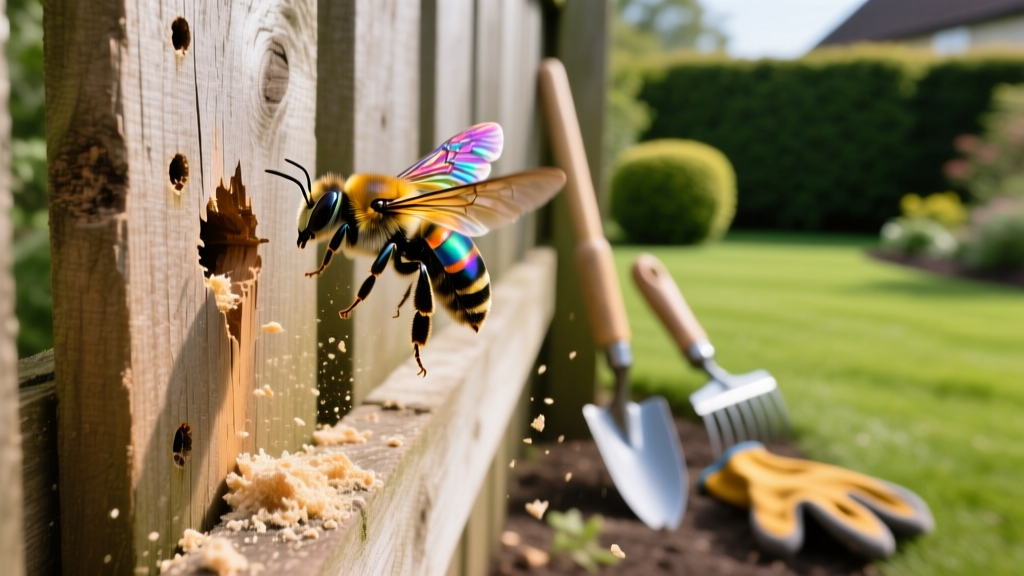
Eliminating Carpenter Bees: Proven Wood Protection Tactics
Structural wood damage from Xylocopa species—primarily the Eastern carpenter bee (Xylocopa virginica)—compromises eaves, fascia boards, deck railings, and pergolas. Unlike termites, carpenter bees do not consume wood; they excavate it to create brood galleries. Over successive seasons, repeated tunneling by multiple generations weakens load-bearing timbers and invites secondary moisture rot and woodpecker damage. Eliminating carpenter bees requires a targeted, multi-phase approach that addresses active galleries, prevents satellite nesting, and fortifies the wood surface against future colonization.
Identifying the Threat: Carpenter Bees vs. Lookalikes
Before initiating any chemical treatment, accurate identification prevents the unnecessary eradication of beneficial pollinators like bumblebees. Carpenter bees are large (1 to 1.5 inches), robust, and predominantly black with yellow fuzz on their thorax. The most critical visual indicator of their presence is the excavation site.
| Feature | Carpenter Bees | Bumblebees | Wood-Boring Beetles |
|---|---|---|---|
| Nest Location | Exposed, unpainted softwoods | Underground burrows, abandoned rodent holes | Hardwoods, structural framing, firewood |
| Entrance Hole | Perfectly round, exactly 1/2-inch diameter | No distinct wooden entrance holes | Irregular, pin-sized shot-holes (1/16 to 1/8 inch) |
| Frass (Sawdust) | Coarse, fresh wood shavings directly below hole | None | Fine, powdery dust (frass) near exit holes |
| Wood Preference | Cedar, cypress, pine, redwood (unpainted) | N/A (soil nesters) | Oak, ash, hickory, bamboo |
Behavioral Reality Check: Male carpenter bees are highly territorial and will aggressively hover near your face when you approach their nesting site. However, males lack stingers and are physically incapable of harming you. Only the females possess stingers, and they are generally docile unless physically handled or trapped. Do not waste pesticide on hovering males.
The 3-Phase Elimination Protocol
Successfully eliminating carpenter bees requires sequencing your interventions. Spraying a surface repellent while active galleries remain open will only force the bees to dig deeper or relocate a few inches down the board.
Phase 1: Active Gallery Treatment (Dusting)
Liquid sprays absorb quickly into raw wood and lose efficacy within days. Insecticidal dusts are the gold standard for gallery treatment because they adhere to the bee's exoskeleton and are tracked deep into the blind-ended tunnels, reaching the brood cells.
- Select the Right Dust: Tempo Dust (1% deltamethrin) is highly effective and costs approximately $12 to $15 for a 10oz shaker. For severe, multi-year infestations, Drione Dust (silica gel + pyrethrin, ~$45 per lb) provides superior desiccation and knockdown.
- Use a Bellow Duster: Do not just squeeze the bottle at the hole. Purchase a JT Eaton or Pest Pistol hand bellow duster ($18–$25). Fill it no more than 1/3 full. Insert the metal wand directly into the 1/2-inch entrance hole and puff 2 to 3 small clouds of dust deep into the gallery.
- Leave the Hole Open: This is the most common failure point. The hole must remain open for 48 to 72 hours to allow foraging females to enter, contact the dust, and spread it to the larvae and nest mates.
Phase 2: Plugging and Sealing the Gallery
After the 72-hour exposure window, the gallery must be physically sealed to prevent overwintering pests, moisture intrusion, and future bees from reusing the existing tunnel.
- Wooden Dowels or Corks: Cut a 1/2-inch wooden dowel to a 2-inch length, coat it in exterior-grade wood glue, and tap it into the hole with a mallet. Alternatively, use 1/2-inch craft corks.
- Exterior Caulk: For irregular or weathered holes, use a paintable, high-elastomeric polyurethane sealant (e.g., Loctite PL S40, ~$7 per tube). Avoid standard acrylic latex caulk, which shrinks and cracks in exterior UV conditions, reopening the gallery.
- Wood Putty: Apply an exterior-rated, two-part wood epoxy filler over the plug, sand it flush once cured, and prime immediately.
Satellite Nest Warning: According to entomologists at the University of Kentucky, carpenter bees frequently create secondary "satellite" galleries branching off the main tunnel. If you plug a hole before dusting, or if you use a liquid spray that only kills the guard bee at the entrance, the surviving bees will simply chew through the softwood and create a new exit hole a few inches away.
Phase 3: Preventative Wood Fortification
Carpenter bees strongly prefer untreated, weathered softwoods. North Carolina State Extension notes that paint is a vastly superior deterrent compared to stain. The physical thickness and chemical composition of a solid paint film create an impenetrable barrier that bees will not attempt to chew through.
- Primer: Apply an oil-based alkyd exterior primer. Alkyd resins penetrate deeper into the wood grain and create a harder, less palatable surface than water-based primers.
- Topcoat: Follow with two coats of 100% acrylic latex exterior paint. The flexibility of acrylic prevents cracking, maintaining the physical barrier.
- The Stain Myth: Semi-transparent and even solid-body exterior stains do not deter carpenter bees. The wood texture remains too accessible, and the chemical deterrent value of the stain pigments is negligible to a nesting female.
Product Comparison Matrix: Dusts, Sprays, and Traps
Choosing the right chemical intervention depends on the severity of the infestation and the accessibility of the nesting sites. Below is a breakdown of professional-grade and consumer-accessible products for 2026.
| Product Type | Brand / Model | Active Ingredient | Approx. Cost | Best Use Case | Residual Life |
|---|---|---|---|---|---|
| Insecticidal Dust | Tempo Dust 1% | Deltamethrin | $14 (10 oz) | Active galleries, deep tunnel penetration | Up to 8 months (if kept dry) |
| Insecticidal Dust | Drione Dust | Silica Gel + Pyrethrin | $45 (1 lb) | Severe infestations, high moisture areas | Indefinite (if kept dry) |
| Microencapsulated Spray | Cyzmic CS | Lambda-cyhalothrin | $28 (8 oz) | Perimeter fascia treatment, early spring barrier | 60-90 days |
| Aerosol Foaming | Spectracide Wasp & Hornet | Prallethrin + Lambda-cyhalothrin | $7 (20 oz) | Emergency knockdown of visible, hovering bees | None (contact kill only) |
| Wooden Trap | Macabee Carpenter Bee Trap | N/A (Mechanical) | $25 (Single unit) | Reducing local populations without chemicals | N/A (Requires weekly emptying) |
Common Failure Modes and Edge Cases
Even experienced homeowners make critical errors when attempting to eliminate carpenter bees. Avoid these specific failure modes:
1. Treating in the Middle of Summer
The primary nesting and excavation season occurs in early spring (April to May, depending on your USDA hardiness zone). By July, the original excavating females have died, and the new brood is developing inside sealed cells. Treating in mid-summer yields poor results because foraging traffic is minimal. Target your dust applications in early spring when you see fresh sawdust and active hovering.
2. Ignoring the Underside of Structures
Carpenter bees prefer to drill upward or horizontally to prevent rainwater from flooding their brood cells. Consequently, the vast majority of entrance holes are located on the underside of eaves, deck joists, and pergola crossbeams. Inspecting only the vertical faces of your wood structures will cause you to miss 80% of the active galleries.
3. Using WD-40 or Citrus Oil as a Repellent
While internet forums frequently recommend spraying WD-40, almond oil, or citrus extracts into holes, these are temporary irritants, not residual insecticides. They evaporate within 48 hours and leave no active chemical barrier to prevent re-infestation the following spring. Rely on pyrethroid-based dusts for proven, long-term elimination.
Ecological Considerations and Relocation
Carpenter bees are vital native pollinators, particularly for open-faced flowers and certain vegetable crops like tomatoes and eggplants (they perform "buzz pollination"). If the bees are nesting in an isolated stump, a detached fence post, or an area far from your primary living spaces, consider tolerating them. The structural damage to a non-load-bearing 4x4 fence post is rarely catastrophic.
If you must eliminate them from your home's fascia but wish to preserve the local population, install wooden carpenter bee traps (which mimic pre-drilled galleries and funnel bees into a collection jar) in early April. Relocate the captured bees to a wooded area at least a half-mile away from your property, releasing them near untreated deadwood or brush piles where they can establish new colonies without threatening your home's architecture.

