
Pest Control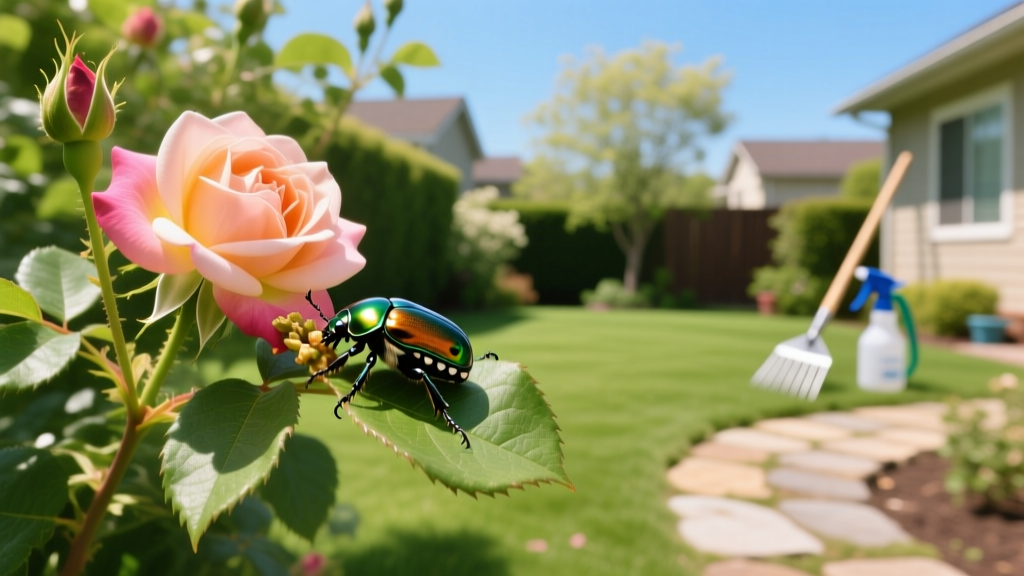
Eliminating Japanese Beetles: A Complete Yard Defense Guide
The Dual Threat: Understanding Popillia japonica
Eliminating Japanese beetles requires a two-front war. Unlike many yard pests that attack in a single life stage, Popillia japonica destroys landscapes both below and above ground. The larval stage (grubs) devours turfgrass roots from late summer through early spring, causing localized dead patches that peel back like loose carpet. By mid-June, the adult beetles emerge to skeletonize the foliage of over 300 plant species, favoring roses, linden trees, and grapes.
Effective yard defense hinges on disrupting their lifecycle at the most vulnerable points. Relying solely on adult sprays during peak summer emergence is a reactive, losing battle. A proactive strategy integrates biological controls for the grub stage and targeted, pollinator-safe interventions for the adults.
Biological Warfare: Milky Spore vs. Beneficial Nematodes
Biological controls offer long-term suppression without harming earthworms, pets, or beneficial pollinators. However, homeowners frequently misapply these products, leading to treatment failure. Understanding the specific environmental requirements of each organism is critical for success.
| Feature | Milky Spore (Paenibacillus popilliae) | Hb Nematodes (Heterorhabditis bacteriophora) |
|---|---|---|
| Target Stage | Grubs (specifically Japanese beetle larvae) | Grubs (broad spectrum, including JB and chafers) |
| Time to Efficacy | 2 to 4 years for full soil colonization | Immediate (kills grubs within 48-72 hours) |
| Application Window | Early fall or early spring | Mid-August to late September |
| Soil Requirements | Soil temp above 60°F; requires active grubs to multiply | Moist soil; UV sensitive (apply at dusk) |
| Approximate Cost | $55 - $75 per 10 oz (treats 2,500 sq ft) | $35 - $50 per 10 million (treats ~2,000 sq ft) |
The Milky Spore Misconception
Milky spore disease is a bacterium that targets only Japanese beetle grubs. When a grub ingests the spores, the bacteria multiply, eventually killing the host and releasing billions of new spores into the soil. The primary failure mode for homeowners is expecting overnight results. According to Penn State Extension, milky spore requires a high initial grub population to sustain the bacterial bloom. If your lawn currently has a low grub count, the spores will simply degrade before establishing a self-sustaining colony. Furthermore, milky spore does nothing to stop adult beetles flying in from neighboring properties.
Deploying Hb Nematodes Correctly
For immediate biological grub control, Heterorhabditis bacteriophora (Hb) nematodes are vastly superior to milky spore in the short term. These microscopic worms actively seek out grubs, penetrate their bodies, and release symbiotic bacteria that kill the host.
Application Protocol:
- Timing: Apply in late August when grubs are small (1st and 2nd instar) and close to the soil surface.
- Preparation: Water the lawn deeply 24 hours before application. Nematodes require a moist film to travel through soil pores.
- Mixing: Use a hose-end sprayer designed for nematodes. Never use hot water, which will kill the organisms.
- Post-Application: Water the lawn immediately after spraying to wash nematodes off grass blades and into the thatch layer. Keep the soil moist for the next 7 days.
Chemical Interventions: Preventative and Curative Options
When biological controls are insufficient or a severe infestation threatens high-value landscaping, synthetic and reduced-risk chemical interventions become necessary. The industry has shifted away from broad-spectrum organophosphates toward targeted anthranilic diamides and neonicotinoids.
Preventative Grub Control: Chlorantraniliprole (Acelepryn)
Chlorantraniliprole, commonly sold under the brand name Acelepryn, is the gold standard for preventative grub control. Unlike older chemicals like imidacloprid, Acelepryn has an excellent safety profile for bees and earthworms. It works by disrupting the muscle function of target insects.
Cost and Application: A 16 oz bottle of Acelepryn liquid concentrate costs between $90 and $120, but it treats up to 10,000 square feet, making the cost per 1,000 sq ft roughly $10. Apply between mid-April and early June. The chemical binds to the thatch layer and remains active in the soil profile for months, killing grubs as they hatch in late summer.
Adult Beetle Management: Systemics vs. Contact Sprays
If adult beetles are already defoliating your trees and shrubs, grub treatments will not help. You must address the adults directly.
- Systemic Insecticides (Dinotefuran): Products containing dinotefuran (e.g., Safari) can be applied as a basal bark spray or soil drench to high-value trees like lindens and birches in early May. The tree absorbs the chemical, poisoning beetles that chew on the leaves. Note: Do not use systemics on flowering plants or linden trees while they are actively blooming, as the chemical can translocate to nectar and harm foraging bees.
- Contact Sprays (Bifenthrin / Carbaryl): For immediate knockdown on roses and ornamentals, pyrethroids like bifenthrin (Talstar) or carbaryl (Sevin) are effective. However, these are highly toxic to pollinators. Spray only in the late evening when bees have returned to their hives, and avoid spraying open blossoms entirely.
Warning: The Pheromone Trap Mistake
Commercial Japanese beetle traps use a combination of floral lures and sex pheromones. While they catch thousands of beetles, University of Minnesota Extension research confirms these traps attract significantly more beetles into your yard than they actually catch. If you must use traps, place them at the extreme downwind edge of your property, at least 50 feet away from your most prized roses and grapevines. Never place a trap directly in your garden beds.
Cultural Defense: Plant Selection and Deterrence
Eliminating Japanese beetles entirely from a region is impossible; they are an established invasive species. The most sustainable long-term strategy involves altering your landscape to make it less appetizing. Adult beetles rely heavily on visual and olfactory cues to find hosts, and they show distinct preferences.
Highly Susceptible Plants (Avoid or Protect)
If you live in an area with heavy JB pressure, planting these species guarantees annual summer defoliation:
- Roses (especially hybrid teas)
- Japanese Maples (Acer palmatum)
- Linden Trees (Tilia species)
- Grapes and Raspberries
- Evening Primrose
Resistant Alternatives
Beetles actively avoid plants with rough, hairy, or heavily textured leaves, as well as those containing specific alkaloids or tannins. Swap susceptible plants for these resistant alternatives:
- Instead of Hybrid Tea Roses: Plant Rugosa roses. Their thick, leathery, textured leaves are highly unpalatable to Japanese beetles.
- Instead of Linden Trees: Plant Oak trees (Quercus), Honeylocust, or Ginkgo biloba, which rarely suffer JB damage.
- Instead of Grapes: Cultivate native muscadines or focus on fruit bushes like blueberries, which experience minimal beetle feeding.
Hand-Picking: The Micro-Yard Protocol
For small urban gardens or isolated ornamental beds, physical removal remains a highly effective, zero-cost intervention. Japanese beetles are sluggish in the early morning when temperatures are below 70°F.
Fill a wide-mouthed container with water and a few drops of dish soap. Hold the container beneath the infested leaf and tap the foliage. The beetles will drop into the soapy water and drown before they can deploy their escape-flight reflexes. Doing this daily from mid-June through mid-July disrupts the aggregation pheromone cycle, significantly reducing the localized population over the summer.
Frequently Asked Questions
Will watering my lawn heavily drown the grubs?
No. Japanese beetle grubs are highly adapted to soil moisture and can survive in waterlogged soil for extended periods. In fact, irrigating your lawn heavily during the late summer egg-laying period creates the ideal moist environment for egg survival. Allow your lawn to go slightly dormant (dry) in late July and August if local water restrictions permit, as dry soil desiccates the newly laid eggs.
Do milky spore and chemical grub killers cancel each other out?
Applying a fast-acting chemical curative like trichlorfon (Dylox) will kill the grubs that the milky spore needs to reproduce and spread. If you are trying to establish a milky spore colony, avoid using broad-spectrum chemical grub killers in those specific treatment zones. Acelepryn, however, is generally considered compatible with biological controls because of its low impact on non-target soil organisms, though it will still kill the target grubs before the spores can infect them.
Why are my geraniums covered in dead beetles?
Zonal geraniums (Pelargonium zonale) contain quisqualic acid, an amino acid that acts as a natural neurotoxin to Japanese beetles. The beetles are attracted to the flowers, but upon ingestion, they become paralyzed and often fall off the plant or die shortly after. Planting geraniums around the perimeter of your garden can serve as a mild biological trap crop, though it will not eliminate a severe regional infestation.

