
Pest Control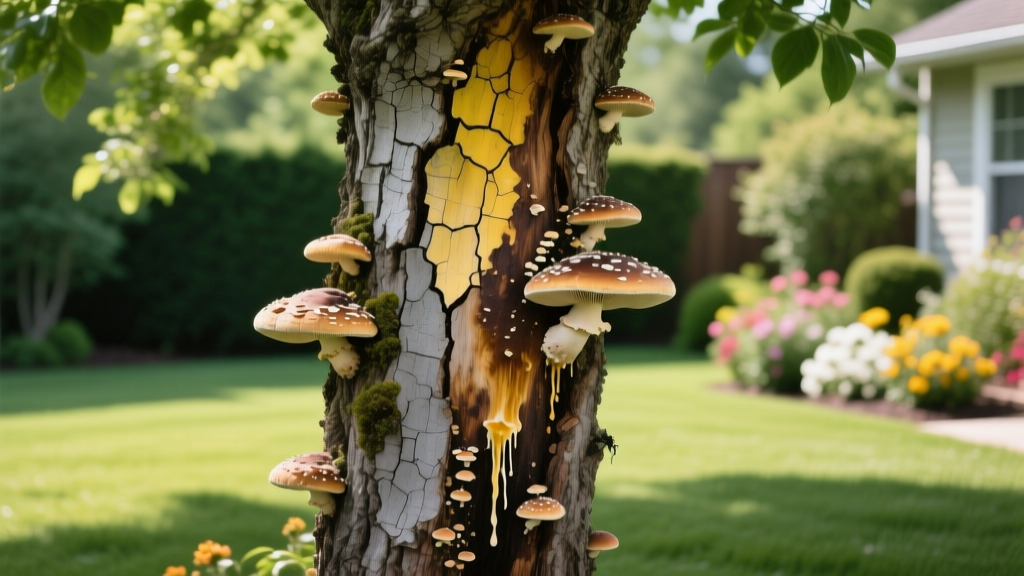
Emergency Tree Fungus Treatment: Symptom Diagnosis & Rescue Fixes
The Diagnostic Matrix: Match Symptoms to the Pathogen
Fungal pathogens exploit stressed trees, spreading rapidly through vascular tissue or leaf stomata. Delayed identification turns a manageable leaf spot into a fatal vascular wilt. Before purchasing any chemical, match your tree's visible symptoms to the correct pathogen class. Misapplying a contact fungicide to a systemic root rot will waste money and accelerate canopy decline.
| Visible Symptom | Likely Pathogen | Rescue Action Required |
|---|---|---|
| Tar-like brown/black spots on leaves; premature defoliation | Anthracnose (e.g., Apiognomonia) | Foliar Propiconazole spray at bud break |
| White, powdery coating on new shoots and leaf undersides | Powdery Mildew (Erysiphe) | Horticultural oil or Myclobutanil foliar spray |
| Mushroom conks at trunk base; sudden canopy thinning | Armillaria Root Rot | Phosphite trunk injection; aerate soil (often fatal) |
| Oozing dark fluid from bark fissures; branch dieback | Hypoxylon Canker / Cytospora | Prune 12 inches below canker; no chemical cure |
| Dark streaks under bark; wilting leaves on one side | Verticillium Wilt | Deep root fertilization; Propiconazole soil drench |
According to the University of Minnesota Extension, environmental stressors like drought and soil compaction are the primary catalysts for these opportunistic fungi. Chemical treatments must be paired with physical stress reduction to succeed.
Rescue Protocols: Foliar vs. Systemic vs. Soil Drench
Emergency tree fungus treatment requires selecting the correct delivery mechanism. Fungi residing on leaf surfaces require contact sprays, while vascular and root pathogens demand systemic movement through the xylem.
Foliar Sprays (Contact & Penetrant Fungicides)
Foliar applications protect emerging tissue but do not cure already infected branches. Use a pump sprayer calibrated to 40 PSI to ensure uniform droplet size (200-400 microns). Coverage must be thorough, targeting the leaf undersides where stomata are concentrated. Apply during early morning when winds are below 5 mph to prevent drift and ensure the spray dries before evening dew sets in.
Systemic Trunk & Soil Treatments
For vascular wilts and root rots, the fungicide must enter the tree's transpiration stream. Soil drenches rely on active root uptake, which is compromised if the tree is already suffering from severe root rot. In acute emergencies, professional trunk injections (using systems like Arborjet) bypass the soil entirely, delivering the active ingredient directly into the xylem within 48 hours.
⚠️ Phytotoxicity Warning: Copper Fungicides
Products containing Copper Hydroxide (e.g., Kocide 3000) are highly effective for dormant-season Anthracnose control. However, applying copper sprays when ambient temperatures exceed 85°F, or when mixed with acidic adjuvants (pH below 6.0), will cause severe copper burn, defoliating the tree and compounding stress. Always test copper sprays on a single branch 48 hours before full canopy application.
Products containing Copper Hydroxide (e.g., Kocide 3000) are highly effective for dormant-season Anthracnose control. However, applying copper sprays when ambient temperatures exceed 85°F, or when mixed with acidic adjuvants (pH below 6.0), will cause severe copper burn, defoliating the tree and compounding stress. Always test copper sprays on a single branch 48 hours before full canopy application.
2026 Product & Chemical Comparison Matrix
Selecting the right active ingredient dictates the success of your rescue operation. Below is a comparison of the most effective commercial and professional-grade fungicides available for homeowner and arborist use.
| Active Ingredient | Product Example | Avg. Cost | Best Target Pathogens | Application Method |
|---|---|---|---|---|
| Propiconazole 14.3% | Bonide INFUSE / Banner MAXX | $28 / quart | Anthracnose, Rust, Leaf Spot | Foliar spray or Soil drench |
| Potassium Phosphite 45.8% | Monterey Agri-Fos | $45 / gallon | Phytophthora, Armillaria, Downy Mildew | Foliar, Soil drench, Trunk inject |
| Copper Hydroxide 46.1% | Kocide 3000 | $35 / 2 lb bag | Fire Blight, Anthracnose (dormant) | Foliar spray (dormant only) |
| Myclobutanil 1.5% | Spectracide Immunox | $16 / 16 oz | Powdery Mildew, Apple Scab | Foliar spray |
Note: Phosphites do not kill fungi directly; they stimulate the tree's natural phytoalexin defense response while inhibiting sporulation. They are the only viable chemical rescue for advanced Phytophthora root rot, as noted by Penn State Extension pathology guidelines.
Step-by-Step Emergency Soil Drench Application
When a tree exhibits early signs of vascular wilt or root-zone fungal pressure, a Propiconazole or Phosphite soil drench provides systemic protection. Follow these exact parameters to ensure the chemical reaches the root zone without leaching past the drip line.
- Calculate Trunk DBH (Diameter at Breast Height): Measure the trunk circumference at 4.5 feet above the ground. Divide by 3.14 to get the diameter. A tree with a 31-inch circumference has a 10-inch DBH.
- Determine Water Volume: You need 10 gallons of water per inch of DBH to carry the chemical into the active root zone. A 10-inch DBH tree requires 100 gallons of mixed solution.
- Mix the Fungicide: For Propiconazole 14.3%, use 1.5 to 2.0 fluid ounces per inch of DBH. For a 10-inch tree, mix 15-20 fl oz of chemical into your 100 gallons of water.
- Prepare the Soil: If the soil is hydrophobic (dry and cracked), pre-water the drip line with 50 gallons of plain water 24 hours prior. Fungicides will not penetrate compacted, dry clay.
- Apply the Drench: Distribute the mixed solution evenly in a circular band starting 2 feet from the trunk and extending 2 feet past the outermost drip line. Use a soaker hose or a slow-flow wand to prevent runoff.
- Mulch Post-Application: Apply a 2-inch layer of arborist wood chips over the drench zone to retain moisture and encourage mycorrhizal fungi, which compete with pathogenic fungi.
When to Abandon Chemical Rescue and Call an Arborist
Chemical interventions have strict biological limits. You must transition from DIY treatment to professional assessment—or removal—under the following conditions:
- Girdling Cankers: If a fungal canker (like Cytospora) wraps more than 50% of the trunk's circumference, the phloem is destroyed. No fungicide can bypass this physical blockage; the tree will starve.
- Advanced Armillaria: If you can easily peel the bark at the root collar and see white, fan-shaped mycelial mats, the structural root system is compromised. The tree is a fall hazard and requires professional removal.
- Cost-Benefit Threshold: Professional trunk injections (the most effective rescue for severe vascular infections) cost between $15 and $25 per inch of DBH. For a 20-inch oak, expect to pay $300-$500 per treatment. If the tree's replacement cost is lower than three years of cumulative injection therapy, removal is the economically sound choice.
Frequently Asked Questions
Can you save a tree that already has severe root rot?
Saving a tree with severe root rot is rarely possible. Once the structural anchor roots decay, the tree becomes a liability. However, if the rot is localized to feeder roots and caught early, aggressive soil aeration (using an AirSpade), improving drainage, and applying Potassium Phosphite can halt progression and allow new root flushes to develop over 12 to 18 months.
How often should I apply fungicide to a susceptible tree?
For chronic issues like Anthracnose on Sycamores or Dogwood, apply a foliar Propiconazole spray at bud break, followed by a second application 14 days later as leaves expand. For soil drenches, a single annual application in early spring (before canopy emergence) provides 6 to 8 months of systemic protection. Over-applying soil drenches can lead to chemical accumulation and root phytotoxicity.
Does pruning infected branches stop the spread of tree fungus?
Pruning is highly effective for localized tip blights and cankers, but useless for systemic vascular wilts. When pruning fungal cankers, sterilize your pruning saw with 70% isopropyl alcohol between every single cut. Cut at least 12 inches below the visible margin of the infection into healthy, unstreaked wood. Dispose of infected wood by burning or landfill disposal; never chip it for mulch.

