
Pest Control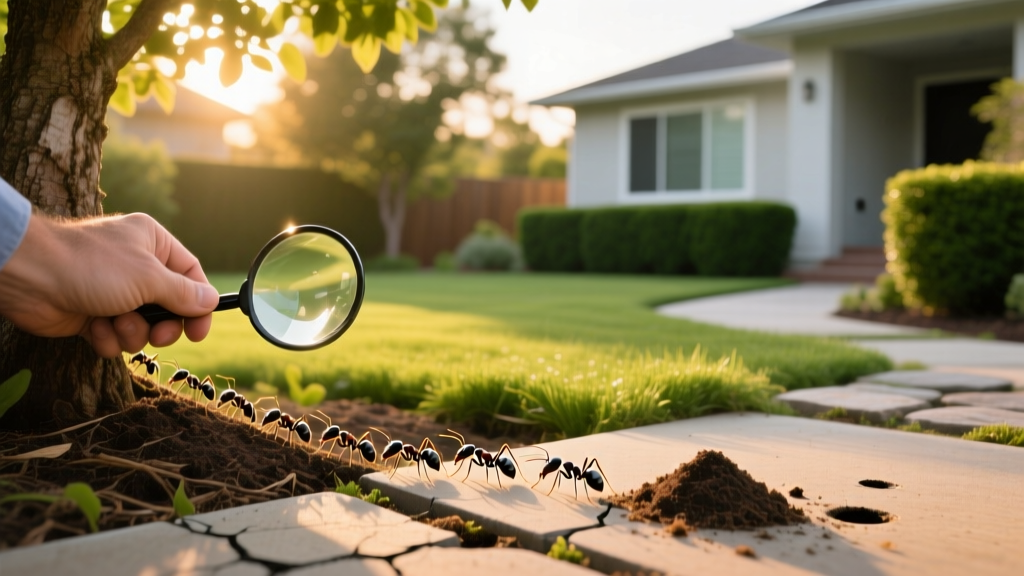
How to Eradicate Ants From Home: Yard & Perimeter Defense Guide
Most homeowners fail at ant control because they treat the symptom rather than the disease. Seeing ants in your kitchen means the foragers have already established a pheromone trail from a massive colony located outside in your yard. Spraying indoor baseboards with over-the-counter repellents only kills the visible 5% of the population and often causes 'budding,' where the colony splits into multiple satellite nests to survive the chemical threat.
To truly understand how to eradicate ants from home, you must shift your strategy to the exterior. By establishing a defensive perimeter, eliminating moisture drivers, and utilizing slow-acting transfer chemicals, you can collapse the colony at its source. This guide details the exact professional-grade products, mixing ratios, and yard management techniques required for permanent eradication.
The 36-Inch Perimeter Protocol
The foundation of outdoor ant defense is creating an unbroken chemical barrier that foraging ants must cross. Professional pest controllers utilize the '36-up, 36-out' rule: treating 36 inches up the foundation and 36 inches out onto the soil. For this, you must use a non-repellent insecticide. Repellents (like Bifenthrin or Deltamethrin) cause ants to detour or bud. Non-repellents are undetectable, allowing ants to walk through the treated zone, pick up the active ingredient, and carry it back to the queen.
Top Non-Repellent Active Ingredients
- Fipronil (Termidor SC): The gold standard for perimeter defense. Fipronil exhibits a powerful 'transfer effect' (secondary kill), where infected ants pass the toxin to nest-mates through physical contact. A 20oz bottle costs approximately $75 and yields enough diluted solution to treat the perimeter of an average-sized home several times over. Mix rate: 0.8 fluid ounces per gallon of water.
- Dinotefuran (Alpine WSG): A water-soluble granule that is highly effective and rotates well to prevent chemical resistance. A box of five 10g packets costs around $45. Mix rate: 1 packet per gallon of water. It is particularly effective against sugar-feeding ants and provides a rapid knockdown without the repellent effect.
Pro-Tip: Do not use a standard garden hose-end sprayer for perimeter treatments. The droplet size is too large and uneven. Invest in a 1-gallon or 2-gallon pumped tank sprayer (like the Chapin 20000) to ensure a fine, even mist that properly coats porous concrete and soil.
Strategic Baiting: Turning Foragers into Trojans
While liquid barriers stop new foragers, baiting is required to eliminate existing satellite colonies hidden in yard debris, retaining walls, or tree stumps. Baiting relies on trophallaxis—the biological process where ants share food mouth-to-mouth and anus-to-mouth with the queen and larvae. According to UC Davis Integrated Pest Management, matching the bait matrix to the colony's current nutritional craving is the single biggest factor in baiting success.
| Bait Type | Active Ingredient | Target Species & Diet | Best Placement |
|---|---|---|---|
| Advion Ant Gel | Indoxacarb (0.05%) | Odorous House, Argentine, Carpenter (Sugar/Syrup) | Cracks, crevices, near trails |
| Maxforce Complete | Hydramethylnon (1.0%) | Fire Ants, Pavement, Field (Protein/Grease) | Broadcast in mulch, near mounds |
| Optigard Ant Gel | Thiamethoxam (0.011%) | Pharaoh, Ghost, Acrobat (High Moisture/Sugar) | Bait stations, under sinks |
When applying gel baits outdoors, place small pea-sized drops inside plastic bait stations or under flat stones to protect them from rain and UV degradation, which can break down the active ingredients and dry out the moisture matrix that attracts the ants.
Yard Habitat Modification: Eliminating the Drivers
Chemicals and baits will eventually fail if your yard provides an ideal nesting environment. Ants require three things: shelter, food, and moisture. Modifying your landscape removes the biological drivers that sustain the colony.
The Mulch and Moisture Rule
Thick layers of organic mulch retain moisture and harbor aphids and scale insects, which produce the honeydew that many ant species farm for food. Keep mulch layers no deeper than 2 inches and maintain a strict 6-inch bare-soil gap between the mulch bed and your home's foundation. Furthermore, inspect your yard for irrigation leaks. A slow-dripping drip emitter creates a localized moisture oasis that is highly attractive to carpenter and moisture ants.
Severing the Canopy Bridge
Tree branches or large shrubs touching your roofline or siding act as an 'ant highway,' allowing foragers to bypass your ground-level chemical perimeter entirely. Trim all vegetation back at least 18 inches from the structure. As noted by University of Kentucky Entomology, eliminating these physical bridges is a mandatory step in structural ant defense, particularly for carpenter ants which often nest in dead tree limbs before migrating into fascia boards.
Warning: Never spray a liquid non-repellent barrier on the same day you apply gel or granular baits in the same area. The barrier will kill the foragers before they can pick up the bait and return it to the colony. Apply baits first, wait 5 to 7 days for the colony to feed, and then apply your liquid perimeter barrier.
Organic vs. Synthetic Yard Treatments
For homeowners managing edible gardens, pollinator zones, or areas near water features, synthetic chemicals like Fipronil may pose unacceptable environmental risks. Fipronil is highly toxic to bees and aquatic invertebrates. In these sensitive zones, pivot to organic or reduced-risk alternatives:
- Spinosad (e.g., Monterey Garden Insect Spray): Derived from soil-dwelling bacteria, Spinosad is highly effective against fire ants and other mound-building species when used as a liquid drench. Mix 2 ounces per gallon and pour directly into the mound center. It breaks down rapidly in sunlight, minimizing long-term environmental impact.
- Beneficial Nematodes (Steinernema feltiae): Applied via a hose-end sprayer to moist soil, these microscopic worms actively seek out and infect ant larvae and pupae in the soil. They are completely safe for pets, earthworms, and plants, though they require consistent soil moisture to survive and hunt.
- Diatomaceous Earth (Food Grade): While not a colony-killer, applying a thick band of DE in dry, protected areas (like under decks or inside crawlspaces) creates a physical barrier that desiccates the exoskeleton of crossing insects. It must be reapplied after any rainfall.
Troubleshooting: Why Your Ant Treatment Failed
If you are still seeing indoor foragers after executing a yard defense strategy, diagnose the failure using these common edge cases:
- You used a repellent pyrethroid outdoors: Products containing Bifenthrin or Cypermethrin (common in big-box store sprays) repel ants. The colony simply routed their foraging trails through untreated soil or under the slab. Switch to a non-repellent like Alpine WSG.
- The colony is budding due to stress: If you applied a fast-acting contact killer (like Raid or vinegar) directly on an outdoor trail, the colony sensed the mass die-off and initiated emergency budding, creating three new colonies instead of one. Stop spraying trails and switch exclusively to slow-acting baits.
- You ignored the concrete expansion joints: Pavement ants nest directly beneath driveways and sidewalks. Surface spraying does not reach them. You must use a granular bait like Maxforce Complete, sweeping it deep into the cracks of the concrete joints where the foragers will carry it down into the sub-slab nest.
Successfully figuring out how to eradicate ants from home requires patience and a methodical approach to the exterior environment. By combining a non-repellent 36-inch perimeter barrier, strategic trophallaxis-based baiting, and rigorous moisture management, you will starve and collapse the colony, leaving your home's interior entirely ant-free.

