
Pest Control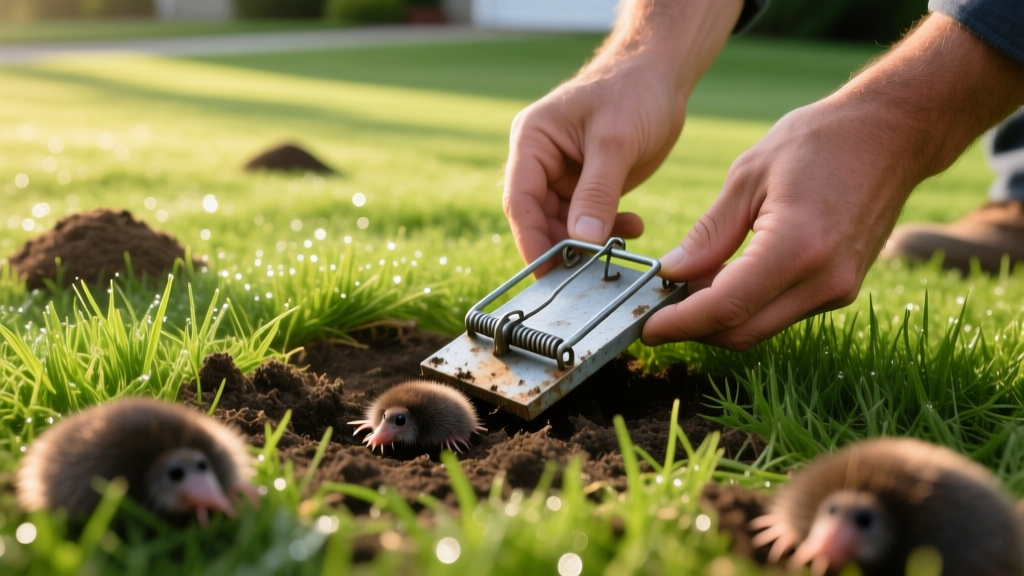
How to Eradicate Moles in Lawn: Traps, Baits, and Deterrents
Understanding the Mole Menace: Diet and Behavior
Before you can successfully learn how to eradicate moles in lawn environments, you must understand their biology. The most common species in North American yards, the Eastern mole (Scalopus aquaticus), is an insectivore, not a rodent. A pervasive myth among homeowners is that moles are tunneling through yards to eat grubs. While they will consume white grubs, earthworms make up 80% to 90% of their diet. According to the Internet Center for Wildlife Damage Management, applying grub control products like imidacloprid will not starve moles out of your yard; it merely removes one minor item from a buffet that is still stocked with earthworms.
Moles are solitary, highly territorial creatures. A typical yard will only host two or three adult moles at a time, even if the tunnel network spans thousands of square feet. They dig two types of tunnels: deep, permanent runways used for travel and nesting (usually 4 to 12 inches deep), and shallow, surface-level feeding tunnels that create the unsightly raised ridges on your grass. Eradication efforts must focus exclusively on the deep, active runways.
Phase 1: The 'Tread Test' to Locate Active Runways
Setting traps or baits in abandoned or lateral feeding tunnels is the number one reason eradication efforts fail. To find the main highway, you must perform the Tread Test:
- Identify straight lines: Look for tunnels that run in relatively straight lines, often following structural boundaries like fences, driveways, or foundations. Meandering, chaotic tunnels are usually temporary feeding runs.
- Flatten the ridge: Use your boot to step down and collapse a 6-inch section of the suspected main tunnel. Mark the spot with a small flag or stick.
- Wait 24 hours: Return the next day. If the mole has repaired the tunnel and pushed the soil back up, you have found an active main runway. If it remains flat, it is abandoned.
- Probe for depth: Use a long steel probe (a soil probe or a long screwdriver) to pierce the soil along the active ridge. You will feel a sudden 'drop' when you hit the hollow tunnel. The main runway is typically 2 to 4 inches below the surface.
Phase 2: Choosing Your Eradication Arsenal
Once you have mapped the active runways, you must select your eradication method. Repellents (like castor oil) and ultrasonic spikes are widely sold but lack peer-reviewed efficacy for permanent removal. For actual eradication, you must rely on mechanical traps or toxic baits.
| Method | Efficacy | Avg. Cost (2026) | Difficulty | Best For |
|---|---|---|---|---|
| Scissor Traps | High | $25 - $35 | Moderate | Sandy or loamy soils |
| Choker Loop Traps | Very High | $30 - $45 | High | Deep, narrow tunnels |
| Bromethalin Baits | High | $30 - $40 | Low | Hard, rocky, or clay soils |
| Castor Oil Repellents | Very Low | $15 - $25 | Low | Temporary deterrence only |
Mechanical Traps: Scissor and Choker Loops
The Wire Tek 1001 Easy Set Mole Eliminator (approx. $38) is a scissor-style trap that is highly favored by professionals for its ease of setting and high kill rate in loamy soils. For tighter, deeper tunnels, the Victor Out O'Sight Mole Trap (approx. $28) utilizes a choker-loop mechanism that triggers when the mole pushes against a pan. Both traps must be placed directly inside the tunnel, not just on top of the dirt ridge.
Toxic Baits: Bromethalin Formulations
If your soil is heavily compacted clay or full of rocks, traps will misfire or fail to seat properly. In these scenarios, toxic baits are the superior choice. The active ingredient to look for is bromethalin, a neurotoxin that is highly lethal to moles in a single feeding. The National Pesticide Information Center notes that bromethalin mimics earthworms in texture and scent when formulated correctly. Products like Talpirid Mole Bait or Tomcat Mole Killer (worm-shaped formulations, approx. $35 for a 10-pack) are the industry standard. Avoid grain-based pellet baits; moles do not recognize grain as food and will simply push the pellets aside.
Phase 3: Execution and Placement Protocols
⚠️ Critical Soil Moisture Warning
Moles prefer moist soil because it houses the most earthworms and is easier to dig. If your lawn is extremely dry, the tunnel roofs will collapse when you probe them, making trap placement impossible. Pre-moisten the active runway with a watering can 12 hours before setting traps or baits to stabilize the soil structure. Conversely, do not overwater, as muddy tunnels will jam mechanical trap springs.
Trap Placement: Use a trowel to carefully excavate a small section of the tunnel roof. Clear out loose dirt from the bottom of the tunnel so the trap sits flush on the floor. Place the trap, secure the safety catch, and cover the excavation hole with a piece of sod or a bucket to block out light. Moles will seal off tunnels exposed to sunlight and fresh air.
Bait Placement: Use your probe to punch a small hole into the top of the active runway. Drop one worm-shaped bait down the hole every 2 to 3 feet. Do not collapse or disturb the tunnel further. Cover the probe hole with a small clod of dirt or a stone to block light, but leave the tunnel structure intact so the mole patrols it normally and finds the bait.
Common Failure Modes and Troubleshooting
- Human Scent Myth: You do not need to boil traps or wear rubber gloves to hide your scent. Moles have poor olfactory senses regarding human odor; they are deterred by physical tunnel disruption, not your smell.
- Setting in Lateral Tunnels: If a trap sits for 5 days without firing, you placed it in a feeding tunnel. Move it to a verified main runway.
- Spring Tension Loss: Scissor traps left in damp soil for weeks will rust and lose spring tension. Lubricate trap hinges with a dry graphite powder (not WD-40, which repels moles) after every use.
Long-Term Habitat Modification
Once the current moles are eradicated, you must make the lawn less hospitable to future invaders. Moles require constant moisture to sustain their earthworm prey. Transitioning your lawn to deep, infrequent watering cycles (e.g., 1 inch of water once a week rather than light daily sprinkling) forces earthworms deeper into the soil profile, making the surface less attractive to foraging moles. Additionally, rolling your lawn with a water-filled lawn roller in early spring can collapse shallow surface tunnels and compact the top inch of soil, creating a physical barrier that deters new moles from establishing surface feeding networks.
Frequently Asked Questions
Will killing grubs get rid of moles?
No. While grubs are a secondary food source, earthworms are their primary diet. Applying grub control will not starve moles, though it is still recommended for overall turf health.
How long does it take for bromethalin bait to work?
Bromethalin is a fast-acting neurotoxin. Once a mole consumes a lethal dose, death typically occurs within 12 to 24 hours. You will know the bait worked when the tunnel repair activity ceases completely for 48 hours.
Are mole traps safe around dogs?
Traps set below the soil surface and covered with a bucket or heavy sod are generally safe from pets. However, if you have a dog that actively digs, you must use bait stations or place traps inside PVC pipe sections buried in the runway to prevent your dog from triggering them or digging them up.

