
Pest Control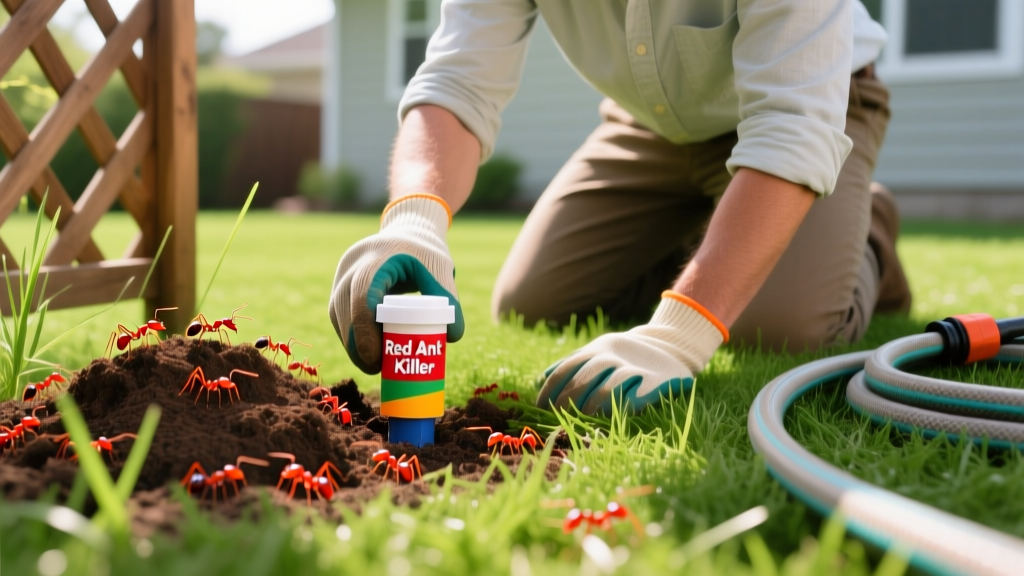
How to Eradicate Red Ants: Yard Baits, Drenches, and Barriers
Identifying the Threat: Red Imported Fire Ants vs. Native Species
Before deploying treatments, you must confirm you are dealing with the Red Imported Fire Ant (Solenopsis invicta), commonly known as RIFA. RIFAs are highly aggressive, deliver painful stings that result in raised white pustules, and can cause severe allergic reactions. They construct large, domed mounds of loose soil that lack a visible entry hole at the top. In contrast, native red harvester ants (Pogonomyrmex barbatus) are less aggressive, clear vegetation around their nests, and have a distinct entry hole at the peak of the mound. Eradicating RIFAs requires a strategic, multi-phase approach because their colonies can house up to 500,000 workers and multiple queens.
The Gold Standard: The Two-Step Eradication Method
Entomologists universally recommend the Two-Step Method for long-term RIFA management. This protocol combines the colony-wide collapse of broadcast baits with the immediate knockdown power of targeted liquid drenches. Attempting to eradicate red ants using only one method usually results in rapid recolonization or colony splitting.
Pro-Tip: The Spreader Contamination Rule
Never use a broadcast spreader for ant bait if it has previously held synthetic fertilizers or herbicides. Even trace amounts of fertilizer residue will repel foraging ants, rendering your expensive bait completely useless. Dedicate a specific, cheap drop spreader exclusively for pest baits.
Never use a broadcast spreader for ant bait if it has previously held synthetic fertilizers or herbicides. Even trace amounts of fertilizer residue will repel foraging ants, rendering your expensive bait completely useless. Dedicate a specific, cheap drop spreader exclusively for pest baits.
Step 1: Broadcast Baiting for Colony Collapse
Broadcast baits are slow-acting insecticides mixed with an attractive food carrier (usually soybean oil and corn grit). Worker ants carry the bait deep into the mound and feed it to the larvae, which then regurgitate it to the queens. This ensures the reproductive core of the colony is destroyed.
Top Fire Ant Baits Compared
| Product | Active Ingredient | Avg. Price | Kill Speed | Best Application |
|---|---|---|---|---|
| Advion Fire Ant Bait | Indoxacarb (0.04%) | $42 / 1.5 lb | 3–14 days | Broadcast / Mound |
| Extinguish Plus | Hydramethylnon + Pyriproxyfen | $38 / 4.5 lb | 7–14 days | Large Area Broadcast |
| Amdro FireStrike | Bifenthrin + Hydramethylnon | $25 / 5 lb | 7–10 days | Perimeter / Broadcast |
Understanding IGRs: Products like Extinguish Plus contain Pyriproxyfen, an Insect Growth Regulator (IGR). IGRs do not kill adult ants immediately; instead, they sterilize the queens and prevent larvae from maturing. This breaks the reproductive cycle, causing the colony to collapse from within over 4 to 6 weeks. According to Texas A&M AgriLife Extension, combining a fast-acting toxicant with an IGR provides the most durable long-term control.
⚠️ The Potato Chip Foraging Test: Before applying any bait, drop a potato chip near the mound. If ants cover it within 15 minutes, they are actively foraging and will carry the bait back to the queen. If not, wait for cooler evening temperatures. Apply baits when ground temperatures are between 70°F and 90°F, and never apply if rain is expected within 24 hours.
Step 2: Targeted Mound Drenches for Immediate Relief
While baits take days to work, nuisance mounds near patios, play areas, or electrical boxes require immediate elimination. Liquid mound drenches provide a rapid kill by flooding the subterranean galleries with a contact insecticide.
How to Mix and Apply a Bifen IT Drench
- Mix the Solution: Combine 1 fluid ounce of Bifen I/T (7.9% Bifenthrin) with 1 gallon of water. For large, mature mounds (over 18 inches in diameter), mix 2 ounces per 2 gallons of water.
- Disturb the Mound: Use a stick to quickly break the top crust of the mound. This forces the ants into a defensive state, driving them deeper into the tunnels rather than fleeing to the surface.
- Drench the Core: Using a metal watering can with a rose head or a specialized soil drenching wand, pour the solution directly into the center of the disturbed mound. Apply 1.5 to 2 gallons per mound, ensuring the soil is saturated to a depth of at least 12 inches.
- Seal the Mound: Do not cover the mound with dry soil immediately; allow the liquid to penetrate fully. The colony will be eradicated within 1 to 2 hours.
Organic and Pet-Safe Drench Alternatives
If you are treating areas where pets roam freely or near organic vegetable gardens, Spinosad is the premier organic alternative. Products like Monterey Garden Insect Spray (spinosad 0.5%) are OMRI-listed and highly effective against RIFAs. Mix 2 ounces of Spinosad per gallon of water and apply as a drench. While slightly slower than Bifenthrin, Spinosad disrupts the ants' nervous system and typically achieves a full colony kill within 24 to 48 hours. The Environmental Protection Agency (EPA) notes that Spinosad breaks down rapidly in sunlight and soil, making it a low-risk option for sensitive environments.
Critical Mistakes That Cause Colony Budding
The most common reason homeowners fail to eradicate red ants is inadvertently triggering "colony budding." When a RIFA colony feels severely threatened but not entirely destroyed, the queens will split the colony, migrating in multiple directions to form three or four new satellite mounds. Avoid these fatal errors:
- Using Aerosol Contact Sprays: Spraying Raid or similar hardware store aerosols on the surface of a mound only kills the outer workers. The queens sense the chemical threat and immediately initiate budding.
- Pouring Boiling Water or Gasoline: Not only are these methods environmentally destructive and dangerous, but they rarely penetrate deep enough to kill the queens, who reside 18 to 24 inches below the surface. The surviving queens will simply relocate 10 feet away.
- Mowing Over Active Mounds: Running a lawnmower over a mound without prior treatment scatters the colony across your yard, turning one manageable problem into a dozen localized infestations.
"Fire ants are incredibly resilient to surface-level disturbances. True eradication requires delivering the active ingredient directly to the brood chamber or utilizing the colony's own trophallaxis (food-sharing) behavior against them via slow-acting baits."
Long-Term Yard Defense and Perimeter Barriers
Once you have eliminated existing mounds, establish a defensive perimeter to prevent new queens from establishing colonies. Apply a granular barrier treatment, such as Bifen L/P (bifenthrin granules), at a rate of 2.3 lbs per 1,000 square feet. Focus on the perimeter of your property, near fence lines, and around the foundation of your home. Water the granules in immediately with a sprinkler to activate the chemical barrier into the top layer of the thatch and soil. This barrier remains active for up to 90 days, killing foraging workers and deterring new queens from founding colonies in your turf.
Frequently Asked Questions
Will treating my yard for red ants harm my earthworms?
Bifenthrin and Indoxacarb have low toxicity to earthworms when applied at labeled rates for fire ants. Spinosad is entirely safe for earthworm populations. However, avoid using carbaryl (Sevin), which is highly toxic to beneficial soil organisms.
How often should I apply broadcast bait?
For year-round control in heavily infested southern regions, apply broadcast bait three times a year: early spring (April), mid-summer (July), and early fall (September). This targets the colonies during their peak reproductive and foraging cycles.
Can I use the same bait indoors if ants invade my kitchen?
No. Outdoor baits are formulated with sunlight stabilizers and weather-resistant carriers. For indoor RIFA intrusions, use specific indoor gel baits like Advion Ant Gel, which utilizes a different moisture-retaining matrix designed for interior baseboard applications.

