
Pest Control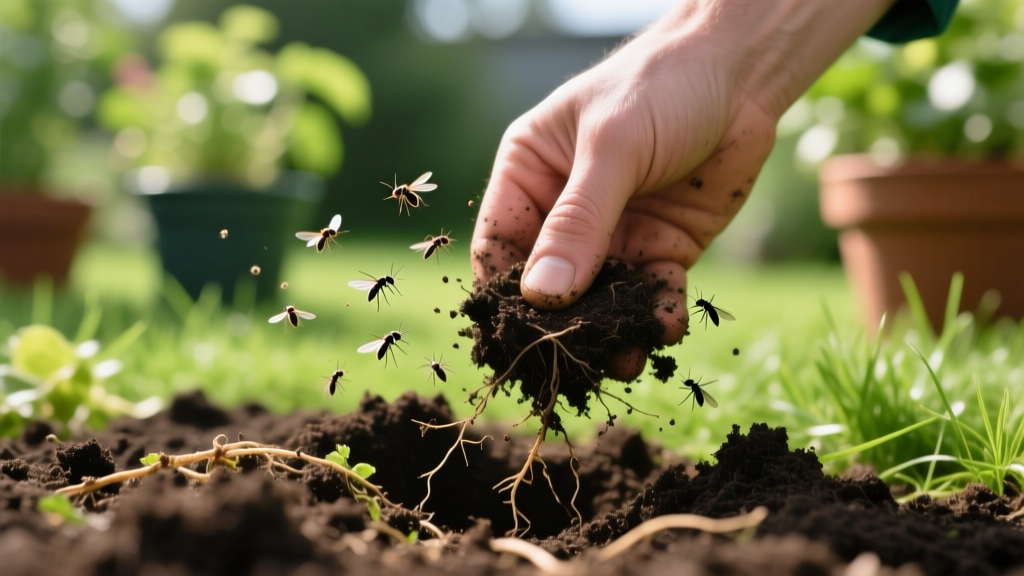
How to Eliminate Small Gnats in Your Yard and Garden Soil
Identifying the Culprit: Fungus Gnats vs. Biting Midges
When homeowners complain about small gnats swarming their yard, they are typically dealing with one of two distinct dipteran pests: fungus gnats (Bradysia spp.) or biting midges (Ceratopogonidae). Misidentifying these pests leads to wasted money on ineffective chemical sprays. Fungus gnats are primarily a nuisance to humans but a severe threat to plant root systems, while biting midges (often called 'no-see-ums') are aggressive blood-feeders that make outdoor spaces unusable.
| Pest Type | Size & Color | Behavior & Habitat | Primary Damage |
|---|---|---|---|
| Fungus Gnats | 1/8 inch, dark gray/black | Weak, erratic fliers; stay within 2 feet of damp soil | Larvae feed on root hairs; transmits Pythium and Fusarium |
| Biting Midges | 1/32 to 1/8 inch, grayish | Strong fliers; active at dawn/dusk near marshy or wet grass areas | Painful bites to humans and pets; allergic reactions |
| Fruit Flies (Drosophila) | 1/8 inch, tan/brown | Attracted to fermenting fruit/compost; do not breed in plain soil | Nuisance around compost bins and outdoor dining areas |
According to the University of Minnesota Extension, fungus gnat larvae thrive in the top 2 to 3 inches of moist soil, feeding on decaying organic matter and delicate root hairs. If your small gnats are hovering over your potted patio plants or seedling trays, you are dealing with fungus gnats. If they are swarming your ankles near a damp lawn or drainage swale at dusk, you are likely facing biting midges.
The Root Cause: Moisture and Soil Biology
Small gnats do not invade dry, well-aerated landscapes. Their presence is an ecological indicator of excessive moisture and fungal proliferation. The larvae require a continuous film of water to survive and move through the soil matrix.
Warning: The Overwatering Trap
Many gardeners attempt to 'flush' pests out by watering heavily. This is a critical error. Saturated soil creates anaerobic conditions that kill beneficial soil microbes while simultaneously accelerating the fungal and bacterial blooms that fungus gnat larvae feed on. Always allow the top 1.5 inches of soil to dry completely between watering sessions.
Step-by-Step Eradication Protocol for Garden Soil
To eliminate small gnats in your yard, you must break their life cycle. Adult gnats live for only 7 to 10 days, but females can lay up to 200 eggs in the soil during that brief window. Targeting the larval stage in the soil is mandatory for long-term control.
Step 1: Soil Drenching with Bti (Bacillus thuringiensis israelensis)
Bti is a naturally occurring soil bacterium that produces crystalline proteins (Cry4A, Cry4B, Cry11, and Cyt1). When gnat larvae ingest these toxins, the alkaline environment of their midgut dissolves the crystals, causing rapid cell lysis and septicemia within 48 hours. Bti is entirely harmless to humans, pets, earthworms, and pollinators.
- Recommended Product: Summit Mosquito Bits (granular) or Mosquito Dunks (for soaking).
- Application Rate: Apply 1/2 cup of granular bits per 20 square feet of garden bed, or sprinkle directly onto the surface of potted plants.
- Cost: Approximately $18 to $22 for a 30 oz. shaker bottle.
- Frequency: Apply every 7 to 14 days for three consecutive cycles to catch newly hatched larvae.
Step 2: Beneficial Nematode Application (Steinernema feltiae)
For severe, entrenched infestations, biological warfare is required. Steinernema feltiae are microscopic, unsegmented worms that actively hunt gnat larvae in the soil. They enter the host through natural openings, release Xenorhabdus bacteria, and kill the larva within 24 to 48 hours before reproducing inside the carcass and emerging to find new prey.
- Recommended Product: Arbico Organics NemaGlobe or Scanmask (10 million count).
- Application Rate: 1 million nematodes per 100 square feet. Mix into a watering can and apply immediately.
- Cost: $35 to $45 per 10-million pack (ships refrigerated).
- Critical Constraint: Soil temperature must be between 55°F and 85°F. UV light kills nematodes instantly, so apply only at dusk or on heavily overcast days. Keep the soil moist for 7 days post-application to allow nematodes to migrate.
Step 3: Adult Gnat Population Control
While treating the soil, you must suppress the adult population to prevent further egg-laying. Yellow sticky cards (such as Aspectek Sticky Traps) are highly effective for monitoring population drops, but they will not eradicate an infestation alone. For immediate adult knockdown in localized outdoor areas, use a Spinosad-based spray like Captain Jack's Deadbug Brew (approx. $16 for 32 oz). Spray the foliage and soil surface at dusk when pollinators are inactive, as Spinosad is toxic to bees when wet but safe once dried.
Preventative Yard Defense Matrix
Once the active infestation is cleared, implement these cultural controls to ensure small gnats do not return to your yard.
| Prevention Strategy | Implementation Details | Target Pest |
|---|---|---|
| Horticultural Sand Top-Dressing | Apply a 1/4-inch layer of coarse horticultural sand (not play sand) to the surface of potted plants and seedling trays. This creates a dry, abrasive physical barrier that prevents adults from laying eggs and traps emerging adults. | Fungus Gnats |
| Compost Bin Management | Bury food scraps under 6 inches of brown carbon material (dry leaves, shredded cardboard). Never leave fruit exposed. Use a tight-fitting, latching lid to exclude adult flies. | Fruit Flies & Fungus Gnats |
| Lawn Aeration and Grading | Core aerate compacted lawns and regrade low spots that hold puddles for more than 4 hours after rain. Biting midges require standing water or saturated mud to breed. | Biting Midges |
| Bottom-Watering Planters | For container gardens, use self-watering pots or wick systems that draw water from a bottom reservoir, keeping the top 2 inches of soil bone-dry. | Fungus Gnats |
Troubleshooting & Edge Cases
Why did my Bti treatment fail?
If you applied Bti and still see small gnats emerging after 14 days, you likely have one of three issues:
- Improper Hydration: Bti granules must be watered into the soil to activate. If left dry on the surface, the larvae will not ingest the bacteria.
- UV Degradation: Liquid Bti degrades rapidly in direct sunlight. Always apply drenches in the evening.
- Misidentification: You may be dealing with shore flies (Scatella stagnalis), which look similar to fungus gnats but breed in algae and are highly resistant to Bti. Shore flies require algae removal and strict sanitation rather than soil drenches.
Can I use Neem Oil for soil drenching?
While raw neem oil (containing Azadirachtin) has some insecticidal properties, it is largely ineffective as a soil drench for gnat larvae. The oil coats the soil, potentially suffocating plant roots and disrupting soil gas exchange, without reliably penetrating the larval cuticle. The University of California Statewide IPM Program explicitly recommends Bti and nematodes over neem oil for soil-dwelling dipteran larvae due to superior efficacy and zero phytotoxicity risk.
Expert Insight: 'The most common mistake I see in landscape pest management is treating the adult gnat with aerosol pyrethroids while ignoring the thousands of larvae breeding in the topsoil. You cannot spray your way out of a soil-borne breeding cycle; you must alter the soil biology.' — Dr. E. Patterson, Urban Entomology Specialist.
By combining precise biological larvicides (Bti and S. feltiae) with strict moisture management and physical sand barriers, you can permanently eradicate small gnats from your yard without resorting to broad-spectrum synthetic pesticides that harm your local ecosystem.

