
Pest Control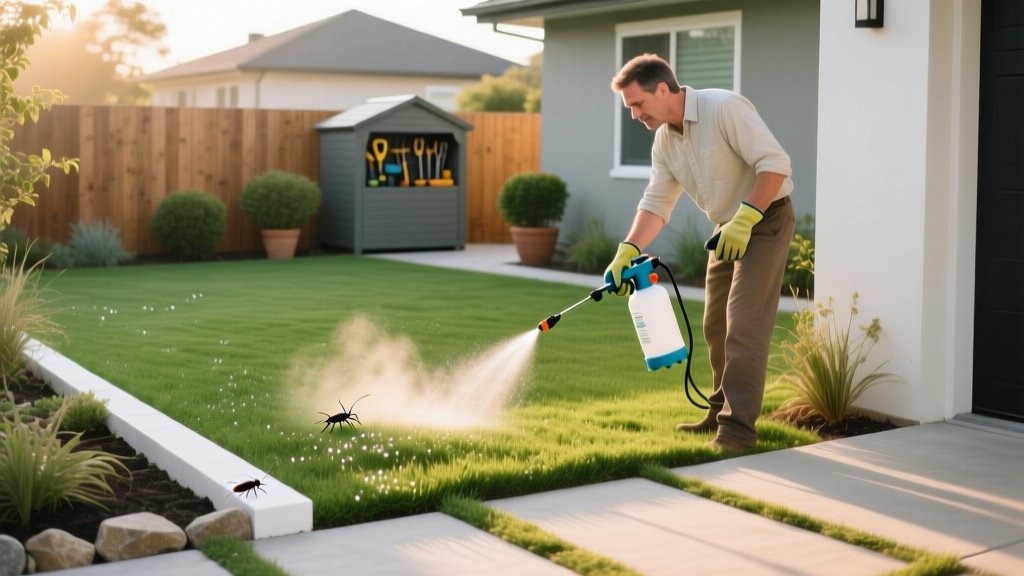
How to Get Rid of Small Roaches: Yard Perimeter Defense Guide
Identify the Invader: Which Small Roach is in Your Yard?
When homeowners ask how to get rid of small roaches, they are usually dealing with an indoor German cockroach infestation. However, if you are finding small roaches in your yard, garden beds, or around your home's exterior perimeter, you are likely dealing with the Asian cockroach (Blattella asahinai) or an outdoor population of German cockroaches hitchhiking in potted plants and compost. According to University of Florida IFAS entomologists, the Asian cockroach is nearly identical in appearance to the German cockroach—measuring 1/2 to 5/8 of an inch long with two dark parallel stripes on the pronotum—but it possesses fully developed wings and is a strong flier attracted to outdoor lighting.
Quick Identification Matrix:
- Asian Cockroach: Found outdoors in leaf litter and mulch. Flies toward porch lights. Rarely establishes long-term indoor colonies.
- German Cockroach (Outdoor/Perimeter): Found near trash receptacles, outdoor kitchens, and potted plants. Cannot fly. Actively migrates indoors through weep holes and door sweeps.
- Smokybrown Cockroach Nymphs: Often mistaken for small roaches. Found in tree holes, gutters, and woodpiles. Will grow up to 1.5 inches.
Phase 1: Habitat Modification and Mulch Management
Small roaches thrive in high-humidity environments with abundant organic debris. Before spending a single dollar on chemical treatments, you must eliminate the micro-habitats in your yard that harbor these pests. The most critical area is the mulch and soil interface directly against your home's foundation.
The 12-Inch Gravel Moat
Wood mulch retains moisture and provides a perfect canopy for roaches to hide during the day. To break this cycle, rake back all organic mulch, pine straw, and leaf litter so that it is at least 12 inches away from your foundation. Replace this 12-inch gap with crushed stone or pea gravel. Gravel drains rapidly, stays dry, and offers no nutritional value or harborage for roaches. This physical barrier alone can reduce perimeter roach populations by up to 60%.
Canopy and Irrigation Adjustments
Trim all shrubs and tree branches so they are at least 6 inches away from your siding. Overhanging branches create shaded, humid zones that prevent the foundation soil from drying out. Additionally, audit your sprinkler system. Ensure that spray heads are not directly hitting your foundation or siding, as chronic moisture buildup invites both roaches and termites.
Phase 2: Establishing a Chemical Perimeter Barrier
Once the habitat is modified, applying a targeted insecticide barrier is the next step in your yard defense strategy. You have two primary chemical approaches: repellent barriers and non-repellent transfer treatments.
Repellent Barriers (Bifenthrin)
Products containing Bifenthrin (7.9%), such as Talstar P, create a highly effective repellent barrier. When mixed at a rate of 1 fluid ounce per gallon of water, it yields a 0.06% suspension. Using a 1-gallon or 2-gallon pump sprayer, apply the mixture in a 3-foot wide band across the soil and a 2-foot high band up the foundation wall. Bifenthrin binds tightly to soil particles and provides residual control for 60 to 90 days. The drawback is that roaches can detect the chemical and may attempt to bypass the treated zone if they find an untreated crack.
Non-Repellent Transfer Treatments (Dinotefuran)
For a more advanced approach, use a non-repellent like Alpine WSG (Dinotefuran 40%). Because roaches cannot detect Alpine WSG, they will freely crawl across the treated foundation and mulch. The active ingredient adheres to their bodies, and through grooming and physical contact, they transfer the lethal dose to other roaches in the harborage area. One 10-gram packet dissolves in a gallon of water and treats roughly 1,000 square feet. A box of five packets costs approximately $45, making it highly cost-effective for seasonal perimeter defense.
| Active Ingredient | Brand Example | Mode of Action | Residual Life | Avg. Cost |
|---|---|---|---|---|
| Bifenthrin (7.9%) | Talstar P | Repellent / Contact | 60 - 90 Days | $50 / 3/4 Gal |
| Dinotefuran (40%) | Alpine WSG | Non-Repellent / Transfer | 30 - 45 Days | $45 / 50g Box |
| Cypermethrin (40%) | Demon WP | Repellent / Contact | 60 - 90 Days | $35 / 10 Packets |
Phase 3: Strategic Outdoor Baiting and Dusting
Liquid sprays degrade faster in areas exposed to direct UV sunlight and heavy rainfall. To supplement your liquid perimeter, integrate targeted baits and dusts into the structural vulnerabilities of your home's exterior. The EPA recommends using baits in areas where sprays cannot reach or where moisture is a persistent issue.
Dusting Weep Holes and Siding Voids
Brick weep holes, vinyl siding gaps, and soffit vents are primary entry points for small roaches. Use a bellows hand duster to apply Avert Dry Flowable Cockroach Bait (Active ingredient: Abamectin 0.05%). Unlike traditional diatomaceous earth or boric acid, which repel roaches and lose efficacy when wet, Avert Dry Flowable is a highly attractive bait dust. Puff 2 to 3 grams directly into weep holes and behind electrical outlet covers on exterior walls. The roaches consume the dust and die within 24 to 48 hours.
Exterior Gel Baiting
For areas around outdoor kitchens, compost bins, and heavy trash receptacles, apply Maxforce FC Magnum gel bait. Place small, pea-sized dots of gel into the hinges of trash can lids, under the lips of compost bins, and inside the protective housings of exterior electrical boxes. Hydramethylnon, the active ingredient in Maxforce, disrupts the roach's cellular energy production, leading to a delayed kill that allows the poisoned roach to return to the harborage and spread the toxin via coprophagy (feces consumption).
Pro-Tip: The AC Condenser Trap
Air conditioning condenser units generate condensation and heat, creating an ideal micro-climate for small roaches. Do not spray liquid insecticides directly into the electrical components of the AC unit. Instead, place three or four outdoor bait stations (like Aroxi Outdoor Roach Bait Stations) in a triangle formation around the base of the concrete pad supporting the condenser. Inspect and replace the bait matrix every 30 days during peak summer months.
Common Perimeter Defense Mistakes
Even with the best products, homeowners often sabotage their own yard defense efforts through poor application habits. Avoid these critical errors:
- Over-mulching: Applying fresh mulch directly over an existing layer without raking it first creates a thick, impenetrable mat of decaying organic matter. Keep total mulch depth under 2 inches.
- Ignoring Potted Plants: German roaches frequently breed in the damp soil of large outdoor potted plants. Before bringing any potted plants indoors for the winter, drench the soil with a diluted insecticidal soap or repot the plant entirely.
- Mixing Repellents and Baits: Never spray a repellent liquid (like Bifenthrin) over an area where you have placed gel bait or bait stations. The repellent residue will contaminate the bait, rendering it unpalatable to the roaches.
- Firewood Storage: Stacking firewood directly against the house or on bare soil invites Smokybrown roaches and termites. Store firewood on a raised metal rack at least 20 feet away from your home's exterior.
Frequently Asked Questions
Will outdoor roach treatments harm my lawn or pets?
When applied according to the label, liquid barriers like Bifenthrin and Alpine WSG are safe for lawns once the surface has completely dried (usually 1 to 2 hours). Keep pets and children off the treated perimeter until the liquid is fully absorbed and dry. Avoid spraying directly into koi ponds or water features, as pyrethroids are highly toxic to aquatic life.
How often should I reapply the perimeter barrier?
For repellent barriers like Talstar P, reapply every 60 to 90 days during the active spring and summer seasons. For non-repellents like Alpine WSG, a 30 to 45-day rotation is recommended, as UV degradation and heavy rainfall break down the active ingredient faster on exposed surfaces.

