
Pest Control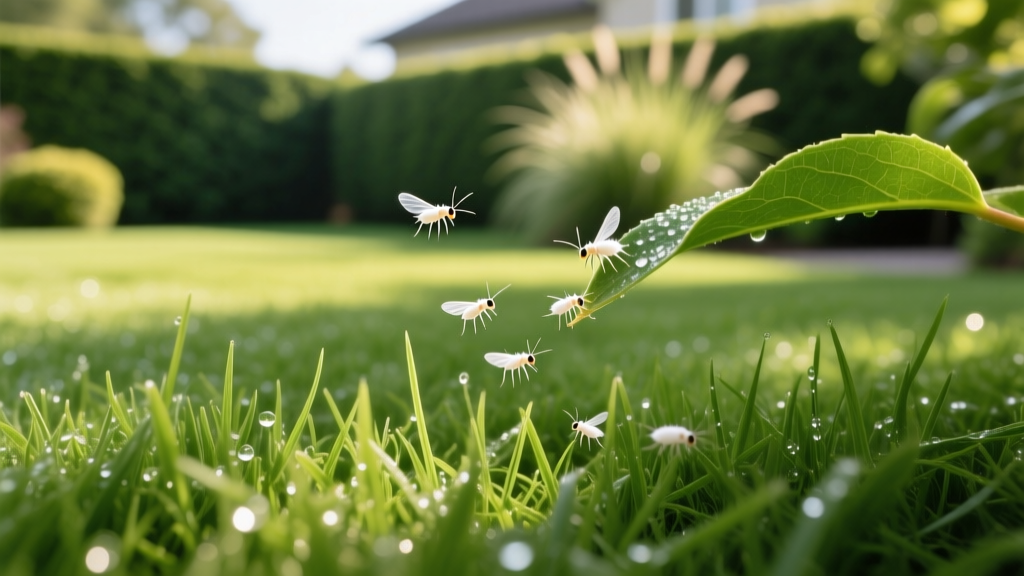
How to Identify and Eliminate Tiny White Flying Bugs in Your Yard
The Culprits: Identifying the Tiny White Flying Bugs
When you brush against a garden plant and a cloud of minuscule, snow-white insects takes flight, you are dealing with whiteflies (family Aleyrodidae). These tiny white flying bugs are not true flies; they are closely related to aphids and scale insects. Measuring just 1 to 2 millimeters in length, they possess four powdery-white wings and feed exclusively on plant phloem (sap).
In residential yards, two species dominate the damage reports:
- Greenhouse Whitefly (Trialeurodes vaporariorum): Holds its wings flat, parallel to the leaf surface. Prefers cooler temperatures and heavily targets tomatoes, cucumbers, and fuchsias.
- Silverleaf Whitefly (Bemisia tabaci): Holds its wings in a distinct 'tent' or roof-like peak over its body. Highly destructive in warmer climates and a primary vector for devastating plant viruses.
Accurate identification requires inspecting the undersides of leaves, where adult females lay their eggs in circular or spiral patterns. The eggs hatch into mobile 'crawlers' (first instar), which quickly settle, insert their piercing-sucking mouthparts into the leaf tissue, and remain immobile through three subsequent nymphal stages before pupating.
The Hidden Damage: Honeydew, Sooty Mold, and Viral Vectors
Whiteflies do not merely cause cosmetic damage; they actively compromise plant physiology. As they consume phloem sap, they excrete a highly sugary, sticky waste known as honeydew. This substance coats the lower leaves and stems, creating an ideal breeding ground for Capnodium fungi, commonly known as sooty mold.
⚠️ The Sooty Mold Cascade:
While sooty mold does not directly infect plant tissue, the thick black fungal mat blocks sunlight from reaching the leaf's chloroplasts. This severely reduces photosynthesis, leading to stunted growth, premature leaf drop, and reduced fruit yield. A heavy whitefly infestation can reduce a tomato plant's yield by up to 40% if left unchecked for more than three weeks.
While sooty mold does not directly infect plant tissue, the thick black fungal mat blocks sunlight from reaching the leaf's chloroplasts. This severely reduces photosynthesis, leading to stunted growth, premature leaf drop, and reduced fruit yield. A heavy whitefly infestation can reduce a tomato plant's yield by up to 40% if left unchecked for more than three weeks.
Beyond physical exhaustion and fungal shading, the silverleaf whitefly is a notorious viral vector. According to the UC Agriculture and Natural Resources IPM program, Bemisia tabaci can transmit over 100 distinct plant viruses, including the highly destructive Tomato Yellow Leaf Curl Virus (TYLCV) and Cucurbit Yellow Stunting Disorder Virus (CYSDV). Once a plant is infected with a whitefly-vectored virus, there is no cure; the plant must be removed and destroyed.
Phase 1: Cultural and Biological Yard Defense
Before reaching for chemical sprays, establish a defensive perimeter using cultural practices and biological control agents. Whiteflies reproduce explosively in warm weather (optimal breeding occurs between 75°F and 85°F), meaning early intervention is critical.
Reflective Mulching and Trap Cropping
Whiteflies navigate using visual cues and are highly repelled by ultraviolet light reflection. Laying down aluminumized reflective plastic mulch (such as Reflective Silver Mulch, typically $35-$45 for a 4x100ft roll) under susceptible crops like peppers and tomatoes disrupts their ability to locate host plants. This single cultural intervention can delay whitefly colonization by 4 to 6 weeks, often long enough for the plant to reach a mature, resilient stage.
Deploying Biological Agents
If you maintain a diverse yard, you can introduce specialized natural predators. Do not release these agents if you have applied broad-spectrum insecticides within the last 30 days.
| Biological Agent | Target Stage | Release Rate & Cost |
|---|---|---|
| Encarsia formosa (Parasitic Wasp) | 3rd and 4th instar nymphs | 3 parasites per sq. ft. (~$35 for 1,000 pupae on cards) |
| Delphastus catalinae (Lady Beetle) | All nymphal stages and eggs | 10-15 adults per plant (~$45 for 100 adults) |
| Beauveria bassiana (Entomopathogenic Fungus) | Adults and late nymphs | Foliar spray (BotaniGard ES: ~$65 for 1 quart) |
Phase 2: Targeted Organic and Chemical Spray Protocols
When populations exceed the threshold of natural control (typically defined as more than 5 adults per leaf on average), targeted sprays are required. The Clemson University Home & Garden Information Center emphasizes that contact insecticides are preferred over systemic options to protect local pollinator populations.
The 3-Step Organic Eradication Sequence
- Knockdown with Insecticidal Soap: Use a potassium salts of fatty acids formulation (e.g., Safer Brand Insect Killing Soap Concentrate, approx. $14 for 32oz). Mix at a rate of 2.5 fl oz per gallon of water. The soap dissolves the waxy protective cuticle of the soft-bodied nymphs, causing rapid dehydration.
- Growth Regulation with Neem Oil: Three days after the soap application, apply a clarified hydrophobic extract of neem oil (e.g., Bonide Neem Oil Concentrate, approx. $16 for 16oz). Mix at 2 fl oz per gallon. Neem contains azadirachtin, which acts as an insect growth regulator (IGR), preventing nymphs from molting into reproducing adults.
- Residual Fungal Strike: For severe, entrenched infestations, apply Beauveria bassiana (strain GHA) in the evening. The fungal spores attach to the whitefly's exoskeleton, germinate, and consume the insect from the inside out over 3 to 5 days.
💡 Pro-Tip: The Underside Mandate
Whiteflies spend 95% of their life cycle on the underside of the leaf canopy. If your spray nozzle is only hitting the top of the leaves, you are wasting your product. Use a pump sprayer with an adjustable nozzle set to a fine mist, and physically bend branches upward to ensure 100% coverage of the lower leaf surfaces.
Whiteflies spend 95% of their life cycle on the underside of the leaf canopy. If your spray nozzle is only hitting the top of the leaves, you are wasting your product. Use a pump sprayer with an adjustable nozzle set to a fine mist, and physically bend branches upward to ensure 100% coverage of the lower leaf surfaces.
Common Eradication Mistakes & Failure Modes
Homeowners often inadvertently worsen whitefly outbreaks through improper chemical selection and application timing. Avoid these critical failure modes:
- Using Broad-Spectrum Pyrethroids: Sprays containing bifenthrin or cypermethrin will kill adult whiteflies but will simultaneously eradicate their natural predators (parasitic wasps and ladybugs). Because whiteflies reproduce much faster than their predators, you will trigger a 'pesticide-induced resurgence' where the whitefly population bounces back 10x larger within two weeks.
- Applying Oils in High Heat: Never apply neem oil or horticultural oils when ambient temperatures exceed 85°F or when plants are drought-stressed. The oil will trap heat against the leaf cuticle, causing severe phytotoxicity (leaf burn) within hours.
- Ignoring the Pupae Stage: The fourth nymphal stage (pupae) is heavily armored and highly resistant to insecticidal soaps. This is why a single spray never works. You must maintain a strict 5-to-7-day spray interval for three consecutive cycles to catch the newly hatched crawlers before they develop their protective pupal casing.
A Note on Systemic Neonicotinoids
While systemic granules containing Imidacloprid (e.g., Bayer Advanced 12 Month Tree and Shrub Protect) are highly effective at killing whiteflies that feed on treated plants, their use in residential yards is heavily restricted in many states due to their high toxicity to bees and aquatic invertebrates. If you must use a systemic, apply it strictly as a soil drench to non-flowering ornamental plants after they have finished their seasonal bloom cycle, never as a foliar spray.

