
Pest Control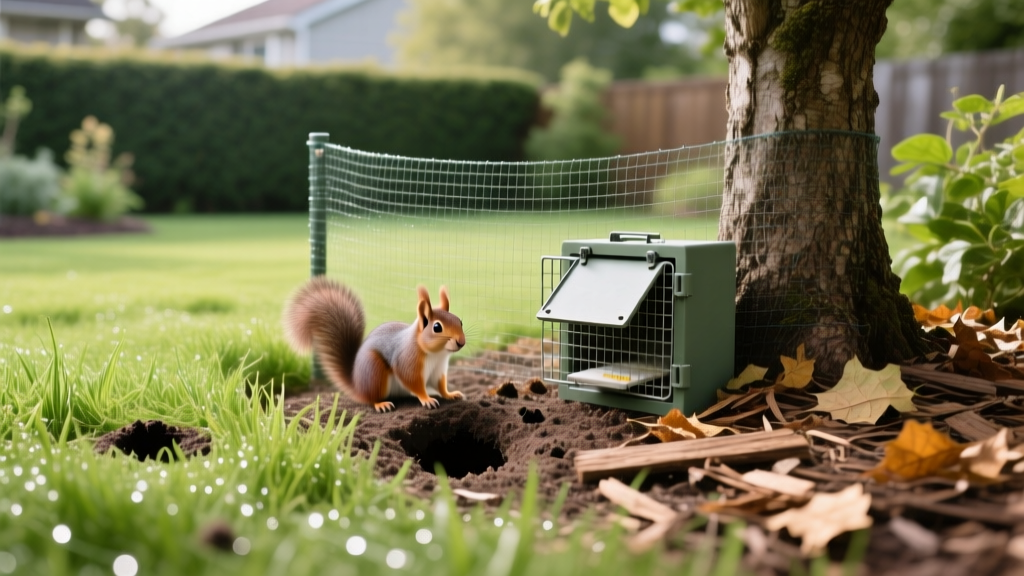
How to Exterminate Chipmunks Safely: Trapping & Exclusion Tactics
Diagnosing the Threat: Chipmunk Damage vs. Other Rodents
Before attempting to eradicate any lawn pest, accurate identification is critical. Homeowners frequently confuse chipmunk (Tamias striatus) activity with that of voles, moles, or ground squirrels. Misidentification leads to wasted money on ineffective traps and incorrect exclusion materials. Chipmunks are primarily surface foragers that dig extensive, multi-chambered burrow systems to store food and hibernate. A single chipmunk can consume up to 35% of its body weight daily, devastating spring bulbs, stripping bark from ornamental shrubs, and undermining concrete patios through soil erosion.
| Pest Species | Entrance Hole Size | Dirt Mound Presence | Tunnel Depth | Primary Lawn Damage |
|---|---|---|---|---|
| Eastern Chipmunk | 2 to 3 inches | None (clean edges) | Up to 3.5 feet | Undermined foundations, eaten bulbs |
| Meadow Vole | 1 to 1.5 inches | None | Surface level | Grass runway trails, girdled tree bark |
| Eastern Mole | No open holes | Volcano-shaped mounds | 6 to 24 inches | Raised soil ridges, uprooted turf |
| Ground Squirrel | 4 to 5 inches | Large dirt fan/mound | Up to 6 feet | Massive soil displacement, crop loss |
If you observe 2-inch holes with clean edges and no excavated dirt mounds nearby, you are dealing with chipmunks. The lack of a dirt mound occurs because chipmunks carry excavated soil away in their cheek pouches and disperse it elsewhere, keeping their burrow entrances stealthy to avoid predators.
The Legal Reality of Chipmunk Extermination
When researching how to exterminate chipmunks, the most critical variable is state and local wildlife law. In many jurisdictions, chipmunks are classified as protected non-game wildlife. This legal distinction fundamentally alters your eradication strategy.
⚠️ Legal Warning: In states like New York, Massachusetts, and Illinois, lethal extermination of chipmunks without a specific nuisance wildlife permit is illegal. Furthermore, relocating trapped chipmunks to a new habitat is often prohibited due to the risk of spreading diseases and disrupting local ecosystems. Always consult your state's Department of Natural Resources (DNR) before deploying lethal snap traps or rodenticides.
According to Cornell University's Wildlife Damage Management program, the most legally sound and ecologically effective approach combines habitat modification with physical exclusion, reserving live-trapping and on-site release for severe infestations.
Step-by-Step Habitat Modification
Chipmunks establish territories based on three factors: food availability, protective cover, and soil structure. Altering these variables forces the colony to relocate naturally.
1. Eliminate High-Value Food Sources
Bird feeders are the primary driver of suburban chipmunk population booms. A single spilled seed pile can support a family of six. Switch to safflower seeds or hot-pepper-treated suet, which birds tolerate but rodents avoid. Install 18-inch diameter predator baffles on all feeder poles, mounted at least 4 feet off the ground. Clean up fallen fruit from ornamental trees weekly during late summer and early autumn.
2. Remove Protective Ground Cover
Chipmunks refuse to cross open, exposed spaces where they are vulnerable to hawks and domestic cats. Clear woodpiles, dense ivy, and leaf litter within a 30-foot radius of your home's foundation and primary garden beds. Replace organic mulch near the foundation with 2 inches of crushed gravel, which provides no cover and is uncomfortable for burrowing.
Strategic Trapping: Lethal vs. Non-Lethal Methods
When habitat modification fails to reduce the population, targeted trapping is required. The choice between live-catch and lethal traps depends on your local regulations and the severity of the structural threat.
Live Catch and On-Site Release
For regions prohibiting lethal control, the Havahart 1025 Two-Door Live Trap (approx. $35) is the industry standard. Its dual-door design allows chipmunks to enter from either direction, increasing catch rates when placed directly over a burrow runway.
- Baiting Protocol: Do not use cheese or bread. Use a high-value paste made from equal parts creamy peanut butter and black oil sunflower seeds. Apply the mixture directly to the trigger pan using a wooden craft stick.
- Pre-Baiting: Wire the trap doors open for the first 48 hours and place bait inside. This conditions the colony to enter the trap without fear, dramatically increasing your catch rate on day three when the trap is armed.
- Placement: Position the trap flush against the foundation wall or directly over the primary burrow entrance. Chipmunks travel along physical edges (thigmotaxis) rather than cutting across open lawns.
Note: If your state prohibits relocation, The Humane Society of the United States advises releasing the animal on the opposite side of your property line or utilizing a veterinarian for humane euthanasia.
Lethal Electronic and Snap Traps
Where legally permitted, lethal traps offer a faster resolution to foundation-threatening infestations. The Victor M144 Electronic Rat Trap ($60-$70) is highly effective for chipmunks. Despite being marketed for rats, its enclosed design prevents non-target wildlife (like songbirds or squirrels) from accessing the high-voltage plates. Standard wooden snap traps (like the Victor M201) are cheaper ($4 each) but pose a high risk of accidental injury to pets and require daily checking to prevent suffering.
Permanent Burrow Exclusion and Trenching
Exterminating the current population is only half the battle. Vacant chipmunk burrows are quickly claimed by new foragers or expanding vole colonies. Permanent exclusion requires physical barriers that account for the animal's digging mechanics.
'A chipmunk's burrow system is not a simple hole. It features a steep entrance tunnel that drops 12 inches before leveling out into a horizontal network of nesting and food-storage chambers. Exclusion mesh must account for this vertical drop.' — University Extension Wildlife Specialists
The L-Shaped Trenching Method
To protect garden beds, patios, and sheds, install an underground physical barrier using 19-gauge, 1/4-inch galvanized hardware cloth (approx. $45 for a 36-inch by 50-foot roll). Do not use chicken wire; chipmunks can easily squeeze through or chew through the thin, hexagonal gaps.
- Dig a Trench: Excavate a trench 8 inches deep and 4 inches wide along the perimeter of the area you wish to protect.
- Create the 'L' Apron: Cut the hardware cloth to a 14-inch height. Bend the bottom 6 inches of the mesh at a 90-degree angle to form an 'L' shape.
- Install the Barrier: Place the vertical 8-inch section into the trench. The 6-inch horizontal 'apron' must point away from the protected area, resting on the trench floor. When a chipmunk digs down to bypass the fence, it hits the horizontal apron and cannot dig backward to bypass it.
- Backfill and Secure: Fill the trench with soil and tamp it down. Use landscape staples every 2 feet to secure the above-ground portion of the mesh to the soil.
Chemical Repellents and Fumigation: Do They Work?
Commercial chemical repellents fall into two categories: taste aversions (Capsaicin, Thiram) and predator odors (coyote or fox urine). Taste aversions like Liquid Fence Mole & Vole Repellent ($25 for 32 oz) can protect specific spring bulbs if applied directly to the soil at planting time, but they wash away after heavy rainfall and require bi-weekly reapplication. Predator urine granules degrade rapidly under UV light and are largely ineffective in suburban environments where chipmunks have habituated to the presence of domestic dogs and cats.
Burrow fumigation using carbon monoxide exhaust machines (like the Burrow RX, approx. $1,200) or smoke bombs (Giant Destroyer, $10 per cartridge) is highly effective for agricultural settings but is rarely recommended for residential lawns. Pumping carbon monoxide or smoke into burrows near home foundations risks the gas seeping through micro-cracks in your basement walls or slab, creating a severe indoor air quality hazard. For residential properties, physical trenching and targeted trapping remain the safest, most cost-effective, and legally compliant methods for long-term chipmunk management.

