
Pest Control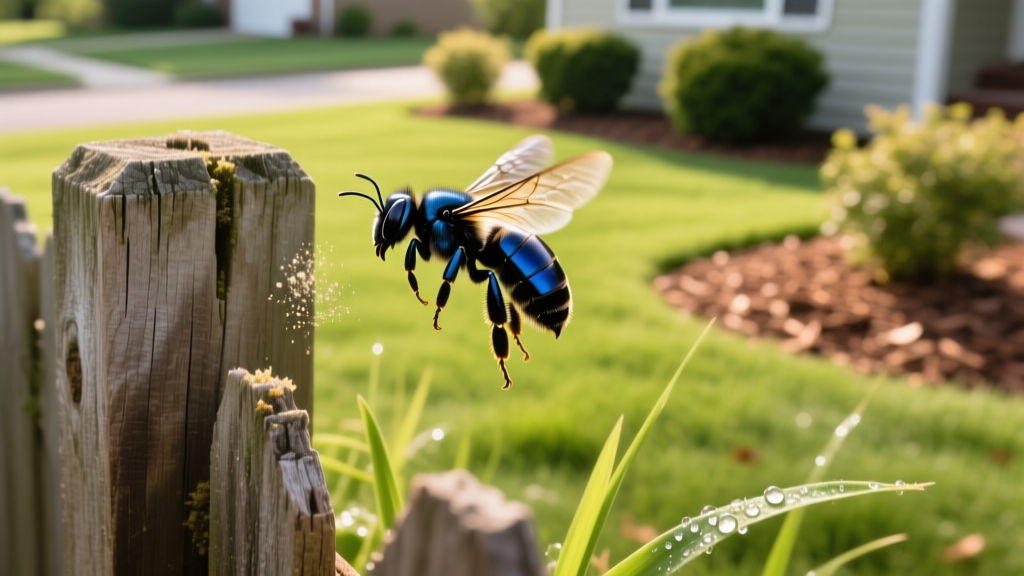
How to Exterminate Wood Bees: Yard Defense & Treatment Guide
The Hidden Threat to Your Yard Structures
When homeowners notice perfectly round, half-inch holes appearing in their wooden fences, deck railings, or fascia boards, the culprit is almost always the carpenter bee (Xylocopa virginica). Often misidentified as bumblebees, these solitary insects do not eat wood; they excavate it to create intricate nesting galleries for their offspring. Left unchecked, a single pair of wood bees can tunnel up to 10 feet into soft, untreated timber over successive generations, compromising structural integrity and inviting secondary damage from woodpeckers seeking the larvae inside.
Understanding how to exterminate wood bees requires a targeted approach that addresses both the active adults and the hidden galleries. This guide provides a comprehensive yard defense strategy, combining immediate extermination protocols with long-term wood preservation techniques.
Identifying the Threat: Carpenter Bees vs. Bumblebees
Before applying any treatment, accurate identification is critical. Carpenter bees and bumblebees share a similar size and color palette, but their behaviors and nesting habits dictate entirely different pest control strategies. Bumblebees are vital pollinators that nest in the ground and should never be exterminated. Carpenter bees, however, pose a direct threat to your property.
| Feature | Carpenter Bees (Wood Bees) | Bumblebees |
|---|---|---|
| Abdomen | Shiny, black, and hairless | Fuzzy, covered in yellow and black hairs |
| Nesting Site | Bore into untreated wood, eaves, decks | Nest underground in abandoned rodent burrows |
| Social Structure | Solitary (though multiple may nest near each other) | Social (live in colonies with a queen) |
| Behavior | Males hover aggressively but lack stingers; females sting only if provoked | Docile, focused on foraging, will sting to defend the colony |
According to North Carolina State Extension, male carpenter bees are notorious for their aggressive territorial hovering, often darting at humans or pets near their nesting sites. However, males are physically incapable of stinging. Only the females possess stingers, and they are generally docile unless directly handled or their nest is physically threatened.
The Damage Matrix: Where Wood Bees Attack
Carpenter bees exhibit a strong preference for soft, unpainted, or weathered woods. In a typical yard defense scenario, you must prioritize inspecting the following high-risk zones:
- Fascia Boards and Soffits: The overhangs of your home provide shelter from rain, making them prime real estate for gallery excavation.
- Wooden Fences: Unstained cedar and pine privacy fences offer miles of continuous, exposed grain.
- Deck Railings and Pergolas: The horizontal surfaces of railings and the joints of pergolas are frequent targets.
- Outdoor Furniture: Unsealed teak or pine patio sets can become secondary nesting sites.
Warning: The Woodpecker Multiplier Effect
The primary structural damage often does not come from the bee itself, but from woodpeckers. Downy and hairy woodpeckers can hear the carpenter bee larvae moving inside the wood. They will aggressively peck and tear through fascia boards and siding to reach the larvae, causing catastrophic cosmetic and structural damage that requires expensive carpentry repairs.
The primary structural damage often does not come from the bee itself, but from woodpeckers. Downy and hairy woodpeckers can hear the carpenter bee larvae moving inside the wood. They will aggressively peck and tear through fascia boards and siding to reach the larvae, causing catastrophic cosmetic and structural damage that requires expensive carpentry repairs.
Step-by-Step: How to Exterminate Wood Bees Effectively
Liquid sprays are largely ineffective for deep gallery treatments because they run off the wood surface and fail to penetrate the 90-degree turns of the tunnel. The industry standard for extermination is residual insecticidal dust.
Phase 1: Preparation and Timing
Timing is everything. Treat nests in the late evening or at night. During the day, females are out foraging for pollen, and males are aggressively patrolling. At night, the females are inside the galleries, and the insects are highly docile. Wear protective clothing, including a bee veil and thick leather gloves, to prevent accidental stings.
Phase 2: Dust Application
- Select the Right Product: Use a desiccant dust or a micro-encapsulated deltamethrin dust. Delta Dust (deltamethrin 0.05%) is highly recommended because it is moisture-proof, meaning it will remain lethal inside the damp environment of a wood tunnel for up to 8 months. Tempo Dust (cyfluthrin) is a fast-acting alternative.
- Load the Duster: Fill a brass bellows hand duster (such as the JT Eaton model) no more than one-third full with the dust. This allows air to mix with the powder, creating a fine, penetrating cloud rather than a heavy clump.
- Inject the Gallery: Insert the duster's metal extension tube about one inch into the half-inch borehole. Give two or three sharp puffs. The goal is to coat the interior walls of the tunnel. When the bee enters or exits, the dust clings to its hairy body, spreading the toxin deep into the nesting chambers and to the developing larvae.
- Leave the Hole Open: Do not plug the hole immediately. Leave it open for 48 to 72 hours to allow the foraging female to return, track the dust through the gallery, and expose the brood.
Phase 3: Sealing the Gallery
After 72 hours, the nest is neutralized. You must now seal the entry point to prevent scavenger insects or new carpenter bees from reusing the pre-excavated tunnel. Use a #10 or #12 cork stopper, or fill the void with a high-quality, paintable acrylic latex wood putty like DAP Plastic Wood. Sand it flush once dry and apply a coat of exterior primer.
Preventative Yard Defense: Sealing and Deterrents
Extermination is only half the battle. If you do not alter the environment, new carpenter bees will simply target the same structures the following spring. According to Penn State Extension, carpenter bees strongly avoid painted wood, but they will readily attack stained wood if the grain is visible and the texture is rough.
The Paint vs. Stain Protocol
For maximum yard defense, bare wood must be sealed. A high-build alkyd or acrylic latex primer followed by two coats of exterior enamel paint creates a hard, impenetrable shell that carpenter bees cannot easily chew through. If you prefer the natural look of wood, a clear polyurethane sealant (minimum three coats) or a heavy, opaque solid-color stain is required. Thin, semi-transparent penetrating stains offer zero protection against wood-boring insects.
Alternative Deterrents and Edge Cases
- Citrus Oil Sprays: Boiling citrus peels (orange, lemon, grapefruit) in water and spraying the extract into active holes can act as a short-term repellent. However, it degrades in sunlight within 48 hours and is not a viable long-term extermination strategy.
- Almond Oil: Rubbing pure almond oil around the perimeter of fascia boards and deck railings in early spring can deter scouting females. The benzaldehyde compound in bitter almonds masks the scent of suitable nesting wood.
- Hardware Cloth: For vents, soffits, and gaps behind wooden trim, install 1/4-inch galvanized hardware cloth to physically block access to the hidden cavities behind the wood.
When to Call a Professional: Cost and Thresholds
While DIY extermination is highly effective for ground-level fences and deck railings, treating second-story fascia boards or complex pergola roofs introduces significant fall risks. If the infestation exceeds 15-20 active boreholes, or if the nests are located above 12 feet, hiring a licensed pest control operator is the safest route.
Professional Treatment Cost Breakdown (2026 Estimates)
- DIY Material Cost: $35 - $60 (Includes 1lb of Delta Dust, bellows duster, and wood putty).
- Professional Spot Treatment: $125 - $185 (For single-story eaves and localized deck treatments).
- Full Exterior Perimeter & Eaves Treatment: $250 - $400 (Includes residual micro-encapsulated liquid spraying of all soffits, fascia, and wooden trim, plus dusting of active holes).
Frequently Asked Questions
Do carpenter bees destroy the structural integrity of my home?
A single gallery rarely causes structural failure. The danger lies in successive generations. Carpenter bees are highly loyal to their natal nesting sites. Daughters will often expand their mother's galleries, and over 3 to 5 years, the internal tunnel network can hollow out a 4x4 post or fascia board, leading to moisture rot and eventual structural collapse.
Can I use WD-40 or gasoline to kill wood bees?
No. Using flammable liquids like gasoline or aerosol sprays like WD-40 inside wood tunnels is extremely dangerous, highly illegal in many jurisdictions, and ineffective. These liquids soak into the wood grain, creating a severe fire hazard and leaving toxic residues that do not provide the residual transfer-kill action required to eliminate the hidden larvae.
What time of year is best for treatment?
Early spring (March to May, depending on your hardiness zone) is the optimal window. This is when overwintered adults emerge, mate, and begin excavating new galleries. Treating during this excavation phase catches the females before they lay eggs and provision the nests with pollen, effectively breaking the reproductive cycle for the entire year.

