Pest Control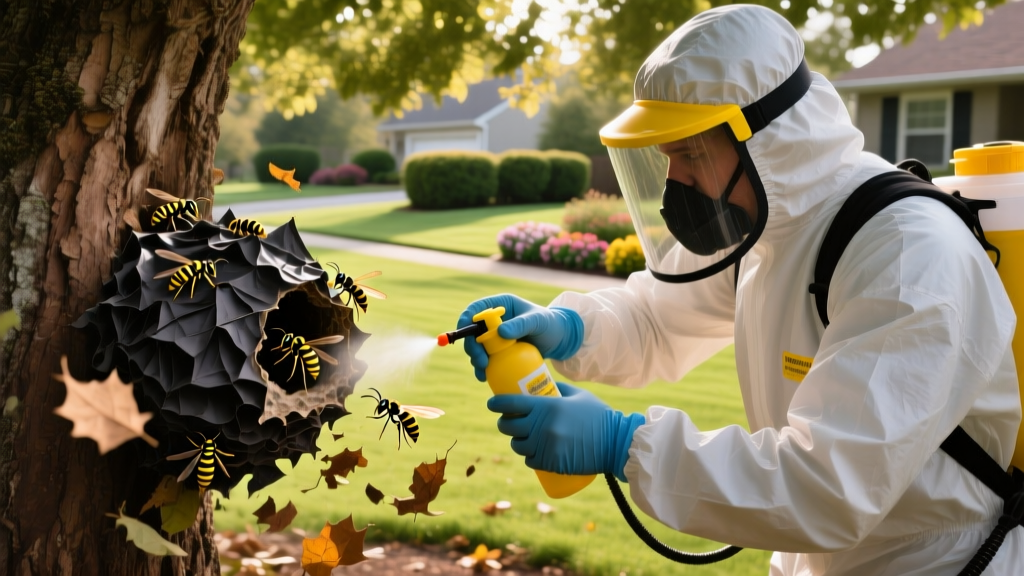
How to Exterminate Yellow Jackets: Rescue Fixes for Active Nests
Yellow jackets (genus Vespula and Dolichovespula) are the most aggressive stinging insects encountered in residential landscapes. Unlike honeybees, yellow jackets possess smooth stingers, allowing them to sting repeatedly while releasing alarm pheromones that summon the entire colony to attack. When dealing with an active infestation, misidentifying the nest type or applying the wrong treatment can result in severe envenomation or drive the colony deeper into structural voids. This guide provides a diagnostic framework to identify the threat, execute immediate rescue fixes if a nest is agitated, and deploy targeted extermination protocols.
Symptom Diagnosis: Confirming the Threat
Before purchasing any extermination products, confirm you are dealing with yellow jackets. Homeowners frequently misidentify them as honeybees or bald-faced hornets, leading to ineffective treatment strategies. According to Penn State Extension, yellow jackets are highly defensive of their nesting sites and are responsible for the majority of severe allergic reactions to insect stings in North America.
| Feature | Yellow Jackets | Honeybees | Bald-Faced Hornets |
|---|---|---|---|
| Appearance | Bright yellow and black, distinct jagged banding, smooth body | Golden-brown, fuzzy/hairy body | Black and white/ivory, larger (up to 3/4 inch) |
| Stinger | Smooth (can sting infinitely) | Barbed (stings once and dies) | Smooth (can sting infinitely) |
| Nest Location | Subterranean, wall voids, rarely aerial | Hollow trees, managed apiary boxes | Aerial (shrubs, trees, eaves) |
| Diet/Foraging | Proteins (meat, insects) and sugars | Nectar and pollen exclusively | Insects (flies, caterpillars) |
Threat Assessment & Nest Location Mapping
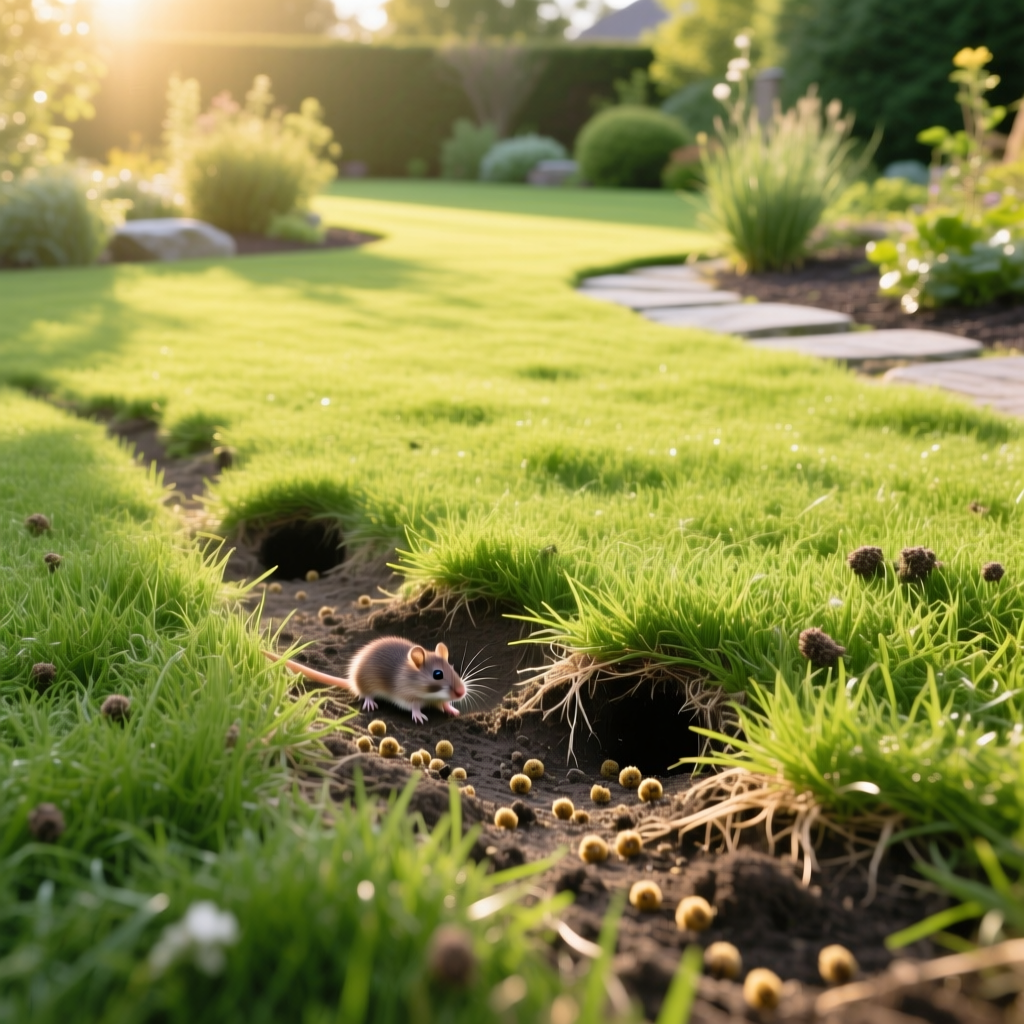
Approximately 80% of suburban yellow jacket nests are subterranean. They frequently hijack abandoned rodent burrows, hollow spaces under landscape timbers, or gaps beneath concrete patios. The remaining 20% nest in structural voids, such as soffit vents, behind vinyl siding, or inside hollow brick columns.
CRITICAL WARNING: The Structural Void Trap
Never caulk, plug, or seal the entry hole to a structural void nest while the colony is active. As noted by the University of California Integrated Pest Management (UC IPM) program, sealing the exit forces the agitated colony to chew through interior drywall or insulation, resulting in a massive emergence inside your living space.
Never caulk, plug, or seal the entry hole to a structural void nest while the colony is active. As noted by the University of California Integrated Pest Management (UC IPM) program, sealing the exit forces the agitated colony to chew through interior drywall or insulation, resulting in a massive emergence inside your living space.
The Dusk-to-Dawn Rule
Yellow jacket foragers leave the nest at sunrise and return by sunset. During the day, up to 70% of the colony's workforce is out foraging. Furthermore, their visual acuity drops significantly in low light. All diagnostic mapping and extermination applications must occur between one hour after dusk and one hour before dawn to ensure maximum colony mortality and minimize human exposure.
Rescue Fixes: Immediate Action for Agitated Swarms
If you accidentally run over a ground nest with a lawnmower or strike a soffit with a ladder, the colony will deploy hundreds of defenders within seconds. Execute these rescue fixes immediately:
- Evacuate in a Straight Line: Do not swat at the air or swing your arms. Run in a straight line toward dense brush, a vehicle, or a fully enclosed structure. Yellow jackets will pursue targets for up to 150 feet.
- Never Jump in Water: A common, fatal mistake is jumping into a swimming pool or pond. Yellow jackets will hover above the water surface and sting you repeatedly the moment you surface for air.
- Deploy a Knockdown Spray: If you are trapped on a patio or in a shed, keep a can of rapid-knockdown aerosol (like Wasp Freeze) on hand. Spray a 3-second burst into the air between you and the swarm to create a chemical barrier that drops fliers on contact, allowing you to retreat.
How to Exterminate Yellow Jackets: Step-by-Step Protocols
Once the nest is mapped and the sun has set, select the protocol that matches your nest type. Always wear thick leather gloves, long sleeves, and a veiled hat or bee suit during application.
Protocol A: Subterranean Nests (The Dust Method)
Liquid sprays are highly ineffective for ground nests because they only treat the top few inches of the soil, failing to reach the deep central comb where the queen resides.
- Prepare the Applicator: Fill a bellows hand duster (e.g., JT Eaton Bellow Hand Duster) halfway with an insecticidal dust containing deltamethrin (Delta Dust) or silica gel + pyrethrins (Drione).
- Approach with Red Light: Wrap red cellophane over your flashlight lens. Yellow jackets cannot perceive red light wavelengths, preventing them from targeting your light source.
- Inject the Dust: Insert the duster tip 1-2 inches into the entrance hole and puff 3 to 4 times. The dust will coat the tunnel walls.
- The Transfer Effect: As foragers return in the dark, they will brush against the dust and carry it deep into the nest, transferring it to the queen and larvae via grooming. Total colony collapse typically occurs within 24 to 48 hours.
Protocol B: Aerial and Exposed Nests (Aerosol Foam)
For the rare exposed nests hanging from shrubs or eaves, use a jet-stream aerosol foam.
- Select a Foaming Agent: Use a product like Spectracide Wasp & Hornet Killer 3, which shoots a concentrated stream up to 27 feet and expands into a foam that encapsulates the nest.
- Saturate the Entry Point: Aim directly at the bottom opening of the paper envelope and spray for 5 to 7 seconds until foam begins oozing out.
- Wait and Remove: Leave the nest undisturbed for 24 hours. Once all activity ceases, scrape the nest into a sealed garbage bag.
DIY Extermination Arsenal & Cost Matrix
Professional extermination for a single yellow jacket nest averages $150 to $350 in 2026, depending on structural access. DIY extermination is highly effective if executed with the correct chemistry. Below is a matrix of professional-grade and consumer products.
| Product Name | Active Ingredient | Best Application | Estimated Cost (2026) |
|---|---|---|---|
| Delta Dust | Deltamethrin (0.06%) | Ground nests, wall voids (waterproof) | $28.00 (1 lb) |
| Drione Dust | Silica Gel, Pyrethrins, PBO | Dry structural voids, attic spaces | $34.00 (1 lb) |
| Wasp Freeze | d-Phenothrin, Prallethrin | Rescue knockdown, small exposed nests | $14.50 (16 oz) |
| Spectracide Wasp & Hornet 3 | Lambda-cyhalothrin | Consumer-grade aerial nest foaming | $6.50 (14 oz) |
| Rescue Yellowjacket Trap | Heptyl butyrate (Attractant) | Spring/Early summer queen interception | $12.00 (Reusable) |
Proactive Prevention & Late-Season Foraging
Extermination is a reactive measure. True pest management requires disrupting the colony lifecycle. In early spring (April/May), mated queens emerge from hibernation to found new colonies. Deploying UC IPM-recommended traps baited with heptyl butyrate around the perimeter of your property (away from patios and play areas) will capture queens before they establish nests.
Expert Insight: By late August and September, yellow jacket colonies reach peak population (often exceeding 4,000 workers) and shift their foraging preference from protein to carbohydrates. This is why they aggressively invade outdoor dining areas, hummingbird feeders, and fallen fruit. During this window, remove all fallen orchard fruit, secure trash cans with tight-fitting lids, and switch hummingbird feeders to models equipped with built-in bee guards.
Frequently Asked Questions
Can I use boiling water to kill a ground nest?
While pouring boiling water mixed with dish soap into a ground nest can kill the colony, it is highly dangerous. The initial pour will agitate the guards, and you must stand directly over the hole to deliver enough volume to reach the deep comb. Insecticidal dust is significantly safer and more reliable.
Will the yellow jackets abandon the nest in the winter?
Yes. In freezing climates, the entire colony (including workers, males, and the founding queen) dies off in late autumn. Only newly mated queens survive by burrowing into leaf litter or soil to hibernate. The paper nest is never reused the following year, but the abandoned ground burrow may be claimed by a new queen the next spring.
Are decoy nests effective against yellow jackets?
Decoy nests (resembling paper hornet nests) rely on territorial avoidance. However, yellow jackets are primarily subterranean and do not build aerial paper envelopes. Decoys have no scientific backing for deterring ground-nesting Vespula species and are considered ineffective by entomologists.