
Pest Control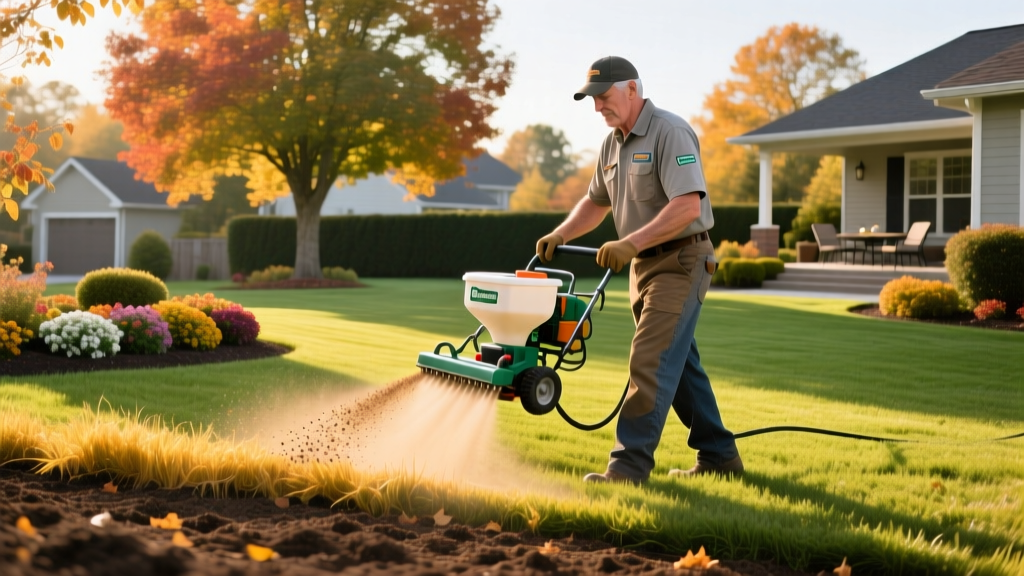
When to Apply Fall Pre Emergent: Regional Timing Guide
The 70°F Soil Temperature Trigger (And How to Measure It)
Applying a fall pre emergent based on air temperature or an arbitrary calendar date is the primary reason homeowners fail to stop Poa annua (annual bluegrass), henbit, and chickweed. The biological trigger for winter annual weed germination is soil temperature. Specifically, you must apply your pre-emergent herbicide when the soil temperature at a 2-inch depth consistently drops to 70°F to 75°F for three to five consecutive days.
Air temperatures can fluctuate wildly in late summer and early autumn, but soil retains heat and cools much more gradually. If you apply when the soil is still 80°F, the chemical barrier may degrade before the weed seeds germinate. If you wait until the soil drops to 60°F, the Poa annua has already germinated, rendering the pre-emergent useless.
Pro Tip: Tracking Soil Temps
Do not guess. Use the GreenCast Soil Temperature Map to track real-time 2-inch soil temperatures by ZIP code. For physical verification, invest in a digital soil probe thermometer (such as the ThermoWorks Thermapen or a dedicated 6-inch soil probe) and measure in a shaded area of your lawn at 10:00 AM for the most stable daily reading.
Do not guess. Use the GreenCast Soil Temperature Map to track real-time 2-inch soil temperatures by ZIP code. For physical verification, invest in a digital soil probe thermometer (such as the ThermoWorks Thermapen or a dedicated 6-inch soil probe) and measure in a shaded area of your lawn at 10:00 AM for the most stable daily reading.
Regional Fall Pre Emergent Calendar
Because soil cooling rates vary drastically by latitude and elevation, your application window shifts depending on your USDA Hardiness Zone and regional climate. Below is the definitive regional calendar for timing your fall pre emergent application.
| Region / Zone | Target Grass Types | Application Window | Target Soil Temp (2-inch) |
|---|---|---|---|
| Northern US (Zones 3-5) | Kentucky Bluegrass, Tall Fescue, Perennial Ryegrass | Mid-August to Early September | 70°F - 75°F |
| Transition Zone (Zones 6-7) | Tall Fescue, Zoysia, Bermudagrass | Late August to Mid-September | 70°F - 75°F |
| Southern US (Zones 8-9) | Bermudagrass, St. Augustine, Centipede | Late September to Mid-October | 70°F - 75°F |
| Deep South / Coastal (Zone 10) | St. Augustine, Zoysia | Late October to November | 70°F - 75°F |
Active Ingredient Matrix: What to Buy in 2026
Not all pre-emergents are created equal. The active ingredient you choose dictates your target weeds, the longevity of the chemical barrier, and your cost per application. According to Penn State Extension turfgrass protocols, selecting the right chemistry is critical for resisting weed resistance and managing budget.
1. Prodiamine (e.g., Quali-Pro Prodiamine 65 WDG, Barricade)
Best for: Long-lasting grassy weed control (Poa annua, crabgrass).
2026 Pricing: ~$150 per pound. At the standard rate of 0.23 oz per 1,000 sq ft, one pound treats roughly 69,000 sq ft, bringing the cost down to an incredibly economical $2.17 per 1,000 sq ft.
Longevity: 4 to 6 months depending on application rate and soil microbiology.
Drawback: Highly susceptible to UV degradation if not watered into the soil within 48 hours. Will also prevent grass seed germination for 4 months.
2. Dithiopyr (e.g., Corteva Dimension 2EW)
Best for: Grassy weeds with early post-emergent activity. Dimension can kill crabgrass and Poa annua up to the 1-tiller stage.
2026 Pricing: ~$185 per gallon. At 0.5 oz per 1,000 sq ft, a gallon treats 25,600 sq ft, costing roughly $7.22 per 1,000 sq ft.
Longevity: 3 to 4 months.
Drawback: More expensive than Prodiamine; shorter residual window in high-rainfall areas.
3. Isoxaben (e.g., Gallery 75 DF)
Best for: Broadleaf winter annuals (henbit, chickweed, spurge, geranium).
2026 Pricing: ~$140 per pound. Applied at 0.125 oz per 1,000 sq ft, cost is roughly $1.75 per 1,000 sq ft.
Longevity: 3 to 4 months.
Drawback: Does absolutely nothing to stop grassy weeds like Poa annua. Must be tank-mixed with Prodiamine or Dimension for complete spectrum control.
The 4-Step Application Protocol for Maximum Efficacy
Even the best chemistry will fail if the physical application protocol is flawed. Follow this exact sequence to ensure the chemical barrier forms correctly at the soil-thatch interface.
- Mow and Remove Debris: Mow your lawn to its standard height and bag the clippings if thatch is heavy. Remove leaves and twigs. The pre-emergent must reach the soil surface, not get trapped in a canopy of dead organic matter.
- Calibrate and Apply: Calibrate your broadcast spreader (for granular) or pump sprayer (for liquid). Apply the product in a crisscross pattern (half the rate horizontally, half vertically) to prevent striping and missed gaps where weeds will exploit weak points in the barrier.
- Water In (The Critical Step):strong> Pre-emergents do not work on the surface. You must apply exactly 0.25 to 0.5 inches of irrigation immediately after application (or within 48 hours for Prodiamine). This moves the active ingredient off the surface and into the top 0.5 inches of soil where weed seeds germinate. Use a tuna can or rain gauge to measure output; over-watering (>1 inch) will push the chemical past the germination zone, rendering it useless.
- Avoid Soil Disturbance: Once watered in, the barrier is set. Do not core aerate, dethatch, or heavily rake the lawn after application. Core aeration physically pulls soil plugs out of the ground, punching holes directly through your chemical shield and allowing Poa annua seeds to germinate inside the aeration holes.
Common Fall Pre Emergent Failure Modes
If you applied your fall pre emergent but still see a lawn full of annual bluegrass in January, one of these edge cases is likely to blame:
- Thatch Buildup > 0.5 Inches: Thick thatch acts like a sponge, absorbing the liquid or granular herbicide before it reaches the soil. If your thatch layer exceeds half an inch, you must dethatch before applying the pre-emergent, or increase your water-in volume to 0.75 inches to force the chemical through the mat.
- UV Degradation: Granular Prodiamine left on the surface in direct, unfiltered sunlight for more than 72 hours without rain or irrigation will photodegrade, losing up to 30% of its efficacy.
- Late Frost Heave: In northern zones, severe freeze-thaw cycles in late winter can physically crack the soil surface, breaking the continuous chemical barrier. This is why split applications (half rate in late August, half rate in late October) are recommended for high-value lawns in Zones 3 and 4.
- Overseeding Conflict: Homeowners often attempt to overseed their fescue lawns in the fall while simultaneously applying pre-emergent. Standard pre-emergents will kill your new grass seed. If you must overseed, use Tenacity (mesotrione) as a seed-safe pre-emergent, though it requires multiple applications and is less effective on mature Poa annua.
Frequently Asked Questions
Can I apply a fall pre emergent if I already see a few winter weeds?
Yes, but only if you use Dimension (Dithiopyr). Dimension has early post-emergent activity and will kill young annual bluegrass and crabgrass up to the 1-tiller stage. Prodiamine and Isoxaben will not kill existing weeds; they only stop seeds from germinating. If the weeds are mature, you must use a selective post-emergent herbicide (like Celsius or Revolver) first, wait 48 hours, and then apply your pre-emergent.
Does fall pre emergent stop spring crabgrass?
Generally, no. A fall application of Prodiamine applied in September will typically degrade in the soil by March or April, leaving your lawn vulnerable to spring crabgrass germination (which triggers at 55°F soil temp). You will need to apply a second, lighter pre-emergent application in early spring (Forsythia bloom) to maintain a year-round barrier.
Is liquid or granular pre emergent better for fall application?
Liquid applications (using a backpack sprayer) offer superior coverage and exact dosing, ensuring the chemical reaches the soil evenly. However, granular applications are much easier for homeowners and require less specialized equipment. If using granular, ensure the product is a high-quality dispersible granule (DG) rather than cheap clay-based carriers, which can leave visible residue on the lawn and require heavier watering to break down.

