
Pest Control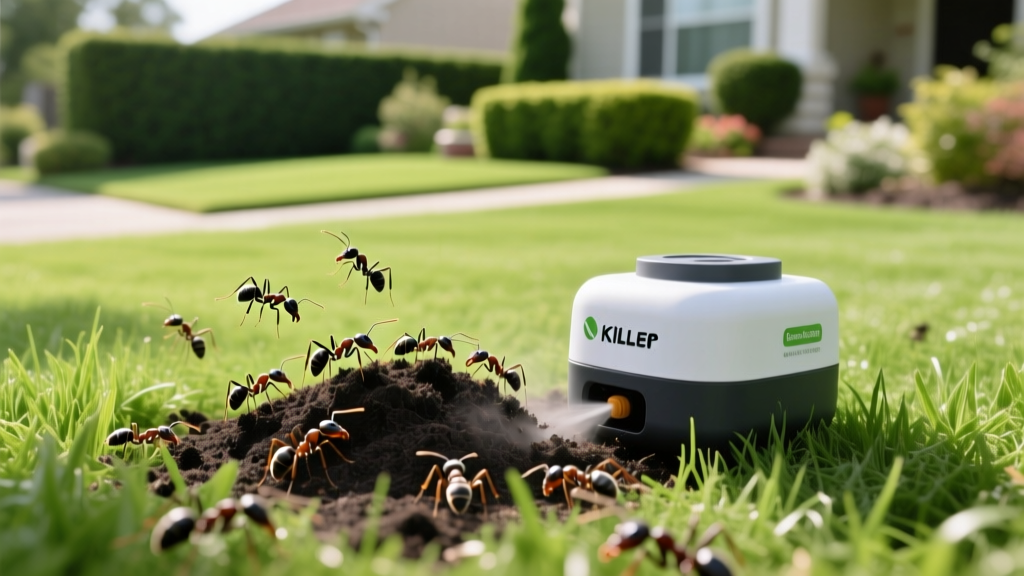
Best Ant Hill Killer for Lawns: Fast-Acting Yard Defense Guide
Ant hills are more than just unsightly dirt mounds that dull your mower blades; they are the surface vents of massive subterranean colonies that suffocate turfgrass roots and harbor thousands of aggressive workers. When you are searching for an effective ant hill killer, the biggest mistake homeowners make is treating only the surface. To reclaim your yard, you must target the colony's architecture and deploy active ingredients that reach the queen.
⚠️ Critical Safety Note: Before applying any chemical ant hill killer, identify your ant species. Fire ants (Solenopsis invicta) require aggressive, colony-wide eradication due to their stinging risk, while harmless native harvester ants play a vital role in soil aeration and should only be treated if they directly threaten high-traffic areas.
The Anatomy of an Ant Mound: Why Surface Sprays Fail
A visible ant mound is merely the excavation debris pushed to the surface. According to the Texas A&M AgriLife Extension, a mature fire ant colony extends 12 to 18 inches below the soil surface, with lateral tunnels spreading up to 3 feet outward. The queen resides deep within this network to protect herself from temperature fluctuations and surface predators.
Spraying a standard over-the-counter aerosol or surface dust only kills the foraging workers on the crust. Within 48 hours, the surviving deep-nest workers will simply push up a new mound a few inches away. An effective ant hill killer must either be carried down by the workers themselves (baits) or flooded into the galleries (liquid drenches).
Decision Matrix: Matching the Ant Hill Killer to Your Scenario
Not all infestations require the same approach. Use this matrix to select the right formulation based on your specific lawn defense needs.
| Method | Kill Speed | Cost per Mound | Best Use Case |
|---|---|---|---|
| Protein/Sugar Baits | 2 to 4 weeks | $0.10 - $0.25 | Broadcasting across entire lawns; eliminating satellite colonies. |
| Liquid Drenches | 2 to 24 hours | $0.50 - $1.50 | Nuisance mounds near patios, play areas, or garden beds. |
| Contact Dusts | 1 to 3 days | $0.75 - $2.00 | Dry, sandy soils where liquid runoff is a concern. |
| Granular Broadcast | 1 to 2 weeks | Varies by area | Preventative perimeter defense and large-acreage properties. |
Top Commercial-Grade Ant Hill Killers on the Market
Skip the diluted hardware store sprays. Professional-grade active ingredients offer superior transfer effects and deeper soil penetration.
1. Syngenta Advion Fire Ant Bait (Indoxacarb 0.04%)
Price: $25 - $32 per 1.5 lb shaker jug.
How it works: Indoxacarb is a pro-insecticide that requires the ant's digestive enzymes to become toxic. Foragers carry the granules deep into the mound, feed them to the larvae and queen, and trigger a colony-wide collapse. The UC Statewide Integrated Pest Management Program highly recommends baiting as the most ecologically sound method for long-term ant suppression.
2. Bayer Tempo SC Ultra (Cyfluthrin)
Price: $45 - $55 per 8 oz bottle.
How it works: A suspension concentrate that mixes with water for a massive liquid drench. Cyfluthrin provides rapid knockdown. Because it is a liquid, it physically floods the 18-inch deep galleries, drowning the queen and workers on contact while leaving a residual barrier in the soil.
3. Ortho Orthene Mound Treatment (Acephate 50%)
Price: $8 - $12 per 1 lb bag.
How it works: Acephate is a systemic organophosphate that acts as a fast-acting contact killer. It is highly effective for individual mound drenching but carries a strong, distinct odor and requires careful handling to avoid runoff into storm drains.
The 'Drench and Bait' Dual Protocol
For the ultimate yard defense, combine the speed of a liquid drench with the long-term eradication of a bait. Follow this exact sequence:
- Identify High-Traffic Mounds: Mark mounds within 10 feet of your home foundation, patios, or play areas with a landscaping flag.
- Mix the Drench: For Tempo SC Ultra, mix 0.1 fluid ounces (approx. 3 ml) per gallon of water. You will need 1.5 to 2 gallons of mixed solution per average-sized mound.
- Disturb the Crust: Use a metal rod or long screwdriver to punch 3 to 4 holes into the top and sides of the mound. This breaks the surface tension and allows the liquid to penetrate rather than pool and run off.
- Flood the Galleries: Pour the solution slowly over the mound, starting from the outer edges and working inward. The goal is to saturate the soil profile to a depth of 18 inches.
- Broadcast Bait 48 Hours Later: Once the drenched mounds are inactive, apply Advion Fire Ant Bait across the entire lawn at a rate of 1.5 lbs per acre (approx. 0.5 oz per 1,000 sq ft). Do not bait on the same day as drenching, as the dead workers and chemical residue will deter foragers from picking up the bait.
Why DIY Home Remedies Fail
"Pouring boiling water, vinegar, or club soda onto an ant hill is a persistent myth. While boiling water will kill the ants it touches, it rarely penetrates past the top 4 inches of soil, leaving the queen completely unharmed. Worse, the boiling water will instantly sterilize the soil and kill the surrounding turfgrass roots, leaving you with a dead, muddy crater that invites weed seeds."
Post-Treatment Lawn Recovery
Once the colony is confirmed dead (no worker activity for 72 hours), the physical mound remains. Do not simply smash it with a rake, as this spreads compacted clay over your healthy grass, smothering the turf.
- Shovel and Remove: Use a flat-nosed spade to slice the dead mound off at the soil line.
- Topdress the Crater: The void left behind will cause water pooling. Fill the depression with a 50/50 mix of play sand and screened compost.
- Core Aeration: If the infestation was severe, the surrounding soil is likely compacted from the tunneling. Run a core aerator over the zone to relieve compaction and promote deep root recovery.
By targeting the subterranean architecture of the colony with precise chemical delivery and following up with broadcast baits, you can maintain a pristine, defensible lawn without relying on ineffective surface treatments. For more detailed ecological data on ant species in your specific region, consult the University of Florida IFAS Entomology Department archives.

