
Pest Control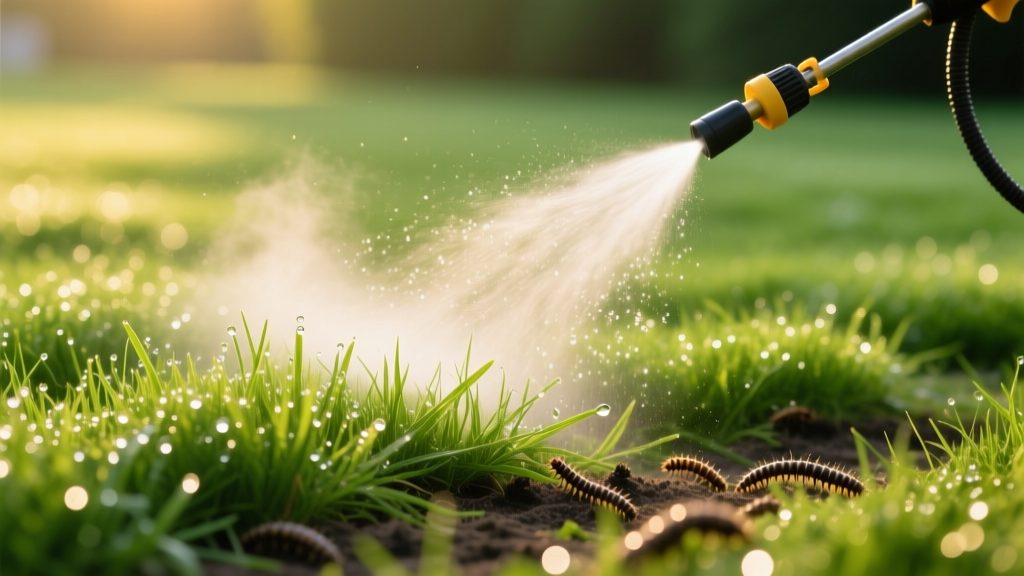
Best Army Worm Insecticide Treatments: Fast-Acting Lawn Defense
Fall armyworms (Spodoptera frugiperda) are the most destructive turfgrass pests in the southern and transitional United States. A severe infestation can defoliate a 5,000-square-foot lawn in under 48 hours, leaving behind only brown, ragged stubble. Selecting the correct army worm insecticide is not about buying the most expensive bottle on the shelf; it requires matching the active ingredient to the caterpillar's instar stage and applying it during their narrow nocturnal feeding window.
Scouting and the Soap Flush Test
Before deploying chemical controls, you must confirm the presence and density of the larvae. Armyworms cause 'frogeye' patches—small, circular brown areas that mimic drought stress but feel ragged to the touch. Because these pests are nocturnal, they hide deep in the thatch layer during the heat of the day, making visual scouting unreliable.
The Soap Flush Protocol: Mix 2 tablespoons of lemon-scented dish soap into 1 gallon of water. Pour the solution evenly over a 1-square-foot section of the lawn's perimeter (where the brown meets the green). Wait three minutes. If 3 to 5 or more larvae surface, immediate treatment is required. According to the University of Florida IFAS Extension, reaching this threshold means the population is actively expanding and will cause severe economic damage to your turf.
Active Ingredient Comparison Matrix
Not all insecticides perform equally against chewing pests. Below is a breakdown of the most effective active ingredients for army worm control, comparing their mode of action, residual lifespan, and average 2026 market costs.
| Active Ingredient | Brand Example | Mode of Action | Residual Control | Cost per Acre |
|---|---|---|---|---|
| Bifenthrin (25.1%) | Bifen XTS | Sodium channel modulator | 30–45 days | ~$48 |
| Carbaryl (22.5%) | Sevin SL | Cholinesterase inhibitor | 7–14 days | ~$35 |
| Chlorantraniliprole (18.5%) | Acelepryn | Ryanodine receptor modulator | 60–90 days | ~$165 |
| Spinosad (22.5%) | Conserve SC | Nicotinic acetylcholine receptor | 14–21 days | ~$95 |
Top Army Worm Insecticide Products for Rapid Knockdown
Bifen XTS (Bifenthrin 25.1%)
Bifen XTS is an oil-based water emulsion that provides rapid contact kill and extended residual control. As of 2026, a 32-ounce bottle retails for approximately $48, treating up to one acre. The oil base allows the active ingredient to penetrate the waxy cuticle of the grass blade and the insect's exoskeleton faster than standard suspension concentrates.
- Application Rate: Mix 0.3 to 0.6 fluid ounces per 1,000 square feet.
- Water Volume: Use 1.5 to 2 gallons of water per 1,000 square feet to ensure the spray penetrates the upper thatch layer.
Sevin SL (Carbaryl 22.5%)
Carbaryl is a fast-acting nerve toxin that paralyzes feeding caterpillars within hours. It is highly effective for immediate rescue treatments but offers a shorter residual window compared to pyrethroids. It is also highly toxic to bees, so applications must be strictly timed.
- Application Rate: 1.5 to 3.0 fluid ounces per 1,000 square feet.
- Water Volume: 1 to 2 gallons per 1,000 square feet.
The Application Protocol: Timing and Technique
Even the most potent army worm insecticide will fail if applied incorrectly. Armyworms are foliar feeders that hide in the thatch during the day and emerge to eat at night. Follow this strict protocol to ensure maximum mortality:
- Calibrate Your Sprayer: Ensure your backpack or tow-behind sprayer is calibrated to deliver exactly 1.5 to 2 gallons of finished solution per 1,000 square feet. Under-watering leads to poor foliar coverage; over-watering causes the product to wash into the soil where foliar-feeding caterpillars won't encounter it.
- Time the Application: Spray between 6:00 PM and 8:00 PM, or at dawn. Treating at dusk ensures the insecticide is wet and highly toxic exactly when the larvae emerge from the thatch to feed.
- Select the Right Nozzle: Never use a flood jet or round nozzle for foliar-feeding pests.
A flat-fan nozzle, such as the TeeJet 11004, produces the uniform droplet spectrum required to coat grass blades evenly without excessive runoff. This ensures the caterpillar ingests a lethal dose upon its next bite.
Critical Post-Spray Rule: Do not water the lawn immediately after application. Unlike grub treatments that require watering into the soil, army worm insecticides must remain on the grass blade. Wait at least 24 hours before irrigating or allowing rainfall to wash the foliage.
Biological and Organic Defense Options
For homeowners managing organic properties or dealing with early-stage infestations, biological controls offer a viable alternative to synthetic pyrethroids. According to Penn State Extension, Bacillus thuringiensis var. kurstaki (Btk) is highly effective against armyworms, but with a critical caveat: it only works on early instars (caterpillars smaller than 1/2 inch).
Once the larvae reach their later instars (the large, 1.5-inch caterpillars that cause the most visible damage), their gut lining thickens, rendering Btk largely ineffective. If you are using Btk products like Monterey B.t., you must scout daily and spray the moment you spot small larvae. Another organic option is the application of beneficial nematodes (Steinernema carpocapsae), which hunt the larvae in the thatch and topsoil, though they require moist soil conditions to survive and infect their hosts.
Post-Treatment Lawn Recovery
Once the army worm insecticide has halted the infestation, your turf will likely look scorched and thin. Armyworms rarely kill the crown or roots of established bermudagrass, zoysiagrass, or tall fescue; they only consume the leaf tissue. This means the lawn can recover fully within 14 to 21 days if properly fed.
Apply a high-nitrogen, quick-release fertilizer (such as a 28-0-3 urea-based blend) at a rate of 0.5 to 0.75 lbs of actual nitrogen per 1,000 square feet three days after your insecticide application. Water the fertilizer in deeply to push rapid vegetative regrowth and help the turf canopy close out the damaged patches before opportunistic weeds can take root.

