
Pest Control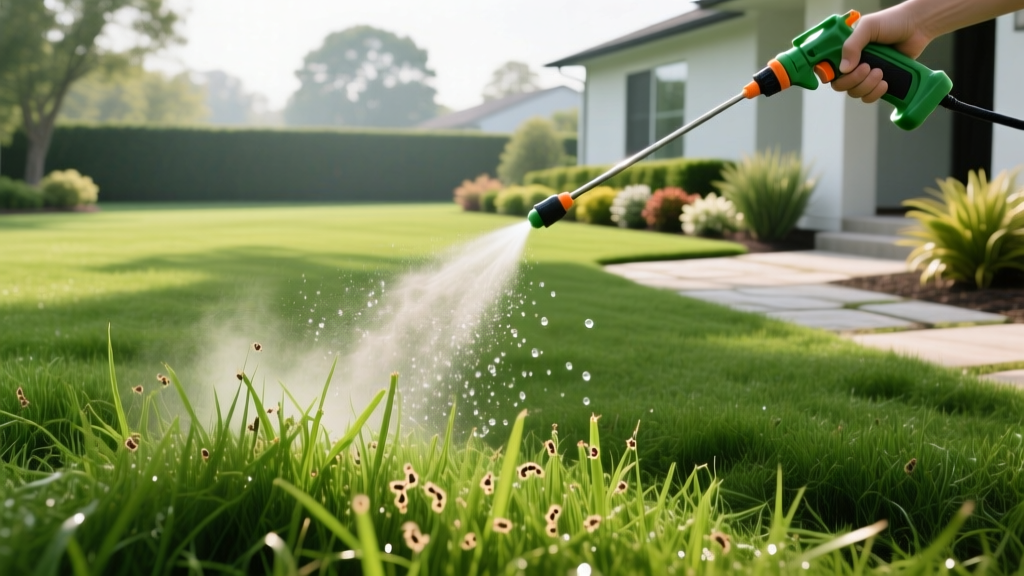
Fast-Acting Army Worm Treatment Guide to Save Your Lawn
Identifying the Threat: Fall Armyworm vs. True Armyworm
Before deploying an army worm treatment, you must correctly identify the species ravaging your turf. The two primary culprits in North American lawns are the fall armyworm (Spodoptera frugiperda) and the true armyworm (Mythimna unipuncta). According to Penn State Extension, fall armyworms primarily devastate warm-season grasses like Bermudagrass and Zoysia, as well as cool-season grasses in the transition zone during late summer. True armyworms typically target cool-season turf and winter ryegrass in the spring.
Visual identification is your first line of defense. Fall armyworm larvae feature a distinct, light-colored inverted 'Y' suture on the front of their dark head capsules. Their bodies are striped with pale longitudinal lines and a wider, darker stripe down the back. True armyworms lack the inverted 'Y' and feature a prominent white stripe bordered by a dark band running along the lower side of their bodies.
The 48-Hour Rule: Why Timing Dictates Your Treatment
Armyworms do not eat at a constant rate. A single larva will consume roughly 80% of its total lifetime food intake during the final three to four days of its sixth instar stage. This biological reality creates a narrow 48-hour window for effective intervention. If you notice small, ragged chew marks on the tips of your grass blades and spot larvae measuring less than 1/2 inch, you have time to deploy biological controls. If you find 1-inch to 1.5-inch plump larvae marching in visible clusters, you must immediately switch to fast-acting synthetic pyrethroids to prevent total defoliation within the weekend.
Warning: Do not rely on 'wait and see' tactics. A heavy infestation of 10 or more larvae per square foot can strip a 5,000-square-foot lawn to bare soil in under 72 hours, killing the crown and requiring complete reseeding or resodding.
Chemical vs. Biological Army Worm Treatment Options
Selecting the right active ingredient depends on the size of the larvae, your environmental constraints, and your budget. Below is a comparison of the most effective compounds currently on the market.
| Active Ingredient | Product Examples | Target Stage | Speed of Knockdown | Est. Cost per 1,000 sq ft |
|---|---|---|---|---|
| Bifenthrin (Pyrethroid) | Talstar P, Bifen I/T | All stages | 24 - 48 hours | $0.08 - $0.12 |
| Carbaryl | Sevin SL, Sevin Dust | Medium to Large | 24 - 72 hours | $0.15 - $0.20 |
| Bt var. kurstaki (Btk) | Thuricide, Monterey Bt | Early instar (<1/2 in) | 3 - 5 days (ingestion) | $0.25 - $0.35 |
| Spinosad | Conserve, Captain Jack's | Early to Medium | 24 - 48 hours | $0.30 - $0.40 |
| Chlorantraniliprole | Acelepryn | Preventative / Early | Slow (systemic) | $0.45 - $0.60 |
Synthesis & Strategy: For acute, late-stage outbreaks, liquid Bifenthrin (7.9% concentration) remains the gold standard for rapid contact kill. However, University of Florida IFAS notes that some southern fall armyworm populations have developed localized resistance to pyrethroids. If a Bifenthrin application fails to halt feeding after 48 hours, rotate immediately to a carbamate like Carbaryl or a biological like Spinosad to bypass the resistance mechanism.
Step-by-Step Application Protocol for Maximum Knockdown
Applying the correct chemical is only half the battle; application mechanics dictate your success rate. Follow this exact protocol for liquid contact insecticides like Bifenthrin or Carbaryl.
- Mow and Bag: Mow your lawn slightly lower than normal and bag the clippings. Armyworms hide in the thatch and canopy during the day. Removing the upper canopy exposes them to the spray and prevents the chemical from binding to clippings that will eventually be mowed and discarded.
- Calibrate the Sprayer: Use a pump sprayer or hose-end sprayer calibrated to deliver 1.5 to 2.0 gallons of finished solution per 1,000 square feet. For 7.9% Bifenthrin, mix 0.5 to 1.0 fluid ounces of concentrate per gallon of water.
- Time the Application: Armyworms are primarily nocturnal feeders. Apply your treatment in the late evening or at dusk. This ensures the chemical is wet on the foliage exactly when the larvae emerge from the soil to feed, maximizing ingestion and contact toxicity.
- Avoid Immediate Watering: Unlike soil-applied grub treatments, contact insecticides for caterpillars must remain on the leaf surface. Do not irrigate for at least 24 hours post-application to allow the pyrethroid to bind to the plant cuticle.
Post-Treatment Recovery and Turf Defense
Once the army worm treatment has halted the feeding, your lawn will likely look scalped and brown. The grass crowns are usually still alive if the invasion was caught before total soil exposure. To force rapid recovery, apply a quick-release nitrogen fertilizer (such as urea or ammonium sulfate) at a rate of 0.5 lbs of actual nitrogen per 1,000 square feet. Follow this immediately with 0.5 inches of deep irrigation to push the nitrogen into the root zone and stimulate new blade generation.
Common Application Mistakes to Avoid
- Spraying at High Noon: Applying liquid insecticides when temperatures exceed 85°F causes rapid evaporation and UV degradation of the active ingredient, reducing efficacy by up to 40%.
- Ignoring Thatch Buildup: If your lawn has more than 0.5 inches of thatch, the thatch layer will act as a sponge, absorbing the pyrethroid before it reaches the soil surface where smaller larvae hide. Dethatch or aerate heavily infested areas prior to treatment.
- Using Granulars for Acute Outbreaks: Granular insecticides require watering-in to activate, which washes the chemical off the leaf blades where the caterpillars are actively feeding. Always use liquid sprays for active armyworm infestations.
Frequently Asked Questions
Will armyworms kill my grass permanently?
Rarely. Armyworms chew the leaf blades but typically leave the crown and root system intact. With proper post-treatment fertilization and watering, warm-season grasses like Bermudagrass can fully recover in 14 to 21 days.
How do I monitor for a secondary hatching?
Armyworm moths lay eggs in staggered batches. According to University of Kentucky Entomology, you must monitor the turf for 14 days after the initial treatment. Flush the grass with a mixture of 1 ounce of dish soap per gallon of water; if live larvae surface within 5 minutes, a second application is required.
Can I use Bt (Bacillus thuringiensis) on large armyworms?
No. Btk is highly effective but only works on early instar larvae (under 1/2 inch long). Large, mature armyworms possess a highly acidic gut that neutralizes the Bt crystal proteins before they can cause fatal septicemia. Switch to a synthetic pyrethroid or Carbaryl for mature worms.

