
Pest Control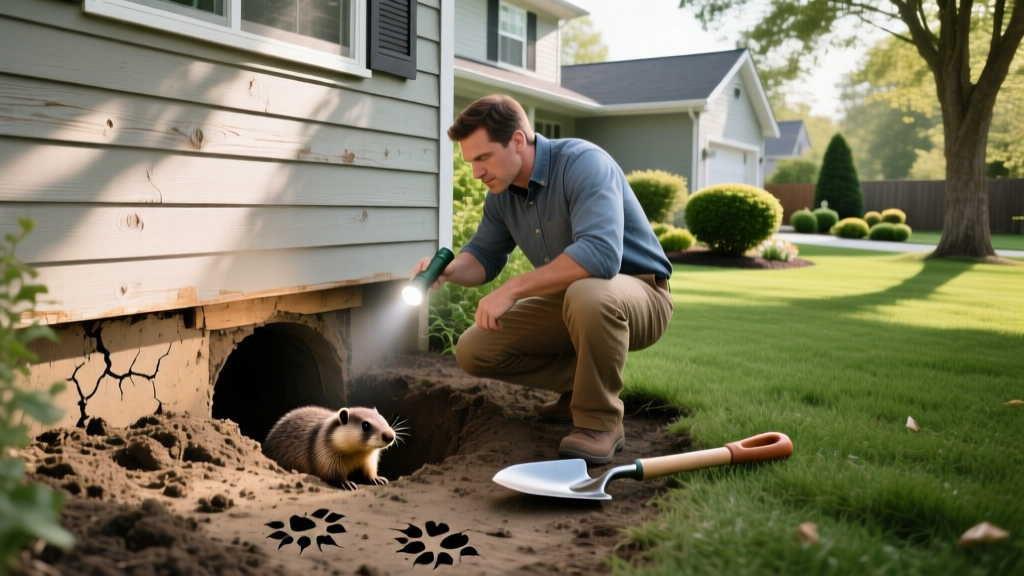
How to Get Rid of Groundhogs Under House Fast: 3-Step Eviction
The Urgency of Groundhog Eviction
A groundhog (woodchuck) living under your house, deck, or crawlspace is not just a nuisance; it is an active structural threat. A single adult groundhog can excavate up to 70 pounds of soil per day, creating multi-chambered burrow systems that extend 10 to 15 feet deep and span up to 50 feet laterally. When these tunnels intersect with your foundation footings, they cause soil subsidence, cracked concrete, and compromised structural integrity. Furthermore, groundhogs frequently chew through PVC plumbing lines and electrical wiring routed through crawlspaces.
If you need to know how to get rid of groundhogs under house fast, you must bypass ineffective repellents and slow-acting deterrents. The only reliable method for rapid removal is a targeted one-way eviction protocol followed immediately by permanent physical exclusion. According to Penn State Extension, physical exclusion remains the only long-term solution to woodchuck damage, as chemical repellents wash away and habituation occurs quickly.
⚠️ CRITICAL SEASONAL WARNING: The Baby Trap
Before initiating any fast eviction, you must determine the season. Groundhogs breed in early spring, and kits are born between April and June. If you install a one-way door during this window, the mother will be locked out while her blind, dependent babies remain trapped inside. The kits will starve, die, and create a severe biohazard and odor problem under your home. If it is May or June, you must either wait until late July when the kits are weaned and mobile, or hire a professional to manually extract the nest. The Humane Society strongly advises against one-way exclusions during birthing seasons.
The 48-Hour Eviction Protocol
To remove the animals humanely and rapidly outside of the spring birthing season, follow this three-step eviction process.
Step 1: Map the Burrow Network
Groundhogs rarely dig just one hole. A standard burrow system features one main entrance (marked by a large mound of excavated dirt) and two to four secondary 'plunge holes' that are flush with the ground and hidden under brush or decking.
- Flour Tracking: Lightly dust flour around suspected exits in the evening. Check for footprints at dawn to confirm active routes.
- Probing: Use a 4-foot fiberglass probe rod to gently map the tunnel direction. Do not collapse the tunnel during this phase, or the groundhog will simply dig a new exit inside your crawlspace.
- Seal the Secondaries: Once all exits are located, plug all secondary holes with heavy rocks and soil, leaving only the main exit open for the eviction device.
Step 2: Install a One-Way Exclusion Door
Do not use live traps for fast crawlspace eviction; trapping requires daily checking, baiting, and navigating complex state relocation laws. Instead, mount a heavy-duty one-way exclusion door over the main exit.
- Select the Right Hardware: Purchase a 12x12 inch galvanized steel one-way door (brands like Critter Control or Trapline offer reliable models ranging from $45 to $75). Avoid plastic models, as groundhogs will chew through them in hours.
- Secure the Perimeter: Attach the door frame directly to the ground or foundation using masonry screws or landscaping stakes. There must be zero gaps around the frame. Use 1/2-inch hardware cloth to patch any gaps between the door frame and the foundation.
- Deploy and Wait: The groundhog will push through the swinging flap to forage but cannot re-enter. Leave the door in place for a minimum of 3 to 5 consecutive days to ensure all animals have exited.
Step 3: Verify and Remove
Stuff a loose ball of newspaper or a handful of dry leaves into the hole behind the door. If the material remains undisturbed for 48 hours, the burrow is empty. Remove the door and proceed immediately to permanent exclusion.
Method Comparison: Speed vs. Efficacy
Homeowners often waste days trying ineffective methods when speed is required. Below is a data-driven comparison of common groundhog removal tactics.
| Method | Time to Result | Estimated Cost | Long-Term Efficacy |
|---|---|---|---|
| One-Way Eviction Door | 3 - 5 Days | $45 - $90 | High (when paired with exclusion) |
| Live Trapping (10x12x32) | 1 - 7 Days | $50 - $120 + Permit fees | Low (new groundhogs claim territory) |
| Castor Oil Repellents | 2 - 4 Weeks | $30 - $60 | Very Low (washes away in rain) |
| Predator Urine (Coyote/Fox) | Unreliable | $20 - $40 | None (habituation occurs rapidly) |
| Professional Wildlife Control | 1 - 2 Days | $450 - $850 | Very High (includes warranty) |
Permanent Exclusion: The L-Footer Trench Method
Evicting the groundhog is only half the battle. If you do not fortify the perimeter, a transient groundhog will claim the existing, highly desirable burrow within 48 hours. To prevent re-entry, you must install an 'L-Footer' trench around the vulnerable foundation, deck, or crawlspace perimeter.
Material Specifications
Do not use chicken wire (poultry netting). Groundhogs have powerful incisors and can easily snap thin chicken wire or push it aside. You must use 19-gauge, 1/2-inch galvanized welded hardware cloth. In 2026, a 36-inch by 50-foot roll of this heavy-duty mesh costs approximately $55 to $75 at major hardware suppliers.
Installation Steps
- Dig the Trench: Dig a narrow trench exactly 12 inches deep and 2 inches wide, running parallel and flush against the foundation or skirting.
- Create the 'L' Bend: Bend the bottom 12 inches of the hardware cloth at a strict 90-degree angle outward, pointing away from the house. This creates an underground shelf. When a groundhog digs at the foundation line, it hits the wire mesh and cannot dig underneath it.
- Attach the Vertical Run: Secure the vertical portion of the mesh to the foundation or deck posts. If attaching to masonry, use concrete tapcon screws and washer-heads every 12 inches. For wood, use heavy-duty galvanized fencing staples.
- Backfill and Compact: Bury the horizontal 'L' shelf in the trench. Backfill with soil mixed with crushed gravel (a 70/30 ratio) to deter future digging, and compact it firmly with a hand tamper.
Pro-Tip on Soil Compaction: Groundhogs prefer loose, well-draining soil for excavating. By mixing sharp, crushed 3/4-inch gravel into the backfill soil above your L-footer, you create a physical deterrent. The sharp edges discourage digging, significantly increasing the longevity of your exclusion barrier.
Addressing Foundation and Crawlspace Damage
Once the animal is evicted and the perimeter is sealed, you must address the void left behind. A mature groundhog burrow can displace 15 to 20 cubic feet of soil. If left empty, water will pool in the tunnels, leading to hydrostatic pressure against your foundation and potential frost heave in colder climates.
Use a slurry pump or a long-reach funnel to inject a flowable fill (a low-strength, self-leveling concrete mix) or a sand-cement grout into the main burrow opening. Flowable fill costs roughly $120 to $150 per cubic yard and will seep into the lateral chambers, solidifying into a stable mass that prevents soil collapse without exerting damaging pressure on your foundation walls.
Frequently Asked Questions
Can I use mothballs or ammonia to drive them out quickly?
No. Using mothballs (naphthalene) or ammonia in a burrow is illegal in many jurisdictions as it violates pesticide label laws, and it is highly ineffective for deep burrows. Groundhogs will simply plug off the contaminated tunnel and dig a new exit further under your home, exacerbating the structural damage.
What if the groundhog is trapped inside my crawlspace during the L-footer installation?
Always complete the eviction protocol using the one-way door before beginning the L-footer trench. If you seal the perimeter while the animal is inside, it will panic and dig aggressively upward through your floor joists, insulation, and subflooring to escape, causing thousands of dollars in interior damage.
Are ultrasonic deterrents effective for crawlspace groundhogs?
Ultrasonic devices are entirely ineffective against groundhogs. Scientific studies on mammalian pest deterrents consistently show that subterranean and burrowing rodents quickly habituate to high-frequency noise, and the sound waves cannot penetrate the dense soil and concrete of a crawlspace environment.

