
Pest Control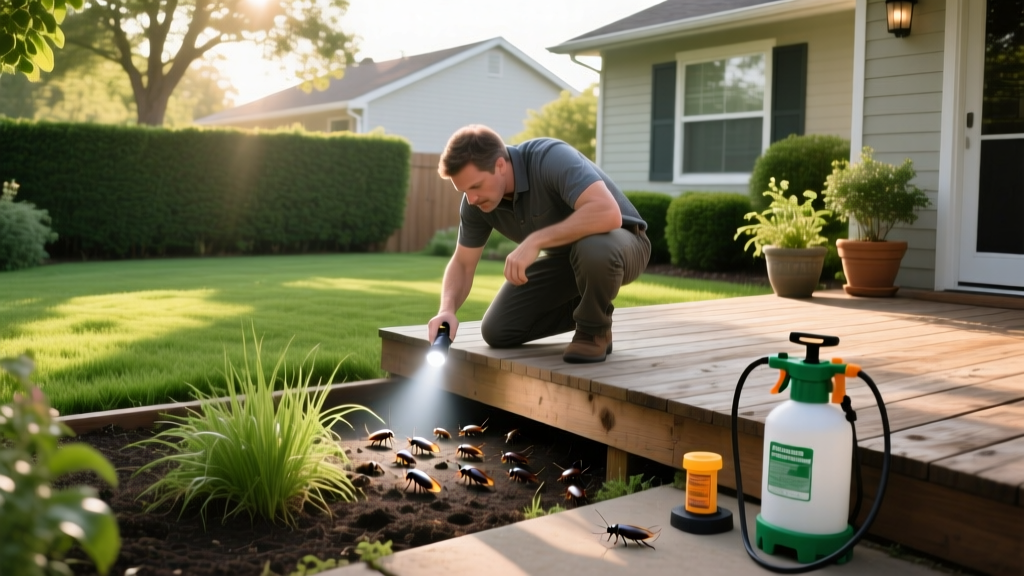
Yard Defense: How Can You Get Rid of Roaches Fast
When homeowners ask how can you get rid of roaches fast, the first critical step is identifying the battleground. If you are seeing large roaches in your yard, mulch beds, or garage, you are dealing with peridomestic (outdoor) species, not the indoor-breeding German cockroach. Yard defense requires a fundamentally different strategy than indoor kitchen treatments. Outdoor roaches thrive in high-moisture environments, decaying organic matter, and dense ground cover. Eradicating them rapidly requires a synchronized attack combining immediate-kill liquid barriers, slow-acting granular baits, and Insect Growth Regulators (IGRs) to break the reproductive cycle.
Identify the Outdoor Invader
Applying indoor gel baits to a yard infestation is a waste of time and money. You must correctly identify the peridomestic species invading your property to target their specific harborage zones. According to the University of Florida IFAS Extension, the three most common outdoor roaches in North America are the American, Smokybrown, and Oriental cockroaches.
| Species | Size | Color/Markings | Primary Yard Habitat |
|---|---|---|---|
| American Cockroach | 1.5 - 2.0 inches | Reddish-brown with pale yellow figure-8 on pronotum | Sewers, storm drains, damp mulch, woodpiles |
| Smokybrown Cockroach | 1.25 - 1.5 inches | Uniform dark brown to black, shiny | Tree holes, roof shingles, dense ivy, leaf litter |
| Oriental Cockroach | 1.0 - 1.25 inches | Glossy dark brown to black | Crawlspaces, damp soil, under porches, drainage areas |
The 48-Hour Fast-Acting Perimeter Protocol
To collapse an outdoor population quickly, you cannot rely on a single product. Professional pest control operators use a three-pronged approach. Here is the exact protocol to execute over a single weekend.
Step 1: Deploy Microencapsulated Liquid Barriers
Standard liquid insecticides break down rapidly under UV light and rain. For outdoor longevity, you need a microencapsulated suspension concentrate (SC). Demand CS (lambda-cyhalothrin 9.7%) or Temprid FX are industry standards. The microcapsules stick to the roaches' tarsi (feet) as they walk over treated surfaces, providing a delayed lethal dose.
- Mixing Rate: Mix 0.4 oz of Demand CS per gallon of water for heavy infestations.
- Application: Using a 1-gallon pump sprayer, apply a continuous band 3 feet up the exterior foundation and 3 feet out onto the soil/mulch. This creates a 6-foot lethal moat.
- Coverage: 1 gallon treats approximately 1,000 square feet of surface area.
Warning: Never spray liquid pyrethroids directly into water features, koi ponds, or storm drains. These chemicals are highly toxic to aquatic life. Maintain a 10-foot buffer from any standing water.
Step 2: Broadcast Granular Bait in Harborage Zones
Liquid barriers kill on contact, but baits cause secondary mortality. Syngenta Advion Insect Granule (indoxacarb) is highly palatable to outdoor roaches. When a roach consumes the bait and dies, other roaches consume the carcass, ingesting the active ingredient and dying in turn (the domino effect).
- Application Rate: Apply 1.1 to 4.4 lbs per 1,000 sq ft.
- Target Zones: Broadcast heavily into thick mulch beds, under decks, and around the bases of mature trees. Do not place granules on top of the liquid barrier; the bitter taste of the liquid can deter roaches from eating the bait.
Step 3: Halt Reproduction with an IGR
Killing adults leaves thousands of eggs and nymphs behind. An Insect Growth Regulator (IGR) like Gentrol (hydroprene) mimics juvenile hormones, preventing nymphs from molting into reproducing adults. Add Gentrol IGR concentrate directly to your liquid sprayer tank when mixing your Demand CS. This ensures every surface treated with the liquid barrier is also coated in reproductive inhibitors.
Landscaping Corrections: The Root Cause
Chemical treatments will fail within 30 days if your yard remains a perfect breeding ground. The Texas A&M AgriLife Extension emphasizes that moisture and harborage management are the most critical long-term deterrents. You must implement the "3-Foot Dry Zone" rule.
The 3-Foot Dry Zone Rule
Roaches require high humidity to survive. By altering the microclimate immediately adjacent to your home, you force them to relocate or die of desiccation.
- Mulch Depth Limit: Cap mulch depth at 2 inches. Thick layers of hardwood mulch retain massive amounts of moisture and provide ideal nesting sites. Switch to inorganic gravel or pine straw, which dries out much faster.
- Vegetation Pull-Back: Trim all shrubs, bushes, and tree branches so they do not touch the exterior siding. Roaches use overhanging branches as bridges to bypass your ground-level chemical barriers and access rooflines or attic vents.
- Grade and Drainage: Ensure the soil slopes away from the foundation at a minimum rate of 1/4 inch per foot. Install French drains in low-lying areas where water pools after rain, as Oriental cockroaches will swarm these saturated zones.
Cost Breakdown: DIY vs. Professional Treatment
Understanding the financial commitment helps you decide whether to tackle the perimeter yourself or hire a licensed operator. Prices below reflect average retail and service costs as of 2026.
| Treatment Method | Initial Cost | Annual Maintenance | Efficacy Timeline |
|---|---|---|---|
| DIY Chemical Protocol (Bait + Liquid + IGR) | $120 - $160 | $80 - $110 (Replenishing bait/liquid) | 48 - 72 hours for initial knockdown |
| Professional Quarterly Pest Control | $175 - $250 (First visit) | $400 - $600 (Quarterly contract) | 24 - 48 hours (Commercial-grade products) |
| DIY Bug Bombs / Foggers | $20 - $40 | $20 - $40 (Constant reapplication) | Ineffective outdoors; high failure rate |
Expert Insight: Total-release foggers (bug bombs) are entirely useless for yard defense. The aerosolized pyrethrin settles on the top layer of leaves and mulch, completely failing to penetrate the deep harborage zones where roaches actually nest. Furthermore, the EPA warns that foggers often agitate outdoor colonies, driving them indoors to escape the chemical irritant.
Frequently Asked Questions
Will heavy rain wash away my liquid perimeter treatment?
If the microencapsulated liquid (like Demand CS) is allowed to dry completely before the rain starts—usually 2 to 4 hours—the polymer capsules bind to the porous surfaces of concrete and soil. Once dry, it can withstand heavy rainfall and remain active for 60 to 90 days. Granular baits, however, can wash away in severe downpours; apply granules only when the forecast shows at least 48 hours of dry weather.
Do outdoor roach treatments kill beneficial insects?
Broad-spectrum pyrethroids are non-selective and will harm beneficial ground beetles, spiders, and pollinators if sprayed directly on flowers. To minimize collateral damage, apply liquids strictly to the foundation perimeter, hardscapes, and non-flowering mulch beds. Avoid spraying the upper canopies of flowering shrubs where bees forage.
Why am I still seeing roaches two weeks after treatment?
Seeing a few lethargic or dead roaches 10 to 14 days post-treatment is actually a sign of success. The IGR (Gentrol) causes nymphs to develop twisted wings and malformed exoskeletons, forcing them out of their hidden harborage zones into the open before they die. If you are seeing healthy, fast-moving adults after three weeks, the liquid barrier was likely applied too thinly or washed away before drying, requiring a reapplication.

