
Pest Control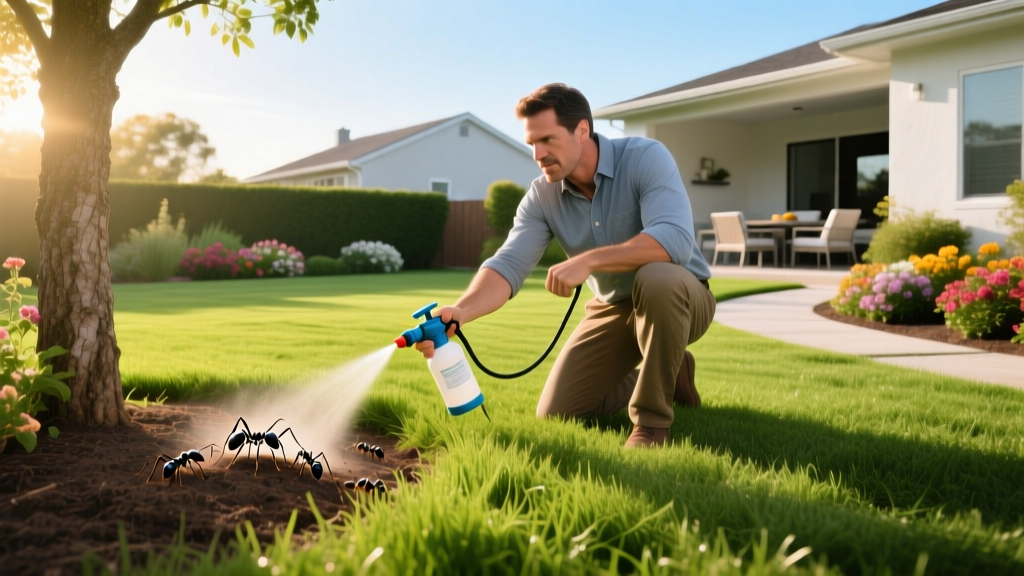
How to Get Rid of Ants Fast in Your Yard: A 24-Hour Defense Plan
When a massive ant mound erupts in your lawn or a trail of carpenter ants invades your patio, you need immediate results. However, learning how to get rid of ants fast requires more than just grabbing a can of bug spray from the hardware store. In fact, the most common "quick fixes" actually make the infestation worse. To achieve rapid, permanent elimination in your yard, you must target the colony's central nervous system and reproductive queens, rather than just killing the surface foragers.
The "Budding" Trap: Why Most Fast Fixes Fail
The biggest mistake homeowners make when trying to eliminate yard ants quickly is using contact repellents like standard cypermethrin or bifenthrin aerosol sprays directly on the mound. According to the Texas A&M Fire Ant Project, applying fast-acting repellent chemicals triggers a survival mechanism known as budding.
When a colony senses a lethal, fast-acting threat at the main entrance, the secondary queens immediately grab a fraction of the workers and tunnel outward to establish three or four new satellite mounds up to 20 feet away. You haven't eliminated the colony; you've just multiplied it. To get rid of ants fast without triggering budding, you must use non-repellent transfer chemicals or slow-acting protein baits that the workers willingly carry back to the queens.
⚠️ Critical Warning: Never use high-pressure hose nozzles to flood mounds with insecticides. The physical force of the water will cause the colony to panic and evacuate before the chemical has time to bind to their exoskeletons. Always use a low-pressure watering can.
24-Hour Yard Ant Elimination Matrix
Different ant species and colony sizes require specific chemical approaches. Below is a decision matrix to help you select the right treatment for rapid eradication based on current 2026 professional-grade product pricing and efficacy rates.
| Method | Active Ingredient | Kill Speed | Avg. Cost per 1k sq ft | Best Target |
|---|---|---|---|---|
| Liquid Mound Drench | Fipronil (9.1%) | 24 - 72 Hours | $0.15 | Fire ants, aggressive visible mounds |
| Granular Protein Bait | Abamectin (0.011%) | 3 - 7 Days | $1.20 | Carpenter ants, sweet-ignoring species |
| Contact Granules | Bifenthrin (0.2%) | Immediate (Surface) | $1.50 | Perimeter barrier, surface foragers |
Step-by-Step Mound Drench Protocol (The 24-Hour Fix)
For visible mounds—particularly Red Imported Fire Ants (RIFA) or pavement ants—a liquid drench using a non-repellent termiticide/insecticide like Termidor SC is the gold standard. Fipronil works via the "transfer effect," meaning foragers unknowingly carry the lethal dose back to the queen through grooming and trophallaxis (food sharing).
1. Calculate and Mix the Solution
A standard 20-ounce bottle of Termidor SC costs between $75 and $95. To mix a standard yard drench, combine 0.8 fluid ounces of Termidor SC per gallon of water. This yields enough solution to treat roughly 15 to 20 average-sized mounds.
2. The Application Technique
Do not disturb the mound with a stick before applying. Disturbance causes the queens to retreat deep into the water table, out of reach of the chemical. Using a standard 2-gallon watering can with a gentle rose attachment, slowly pour 1.5 to 2 gallons of the diluted solution directly over the mound and a 2-foot radius surrounding it. The goal is to let the soil absorb the liquid, creating a treated dome.
3. The Waiting Period
Walk away. You will still see ants moving on the surface for the first 12 to 18 hours. This is normal; the chemical must bind to their cuticles. By hour 48, surface activity should drop by 90%, and by hour 72, the colony will be entirely eradicated.
The 72-Hour Baiting Strategy for Invisible Colonies
Not all yard ants build massive, visible mounds. Carpenter ants and certain sweet-ant species nest inside rotting fence posts, hollow tree stumps, or under thick thatch layers. When you cannot find a central mound to drench, you must force them to carry the poison home.
According to NC State Extension, baiting is highly effective but requires strict environmental timing. Use a professional-grade granular bait like Advance Carpenter Ant Bait (active ingredient: Abamectin 0.011%).
- Timing: Apply bait strictly at dusk. Ants forage most heavily between 8:00 PM and midnight. Morning applications risk the bait being eaten by birds or degraded by UV rays.
- Placement: Broadcast 1.5 ounces of bait per 1,000 square feet across the lawn, or place small 1-ounce piles directly next to suspected nesting sites (like the base of a wooden retaining wall).
- Moisture Rule: Never apply granular bait if rain is forecast within 24 hours, or if you plan to run your irrigation system. Wet bait loses its palatability, and the ants will ignore it in favor of natural food sources.
💡 Pro Tip: If your ants are ignoring the protein bait, they may be in a "sugar cycle." Switch to a liquid carbohydrate bait like Maxforce Fleet (Fipronil 0.001%) placed in plastic bait stations to match their current nutritional cravings.
Perimeter Defense: Keeping Them Out Long-Term
Once the active mounds are destroyed, you must establish a chemical barrier to prevent neighboring colonies from migrating into your treated turf. This is where contact granules shine.
Granular Barrier Application Rates
Use Bifen L/P (Bifenthrin 0.2%), which typically costs around $30 for a 25-pound bag. This bag covers approximately 5,000 square feet. Set your rotary spreader to the manufacturer's recommended setting (usually setting 4 or 5 on a Scotts spreader) to apply 2.3 pounds per 1,000 square feet. Immediately after spreading, water the lawn with exactly 0.25 inches of irrigation. This washes the active ingredient off the grass blades and into the top half-inch of the soil, creating a lethal barrier for ground-dwelling insects without harming the turfgrass.
Frequently Asked Questions
Is fipronil safe for dogs and cats in the yard?
When applied as a liquid drench and allowed to dry completely (usually 2 to 4 hours), fipronil binds tightly to soil organic matter and poses minimal risk to mammals. However, keep pets off the lawn during the application and drying process. Never allow pets to ingest undiluted concentrate or chew on freshly treated ant mounds.
Why are the ants migrating into my house after I treated the yard?
This is a common failure mode caused by using repellent sprays (like Ortho Home Defense) near the foundation. The outdoor ants panic and seek refuge indoors. If you must treat the foundation, use a non-repellent liquid like Alpine WSG (Dinotefuran) which allows ants to cross the barrier and die outside, rather than bouncing them into your kitchen.
Can I use boiling water to get rid of ants fast?
While pouring 3 gallons of boiling water directly into a mound will kill about 60% of the colony on contact, it rarely reaches the deep queen chambers. Furthermore, boiling water will instantly sterilize the soil and kill the grass roots, leaving a dead, brown patch in your lawn that will take months to recover. Chemical drenches are vastly superior for turf preservation.

