
Pest Control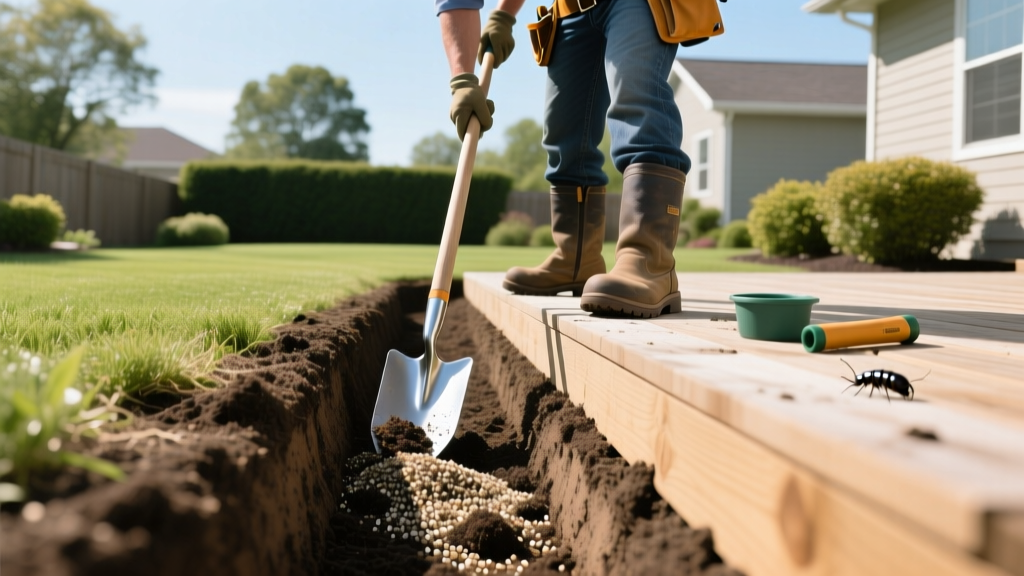
DIY Soil Treatment for Termites: Trenching and Chemical Guide
The Mechanics of Perimeter Defense: Why Soil Treatment Works
Subterranean termites require constant contact with soil moisture to survive, making the earth surrounding your foundation their primary highway into your home. A properly executed soil treatment for termites creates a continuous, unbroken chemical barrier that intercepts foraging workers before they reach wooden structural components. Unlike localized wood treatments or interior bait stations, liquid soil treatments leverage the termites' own foraging behavior. When utilizing non-repellent active ingredients like fipronil, foraging termites pass through the treated soil, pick up a lethal dose, and transfer it to the broader colony through trophallaxis (food sharing) and physical contact.
⚠️ Environmental Safety Warning: Never apply liquid termiticides within 5 feet of a well, cistern, or water source. If your property relies on a private well, the Environmental Protection Agency (EPA) mandates specific setback distances and prohibits trenching within the well's designated protection radius to prevent groundwater contamination.
Liquid Termiticides vs. Bait Stations: A Yard Defense Matrix
Choosing the right chemical foundation for your yard defense strategy depends on your soil type, budget, and long-term maintenance preferences. Below is a direct comparison of the industry-standard active ingredients used in modern perimeter defense.
| Active Ingredient | Brand Examples | Transfer Effect? | Soil Longevity | Est. Cost (per 100 linear ft) |
|---|---|---|---|---|
| Fipronil (9.1%) | Taurus SC, Termidor SC | Yes (High) | 10+ Years | $65 - $85 |
| Imidacloprid (21.4%) | Dominion 2L, Premise | Yes (Moderate) | 5 - 7 Years | $40 - $55 |
| Chlorantraniliprole | Altriset | Yes (High) | 5+ Years | $90 - $120 |
| Hexaflumuron (Bait) | Sentricon (In-Ground) | N/A (Ingestion) | Annual Refills | $150+ (Pro only) |
For DIY yard defense, Fipronil remains the gold standard. Its non-repellent nature means termites cannot detect it, preventing them from simply tunneling around the treated zone—a common failure mode with older, repellent pyrethroids like bifenthrin.
Step-by-Step Trenching Protocol for Foundation Defense
According to North Carolina State Extension entomologists, the efficacy of a soil treatment for termites relies entirely on the physical dimensions of the trench and the volume of the finished solution applied. Guessing the measurements will leave microscopic gaps in your chemical barrier.
- Map the Perimeter: Measure the total linear footage of your foundation, including attached structures like garages and porches. An average 2,000 sq. ft. home typically has 200 to 240 linear feet of exterior foundation.
- Dig the Trench: Using a flat-head spade and a mattock, dig a trench exactly 6 inches wide and 6 inches deep directly against the foundation wall. Do not leave a gap between the trench and the concrete; the chemical must bond to the foundation edge.
- Calculate the Volume: The universal application rate for subterranean termites is 4 gallons of finished solution per 10 linear feet of trench. For a 200-foot perimeter, you must mix and apply 80 gallons of solution.
- Mix the Solution: For Fipronil (e.g., Taurus SC), the standard mixing ratio is 0.8 fluid ounces per gallon of water. For an 80-gallon batch, you will need 64 fluid ounces (roughly three 20-oz bottles) of concentrate. Mix thoroughly in a 50-gallon tow-behind or pump sprayer.
- Apply and Backfill: Flood the trench evenly. As the soil absorbs the liquid, gently backfill the trench with the excavated dirt, mixing the treated soil slightly to ensure a uniform barrier.
The Math Shortcut for Perimeter Calculation
💡 Pro Tip: To avoid running out of chemical mid-application, always add a 10% buffer to your linear footage calculation to account for soil porosity variations. Sandy soils absorb liquid faster and may require slightly higher volumes to achieve the same depth of saturation compared to dense clay.
Addressing Concrete Slabs, Patios, and Hardscapes
The most frequent point of failure in DIY termite defense is the untreated concrete slab. Termites frequently enter homes under attached patios, driveways, and garage slabs where trenching is physically impossible. Texas A&M Agrilife Extension outlines two primary methods for securing these hardscapes:
- Rodding: If the soil adjacent to the slab is accessible, use a soil probe or a long piece of rebar to punch holes 12 inches apart, penetrating down to the base of the slab footer. Inject 2 gallons of termiticide solution into each hole using a sub-slab injection nozzle.
- Drilling: For enclosed slabs (like a garage floor or an enclosed sunroom), you must drill 1/2-inch holes through the concrete every 12 to 18 inches, approximately 2 inches away from the interior wall edge. Inject the chemical beneath the slab, then seal the holes with concrete patching compound. This requires a specialized hammer drill and a sub-slab injector, which can be rented from most equipment supply yards for about $75 per day.
Common Application Failure Modes in Yard Landscaping
Even a perfectly applied soil treatment for termites can be compromised by subsequent yard maintenance and landscaping decisions. Understanding these edge cases is critical for long-term defense.
1. The Mulch Bridge Effect
Applying organic mulch directly against the foundation creates a moisture-rich highway that allows termites to bridge over the chemical barrier. Always maintain a strict 12-inch clearance between any mulch, soil beds, and the foundation wall. Use inorganic materials like crushed stone or river rock in this 12-inch gap.
2. Irrigation Washout
Sprinkler heads positioned too close to the foundation will constantly saturate the treated soil, accelerating the degradation of the active ingredient and potentially washing the chemical away from the foundation footer. Adjust all rotary and spray heads to ensure a minimum 2-foot dry zone directly against the house.
3. Root System Disturbance
Planting deep-rooted shrubs (like azaleas or junipers) within 3 feet of the foundation after treatment will physically disrupt the continuous chemical barrier as the roots expand. If you must plant near the foundation, choose shallow-rooted annuals or treat the specific planting hole with a localized termiticide drench before backfilling.
Integrating Termite Defense with General Pest Control
While fipronil and imidacloprid are specifically engineered for termites, a robust soil perimeter treatment offers secondary benefits for general insect and rodent yard defense. The trenching process itself disrupts existing shallow burrows used by voles and ground squirrels. Furthermore, non-repellent termiticides are highly toxic to ants, including destructive carpenter ants that often nest in the same moisture-compromised wood as termites. By establishing this chemical moat, you simultaneously suppress ant colonies that forage near the foundation, reducing the overall pest pressure on your home's exterior.

