
Pest Control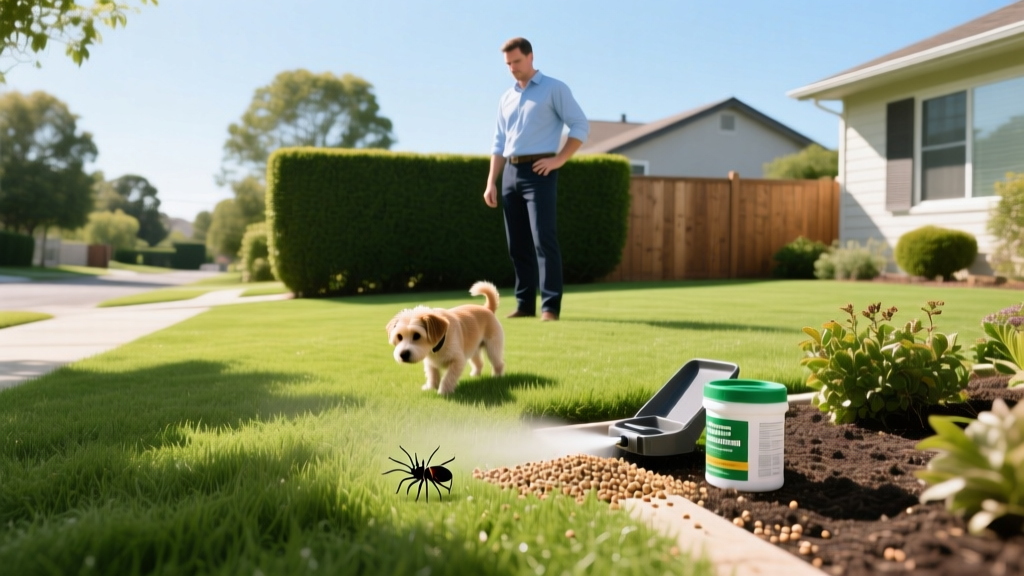
Effective Flea Control for House and Yard Perimeter Defense
Achieving complete flea control for house and yard environments requires abandoning the misconception that fleas are strictly an indoor or pet-only problem. According to the University of California Integrated Pest Management (UC IPM) program, adult fleas on your pet represent only 5% of the total infestation. The remaining 95% exist as eggs, larvae, and pupae hidden in carpet fibers, baseboards, and shaded outdoor soil. If you treat the house but ignore the yard perimeter, wildlife and pets will continuously reintroduce the pests, rendering your indoor efforts futile.
The Yard-to-House Flea Pipeline: Why Indoor Sprays Fail
Fleas do not spontaneously generate indoors; they are transported. The primary vectors are domestic pets, but in many suburban environments, rodents (mice, rats, and squirrels) and wildlife (opossums, raccoons) are the original carriers. These animals nest under decks, in crawl spaces, or in dense yard debris, creating localized flea hotspots. When your dog or cat walks through these shaded perimeter zones, flea larvae and adults latch onto their fur and are carried directly into your living room.
Most homeowners fail at eradication because they only target adult fleas. The pupal stage (the cocoon) is highly resilient, featuring a sticky outer layer that repels most chemical adulticides. The Environmental Protection Agency (EPA) notes that breaking the life cycle requires Insect Growth Regulators (IGRs) to stop eggs and larvae from maturing, combined with mechanical and chemical disruption of the adult stage.
⚠️ CRITICAL PET SAFETY WARNING: Never use products containing Permethrin in households with cats. Permethrin is a common synthetic pyrethroid found in many outdoor yard sprays and indoor flea bombs. While safe for dogs once dry, it is highly toxic and often fatal to cats, even through secondary contact or grooming. Always verify the active ingredient and consult your veterinarian before applying perimeter chemicals.
Phase 1: Establishing Your Outdoor Yard Defense Perimeter
Before treating the interior, you must sever the supply line. Focus your outdoor treatment on shaded areas, as flea larvae cannot survive in direct sunlight or soil temperatures exceeding 95°F. Target the 3-foot band of soil and mulch directly adjacent to your home's foundation, as well as areas under decks and around pet houses.
Chemical Barrier Application (Bifenthrin)
For immediate knockdown and residual outdoor control, a Bifenthrin 7.9% concentrate (such as Bifen IT) is the industry standard.
- Dilution Rate: Mix 1 fluid ounce of Bifen IT per gallon of water.
- Coverage: One gallon of mixed solution treats approximately 1,000 square feet.
- Application: Use a 1-gallon or 2-gallon pump sprayer. Apply to the foundation perimeter, mulch beds, and shaded lawn edges. Do not spray directly onto blooming flowers to protect pollinators.
- Cost: A 32 oz bottle of Bifen IT costs roughly $45 and yields up to 32 gallons of solution, enough to treat 32,000 sq ft.
Biological Warfare: Beneficial Nematodes
For an organic approach, or to supplement chemical treatments in pet-heavy play areas, apply beneficial nematodes (Steinernema carpocapsae). These microscopic worms actively seek out and parasitize flea larvae and pupae in the soil, killing them within 48 hours.
| Treatment Type | Active Agent | Target Life Stage | Residual Lifespan | Pet Safety Profile |
|---|---|---|---|---|
| Chemical Spray | Bifenthrin 7.9% | Adults, Larvae | 30–45 Days | Safe when completely dry |
| Biological | S. carpocapsae Nematodes | Larvae, Pupae | Self-replicating (seasonal) | 100% Safe (Immediate) |
| Granular IGR | Pyriproxyfen | Eggs, Larvae | Up to 90 Days | Safe when watered in |
Phase 2: Indoor Eradication Protocol (Flea Control for House)
Once the yard perimeter is secured, shift focus indoors. The Centers for Disease Control and Prevention (CDC) emphasizes that environmental modification inside the home is just as critical as chemical application. Follow this strict 3-step protocol to eliminate the indoor population.
Step 1: Mechanical Stimulation (Vacuuming)
This is the most skipped and most vital step. Flea pupae can remain dormant in their cocoons for up to five months, waiting for vibrations that signal a host is nearby.
- Use an upright vacuum with a motorized beater-bar brush head.
- Vacuum all carpets, rugs, and upholstered furniture thoroughly. The physical vibration forces dormant pupae to hatch into adults, exposing them to your chemical treatments.
- Pay special attention to baseboards, under beds, and pet resting areas.
- Crucial: Immediately seal the vacuum bag or empty the canister into an outdoor trash bin. Leaving flea eggs inside the vacuum allows them to hatch and re-infest the home.
Step 2: Insect Growth Regulator (IGR) Application
Apply an indoor IGR spray containing Pyriproxyfen or (S)-Methoprene (e.g., Precor 2625 Premise Spray). IGRs mimic juvenile hormones, preventing eggs from hatching and larvae from molting into pupae. A standard 15 oz can of Precor 2625 covers roughly 2,600 square feet and costs about $28. Spray lightly over carpets, pet bedding, and cracks in hardwood floors. IGRs are photostable and can remain effective indoors for up to seven months.
Step 3: Targeted Adulticide
After the IGR dries, apply a localized adulticide if the infestation is severe. Avoid total-release "flea bombs" or foggers; they fail to penetrate carpet fibers where larvae hide and simply coat your countertops in toxic residue. Instead, use a targeted aerosol or liquid spray containing Etofenprox or Imidacloprid, directing it specifically at baseboards and carpet edges.
"The 'pupal window' is where most DIY treatments fail. Even with perfect IGR and adulticide application, pre-existing pupae will continue to hatch for 14 to 21 days. You must continue daily vacuuming during this window to stimulate emergence and capture the new adults before they can lay new eggs."
— Entomological Pest Management Guidelines
Rodent Vectors: Sealing the Perimeter
If you have mice or rats nesting in your walls, crawl space, or attic, no amount of spraying will solve your flea problem. Rodents carry their own specific flea species (like the Oriental rat flea), which will readily bite humans and pets when the rodent host dies or moves on.
- Exclusion: Seal all foundation cracks, utility penetrations, and soffit gaps larger than 1/4 inch using copper mesh and expanding polyurethane foam.
- Trapping: Deploy snap traps in attics and crawl spaces. Avoid using rodenticide baits indoors; poisoned rodents often die inside wall cavities, creating a secondary odor and fly problem while their fleas abandon the cooling body to seek new hosts.
- Habitat Denial: Clear leaf litter, woodpiles, and dense ivy from within 5 feet of your home's foundation to remove outdoor rodent harborage.
Cost Breakdown and Expected Timeline
Effective flea control is a marathon, not a sprint. Budget accordingly and expect a 3-to-4-week eradication timeline.
| Phase | Materials Required | Estimated DIY Cost | Time to Completion |
|---|---|---|---|
| Yard Perimeter | Bifen IT (32 oz) + Pump Sprayer | $65.00 | Day 1 (2 hours) |
| Indoor IGR | Precor 2625 (2 cans) | $56.00 | Day 2 (1 hour) |
| Mechanical | Vacuum bags / disposal liners | $15.00 | Daily for 21 days |
| Total DIY | ~$136.00 | 21–28 Days |
By integrating outdoor chemical and biological barriers with precise indoor IGR applications and aggressive mechanical removal, you dismantle the flea life cycle at every vulnerable stage. This dual-environment strategy is the only scientifically backed method to guarantee long-term flea control for house and property perimeters.

