
Pest Control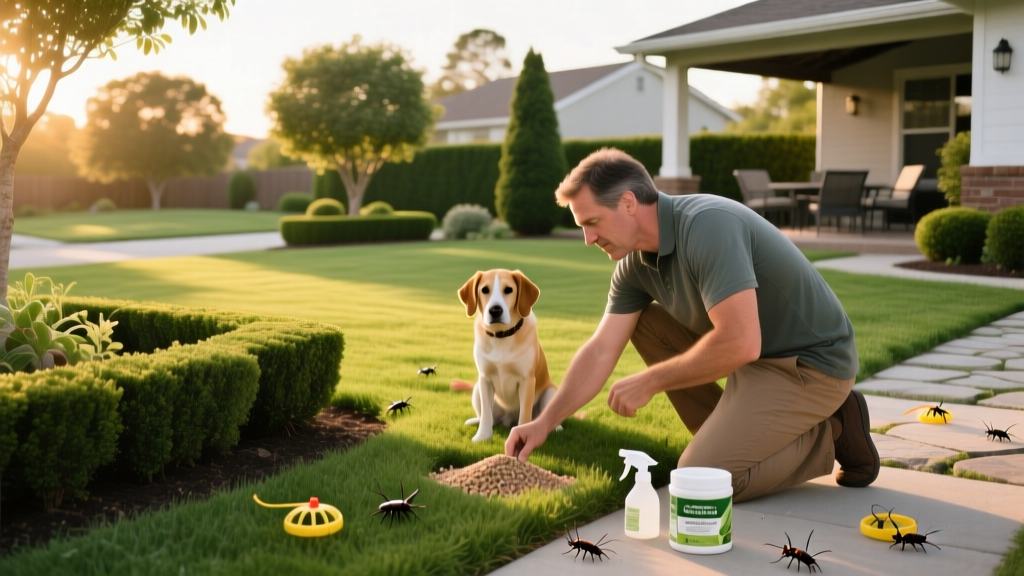
Effective Flea Home Treatment: Yard-To-Indoor Eradication Strategy
The Flea Commute: Why Yard Defense Dictates Indoor Success
Most homeowners approach a flea home treatment by focusing exclusively on carpets and pets, treating the symptoms while ignoring the source. Fleas do not spontaneously generate indoors; they commute. According to entomological data from Texas A&M AgriLife Extension, adult fleas living on your pet represent only 5% of the total infestation. The remaining 95% exists as eggs, larvae, and pupae hidden in your yard, carpet fibers, and baseboard crevices.
If you treat your living room but ignore the shaded perimeter of your lawn where wildlife and pets deposit flea eggs, your indoor treatment will fail within three weeks. A successful eradication protocol requires a synchronized, four-phase attack spanning the yard, the home interior, and the host animal.
Phase 1: Perimeter & Yard Defense (Stopping the Source)
Before spraying a single baseboard inside, you must sever the supply line from the outdoors. Flea larvae thrive in moist, shaded environments with temperatures between 70°F and 85°F. They cannot survive in direct, scorching sunlight.
Targeted Outdoor Application
- Chemical Barrier: Apply a Bifenthrin-based insecticide (such as Bifen IT at a 0.06% dilution rate) to shaded areas, under decks, and along fence lines. Use a pump sprayer to coat the soil and lower foliage. Cost: ~$25 for a pint concentrate that treats up to 2,000 sq ft.
- Biological Control (Organic Option): For areas where pets play or near vegetable gardens, apply Steinernema carpocapsae beneficial nematodes. These microscopic worms actively hunt and destroy flea larvae in the soil. Apply via hose-end sprayer in the early evening when soil temperatures are below 85°F. Cost: ~$35 for 10 million nematodes.
- Moisture Management: Fix leaky spigots and adjust irrigation heads. Flea larvae require high humidity (above 50%) to survive; drying out the yard creates a natural biological barrier.
⚠️ The Wildlife Factor: If opossums, raccoons, or feral cats are entering your yard, they are dropping hundreds of flea eggs daily. Before treating the lawn, install dig-proof L-footers under decks and use motion-activated sprinklers to deter wildlife hosts.
Phase 2: Indoor Preparation & Mechanical Removal
Chemical treatments fail when they cannot penetrate the organic debris where flea larvae feed. Larvae eat adult flea feces ("flea dirt") and skin flakes. You must remove this food source and physically extract as many life stages as possible before applying insecticides.
- Thermal Shock Laundering: Wash all pet bedding, throw blankets, and removable cushion covers in water heated to at least 130°F for a minimum of 20 minutes. This temperature threshold is required to melt the waxy cuticle of flea eggs and kill them instantly.
- Strategic Vacuuming: Use a vacuum with a motorized beater bar. The agitation pulls larvae out of deep carpet pile. More importantly, the vibration and heat from the vacuum head stimulate pre-emerged adult fleas in the pupal stage to hatch, exposing them to the chemical treatment you will apply next.
- Immediate Disposal: Empty the vacuum canister or discard the bag into an exterior trash receptacle immediately. Leaving it in the indoor vacuum allows fleas to escape back into the home.
Phase 3: Chemical & IGR Indoor Application
The cornerstone of an effective indoor flea home treatment is the combination of an adulticide (to kill active biters) and an Insect Growth Regulator (IGR) to sterilize eggs and prevent larval molting. The EPA strongly advises against using total-release "bug bombs" or foggers, as the aerosol droplets settle on top of furniture and fail to penetrate the carpet baseboards where fleas actually reside.
Top Indoor Flea Sprays Compared
| Product | Active Ingredients | Coverage / Format | Avg. Cost (2026) | Dry Time |
|---|---|---|---|---|
| PT Ultracide | Permethrin + Pyriproxyfen (IGR) | 20 oz. Aerosol | $28 - $32 | 30 mins |
| Novacem | Imidacloprid + Pyriproxyfen (IGR) | 20 oz. Aerosol | $26 - $30 | 45 mins |
| Zoecon Precor 2000 | Methoprene (IGR only) | 16 oz. Pump Spray | $22 - $25 | 1 hour |
Application Technique: Apply PT Ultracide or Novacem using a sweeping motion across carpets, focusing heavily on the perimeter of the room, under furniture, and in the first 12 inches of wall-to-wall transitions. Hold the can 24 to 36 inches from the floor to ensure a fine, even mist rather than heavy wet spots.
Phase 4: The Pet Protocol (The Mobile Host)
Your pet is the mobile incubator for the infestation. Over-the-counter supermarket flea collars and topical shampoos offer virtually zero residual protection and contribute to widespread pesticide resistance. You must utilize veterinary-prescribed isoxazoline-class oral medications.
- Bravecto (fluralaner): Provides 12 weeks of systemic protection. Kills fleas within 8 hours of ingestion.
- NexGard (afoxolaner): Monthly chewable that begins killing fleas within 4 hours.
- Revolution Plus (selamectin + sarolaner): A topical option for cats that also covers ticks and ear mites.
Note: Never use dog-specific permethrin products on cats. Permethrin is highly toxic to felines and can cause fatal neurological seizures. Always verify the species-specific labeling on any topical treatment.
Troubleshooting: Why Your Flea Home Treatment Failed
If you are still seeing fleas 10 days after a thorough treatment, you are likely experiencing one of three specific failure modes.
1. The Pupal Window (Days 14–21)
Flea pupae spin a sticky cocoon that is virtually impervious to insecticides, IGRs, and vacuuming. They can remain dormant for up to 5 months. When they detect vibrations and carbon dioxide, they hatch. It is entirely normal to see a resurgence of adult fleas between days 14 and 21 post-treatment. These newly hatched adults will jump onto your treated pet or contact the residual IGR on the carpet and die before they can lay new eggs. Do not re-treat the home with harsh chemicals during this window; simply continue vacuuming daily.
2. Missed Micro-Habitats
Homeowners frequently miss the "dust zones." Flea larvae hide in floor vents, under the toe-kicks of kitchen cabinets, and inside the fabric skirts of upholstered furniture. If you only treated open floor space, you missed the breeding grounds.
3. Continuous Outdoor Reintroduction
If your yard was not treated, or if your pet frequently visits untreated neighbor yards or dog parks, you are dealing with a continuous reintroduction problem rather than a surviving indoor infestation. The fleas you see are "hitchhikers" that arrived today, not survivors from last month.
Cost Breakdown: DIY vs. Professional Extermination
2026 Eradication Cost Matrix (Average 2,000 sq. ft. Home)
- Complete DIY Protocol: $85 - $140 (Includes Bifenthrin concentrate, PT Ultracide aerosols, and nematodes. Excludes vet bills for pet meds).
- Professional Pest Control (One-Time): $250 - $450 (Includes interior IGR/adulticide spray and exterior perimeter treatment).
- Professional Follow-up Visit: $120 - $180 (Usually required 14-21 days later to address the pupal window).
Verdict: DIY is highly effective if you strictly follow the four-phase protocol and possess the physical ability to move heavy furniture and operate pump sprayers. Hire a professional if the infestation spans multiple stories, includes severe carpet soiling, or if you have respiratory sensitivities to aerosolized permethrin.

