
Pest Control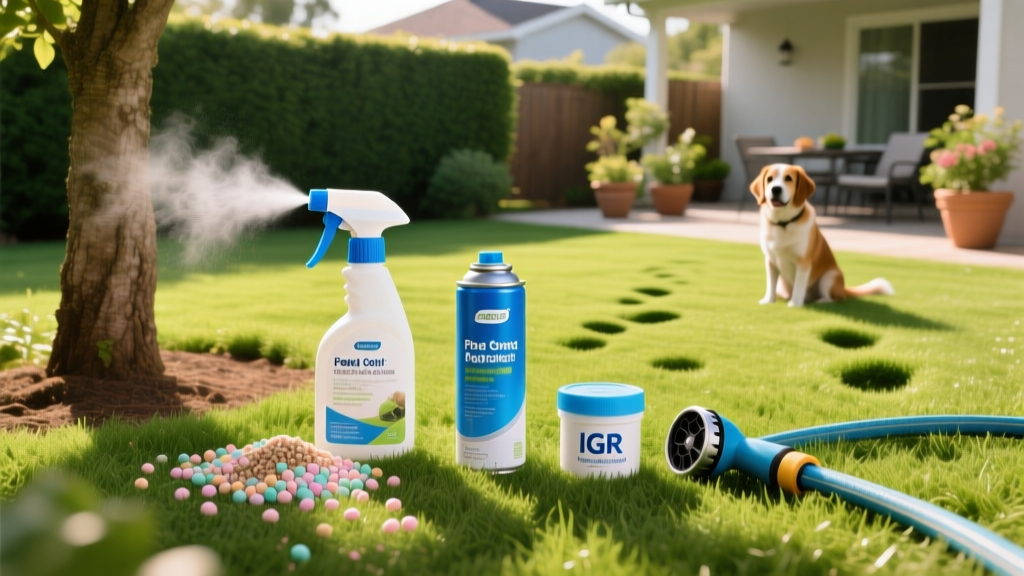
Effective Flea Medicine for Yards: Sprays, Granules & IGRs
The Outdoor Flea Lifecycle: Why Your Yard is the Battleground
Treating your pet for fleas without treating your yard is a losing battle. According to the Centers for Disease Control and Prevention (CDC), adult fleas living on your dog or cat represent only 5% of the total flea population. The remaining 95%—eggs, larvae, and pupae—are hiding in your grass, soil, and shaded perimeter areas.
Flea larvae thrive in environments with high humidity (70-85%) and temperatures between 70°F and 90°F. They avoid direct sunlight, congregating instead under decks, in dog runs, along fence lines, and in dense shrubbery. To permanently eradicate an infestation, the best flea medicine for yards must target both the adult stage and the developmental stages simultaneously.
Comparing the Best Flea Medicine for Yards
Not all outdoor flea treatments are created equal. Choosing the right formulation depends on the severity of your infestation, your lawn type, and whether you have free-roaming cats. Below is a structural comparison of the three primary chemical classes used in professional and consumer-grade yard defense.
| Treatment Type | Active Ingredient Example | Kill Speed | Residual Life | Best Use Case | Avg Cost |
|---|---|---|---|---|---|
| Liquid Spray | Permethrin (36.8%) | 1-2 Hours | 4-6 Weeks | Severe infestations, fast knockdown | $25 / 16 oz |
| Granules | Bifenthrin (0.115%) | 24-48 Hours | 8-12 Weeks | Maintenance, large turf areas | $35 / 10 lbs |
| IGR Liquid | Pyriproxyfen (Nylar) | N/A (Growth Regulator) | Up to 7 Months | Breaking the breeding cycle | $40 / 8 oz |
Top Active Ingredients for Yard Defense
Permethrin: The Fast-Acting Adulticide
Permethrin is a synthetic pyrethroid that attacks the nervous system of adult fleas, causing rapid paralysis and death. Products like Martin's Permethrin SFR (36.8%) are the industry standard for heavy outdoor infestations. However, the Environmental Protection Agency (EPA) notes that permethrin is highly toxic to cats and aquatic life. It must be applied when pets are indoors and allowed to dry completely before they return to the yard.
Pyriproxyfen: The Cycle-Breaking IGR
Insect Growth Regulators (IGRs) like pyriproxyfen do not kill adult fleas. Instead, they mimic the juvenile hormone of the flea, preventing larvae from molting into adults and causing eggs to become unviable. Mixing an IGR with an adulticide is the single most critical step in long-term flea control. Without an IGR, the 'pupal window'—a stage where fleas are encased in a chemical-resistant cocoon—will allow a new generation to hatch 2 to 3 weeks after your initial spray.
⚠️ CRITICAL WARNING FOR CAT OWNERS: Never use permethrin-based yard sprays if your cats roam outdoors. Even dried residue on grass blades can cause severe neurological tremors and fatal toxicity in felines. Opt for cat-safe alternatives like Bifenthrin granules or organic cedarwood oil sprays.
Step-by-Step Yard Treatment Protocol
Follow this exact protocol to ensure maximum efficacy and prevent chemical runoff.
- Calculate and Prep the Area: Measure your treatment zone (focus on shaded areas, not the entire sun-baked lawn). Mow the grass to 2 inches to allow the spray to penetrate the thatch layer. Rake away heavy leaf litter where larvae hide.
- Mix the Tank Solution: For a standard 1-gallon pump sprayer, mix 1 oz of Permethrin SFR (36.8%) and 1/8 oz of NyGuard IGR per gallon of water. This ratio treats approximately 1,000 square feet.
- Apply to Micro-Habitats: Spray heavily along the base of fences, under porches, around dog houses, and in dense shrubbery. The grass should be visibly wet but not pooling.
- Enforce the Drying Period: Keep all children and pets off the treated area for at least 2 to 4 hours, or until the grass is completely dry to the touch.
- Execute the Follow-Up: Reapply the mixture in 14 days to catch any fleas that hatched from the chemical-resistant pupal stage.
Organic and Pet-Safe Alternatives
If you prefer to avoid synthetic pyrethroids, or if you have free-roaming cats and sensitive pollinator gardens, organic yard defense requires a different tactical approach.
Beneficial Nematodes (Steinernema carpocapsae)
Nematodes are microscopic, soil-dwelling worms that actively hunt and destroy flea larvae in the thatch and topsoil. According to the University of Florida IFAS Extension, Steinernema carpocapsae is the most effective species for flea control.
- Application Rate: 1 million nematodes per 1,000 square feet.
- Cost: Approximately $30 to $45 per 10-million pack.
- Crucial Requirement: Nematodes are living organisms. They must be applied in the early morning or late evening to avoid UV light, and the soil must be kept consistently moist for 7 days post-application to ensure survival.
Cedarwood Oil Sprays
Products like Wondercide Flea & Tick Yard Spray utilize cedarwood oil to block the octopamine receptors in insects, leading to dehydration and death. While highly safe for pets and pollinators, cedarwood oil lacks the residual longevity of synthetic chemicals. You must reapply every 7 to 10 days, and immediately after heavy rainfall, to maintain an active barrier.
Common Application Mistakes and Troubleshooting
If you have sprayed your yard and are still seeing fleas on your pets, you have likely fallen victim to one of these common failure modes:
🔍 The 'White Sock' Monitoring Test: Before and after treatment, pull on a pair of knee-high white cotton socks and walk slowly through the shaded areas of your yard. Fleas are highly attracted to the heat and movement, and will jump onto the white fabric, making it incredibly easy to gauge the severity of your infestation and the success of your treatment.
- Mistake 1: Spraying in Direct Sunlight. UV radiation degrades pyrethroids rapidly. Furthermore, flea larvae do not live in sunny areas. Spraying the middle of a sun-baked lawn wastes chemical and money. Focus strictly on the shaded perimeter.
- Mistake 2: Skipping the IGR. If you only use an adulticide, the unhatched pupae will emerge two weeks later, restarting the infestation. Always tank-mix an IGR like Pyriproxyfen or Methoprene.
- Mistake 3: Ignoring the Wildlife Vector. If opossums, raccoons, or feral cats are sleeping under your deck, they are constantly dropping flea eggs into your yard. You must use live traps or exclusion fencing to block wildlife access, otherwise, no chemical will keep up with the daily influx of new pests.
FAQ: Quick Answers on Yard Flea Defense
How long does flea medicine for yards last?
Liquid permethrin sprays typically provide 4 to 6 weeks of residual control in shaded areas. Granular bifenthrin can last up to 12 weeks. IGRs like pyriproxyfen can remain active in the soil for up to 7 months, preventing new generations from maturing.
Will rain wash away my yard flea spray?
Yes, if it rains before the product has dried. Once a liquid spray has fully dried (usually 2 to 4 hours), it binds to the plant tissue and soil particles, becoming highly rain-fast. Granules actually benefit from light rain, which waters the active ingredient down into the thatch layer where larvae live.
Can I use agricultural permethrin on my lawn?
No. Always ensure the product is specifically labeled for 'residential outdoor use' or 'turf and ornamentals.' Agricultural formulations may contain different solvents or adjuvants that are illegal to use in areas where children and pets play, and they may damage your grass species.

