
Pest Control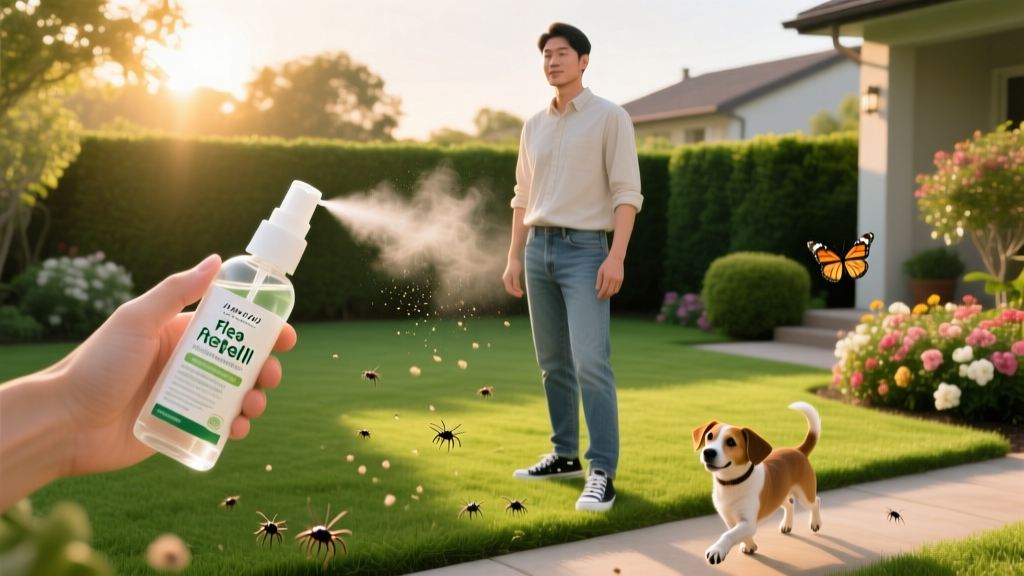
Best Flea Repellent for People: Outdoor Yard Defense Guide
The Reality of Human Flea Bites in the Yard
While most homeowners associate fleas strictly with dogs and cats, the cat flea (Ctenocephalides felis) accounts for roughly 95% of all yard flea infestations and will readily feed on human blood when pets are unavailable. When you step into a flea-heavy yard, the insects detect your body heat, carbon dioxide output, and movement, launching themselves from the grass canopy onto your lower legs and ankles. Relying solely on pet treatments leaves you vulnerable. To maintain a functional outdoor space, you must deploy a targeted flea repellent for people while simultaneously executing a perimeter defense strategy to eradicate the source.
Expert Insight: Fleas cannot fly; they jump up to 8 inches vertically. This means your primary vulnerability zone is from the ground up to your mid-calf. Repellent application must heavily concentrate on shoes, socks, and lower pant legs.
Active Ingredients: How Chemical Repellents Disrupt Fleas
Commercial repellents do not kill fleas on contact. Instead, they interfere with the insect's olfactory receptors, masking the human scent markers (like lactic acid and octenol) that trigger the flea's jumping response. According to the Environmental Protection Agency (EPA), there are four primary registered active ingredients effective against fleas for human use.
| Active Ingredient | Optimal Concentration | Protection Duration | Skin Feel & Odor |
|---|---|---|---|
| Picaridin | 20% | 8–12 Hours | Odorless, non-greasy, safe on plastics |
| DEET | 25%–30% | 6–8 Hours | Slightly oily, distinct chemical odor |
| OLE (Lemon Eucalyptus) | 30% | 4–6 Hours | Strong botanical scent, slightly sticky |
| IR3535 | 20% | 4–6 Hours | Light feel, mild odor |
Top Commercial Flea Repellents for People (2026 Formulations)
When selecting a product for yard work, you need formulations that resist sweat and provide long-lasting barriers. Here are the top-performing options based on efficacy and user compliance.
1. Sawyer Products Premium Picaridin (20%)
Picaridin is a synthetic compound modeled after piperidine, a natural compound found in black pepper. It is currently the gold standard for yard work because it does not degrade synthetic fabrics, watch crystals, or gardening gear like DEET does. The Sawyer 6-ounce pump spray (Model SP5432, typically priced around $10.99) provides up to 12 hours of protection against fleas and ticks. It dries completely matte, making it ideal for hot, humid afternoons when sweat would otherwise cause oily repellents to run into your eyes.
2. OFF! Deep Woods Insect Repellent (25% DEET)
For heavy brush clearing or working in deeply shaded, overgrown areas where flea populations are dense, DEET remains a highly reliable workhorse. The OFF! Deep Woods Dry Feel formula (6 oz, approx. $8.50) utilizes a powder-dry aerosol delivery system that mitigates the traditional greasy feel of DEET. Note that DEET can melt certain plastics and synthetic rayon, so avoid spraying it directly onto high-end gardening gloves or plastic tool handles.
3. Repel Plant-Based Lemon Eucalyptus (30% OLE)
If you prefer a bio-based active ingredient, Oil of Lemon Eucalyptus (OLE) is the only plant-based repellent recommended by the CDC. The Repel 4-ounce pump (approx. $7.97) offers roughly 6 hours of protection. Warning: Do not confuse OLE with pure "essential oil of lemon eucalyptus." Pure essential oils are not EPA-registered as repellents and evaporate within 30 minutes, leaving you entirely unprotected.
Clothing Treatment: The Permethrin Advantage
Skin repellents only cover exposed flesh. When kneeling in the grass or dragging brush, fleas will easily crawl under pant cuffs. The most effective defense for yard workers is Permethrin, a synthetic pyrethroid applied directly to clothing, not skin.
Safety Protocol: Permethrin is highly toxic to cats while in its liquid state. You must treat your clothing outdoors, away from feline pets, and allow the garments to dry completely for at least 2 hours. Once dry, it is safe for human contact and will not harm cats.
Products like Sawyer Permethrin Insect Repellent (24 oz aerosol, approx. $16.99) bond to fabric fibers. A single application survives up to six washings or six weeks of sunlight exposure. When a flea lands on permethrin-treated denim or socks, the chemical triggers rapid nervous system failure in the insect, killing it before it can locate a patch of exposed skin.
Natural & DIY Alternatives: Efficacy vs. Expectation
Many homeowners seek natural flea repellents for people using essential oils like cedarwood, peppermint, or lemongrass. While these oils possess mild insecticidal properties, their volatility is the critical failure point. Cedarwood oil evaporates from the skin in roughly 45 to 60 minutes. If you insist on a DIY route, you must use a carrier oil to slow evaporation and commit to aggressive reapplication schedules.
High-Viscosity DIY Repellent Recipe
- 2 oz Fractionated Coconut Oil (carrier to slow evaporation)
- 1 oz Witch Hazel (emulsifier base)
- 40 drops Texas Cedarwood Essential Oil (Juniperus ashei)
- 20 drops Lemongrass Essential Oil
Mix vigorously in a glass amber bottle. Apply heavily to ankles and wrists. Reapply every 60 minutes without fail. For sustained yard work, this method is vastly inferior to Picaridin or Permethrin.
Integrating Personal Protection with Yard Eradication
Repelling fleas from your body is a temporary defensive measure. True yard defense requires attacking the flea life cycle at the soil level. According to University of Kentucky Entomology, 95% of a flea population exists in the environment as eggs, larvae, and pupae, not as adults. If you do not treat the soil, you will face an endless battle.
The 3-Step Perimeter Protocol
- Deploy Beneficial Nematodes: Purchase Steinernema carpocapsae nematodes (available from arbico-organics or local garden centers). These microscopic worms hunt flea larvae in the top inch of soil. Apply at a rate of 1 million nematodes per 1,000 square feet using a hose-end sprayer. Critical timing: Apply at dusk when soil temperatures are above 55°F and UV radiation is zero, as sunlight kills nematodes in minutes.
- Apply an Insect Growth Regulator (IGR): Spray an outdoor IGR containing Pyriproxyfen (e.g., Archer IGR or Martin's IGR). Pyriproxyfen mimics juvenile hormones, preventing flea larvae from molting into biting adults. It remains photostable in the yard for up to 7 months, providing long-term population collapse.
- Modify the Microclimate: Flea larvae require high humidity and shade to survive. Trim tree canopies to allow direct sunlight to hit the soil, and clear organic debris (leaf litter, pine straw) from high-traffic zones. Sunlight and desiccation are lethal to flea pupae.
Frequently Asked Questions
Can I use my dog's topical flea treatment on my own skin?
Absolutely not. Topical veterinary treatments like fipronil or imidacloprid are formulated for animal sebum distribution and are not tested or approved for human dermal absorption. Applying pet flea medication to human skin can cause severe contact dermatitis and systemic toxicity.
Why do fleas keep biting my ankles even when I wear repellent?
Fleas often jump from the grass directly onto your shoes and crawl upward. If you only apply skin repellent to your legs but wear untreated canvas sneakers, the fleas will bypass the chemical barrier by traveling along the shoe's tongue and laces. You must spray your shoes and socks, or treat them with Permethrin.
Does eating garlic or taking vitamin B1 repel fleas from humans?
No. Multiple peer-reviewed entomological studies have debunked the myth that systemic ingestion of garlic, brewer's yeast, or vitamin B1 alters human scent in a way that deters biting insects. Relying on dietary supplements for flea defense will result in immediate bites upon entering an infested yard.

