
Pest Control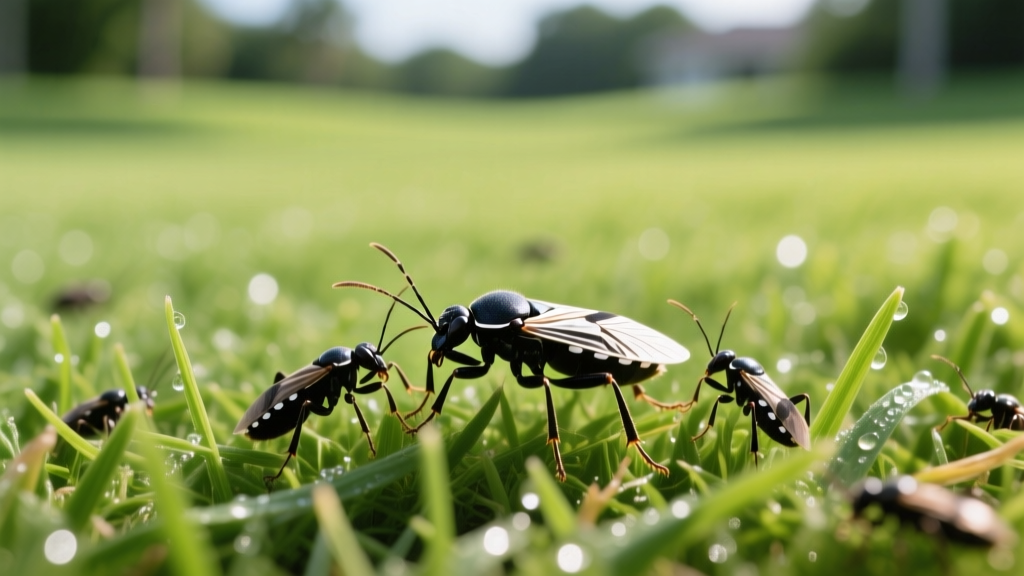
Chinch Bugs Florida: 2026 Treatment Dosage & Cost Guide
The Economics of Chinch Bug Damage in Florida
The southern chinch bug (Blissus insularis) is the most destructive insect pest of St. Augustinegrass in Florida. Left untreated, a severe infestation can destroy a 5,000-square-foot lawn in under three weeks during peak summer heat, resulting in $2,500 to $4,000 in sod replacement costs. However, the financial challenge isn't just the damage; it is the escalating cost of chemical control due to widespread genetic resistance.
According to the UF/IFAS Southern Chinch Bug Guide, populations in South Florida (particularly Miami-Dade, Broward, and Palm Beach counties) exhibit severe resistance to pyrethroid insecticides. This means homeowners who blindly purchase off-the-shelf bifenthrin products are often wasting money and allowing the colony to expand. This 2026 guide provides exact dosages, coverage metrics, and cost breakdowns to help you execute a targeted, resistance-breaking treatment protocol.
Resistance Alert: If you live south of Interstate 4, do not rely solely on pyrethroids (bifenthrin, lambda-cyhalothrin) for chinch bug control. You must rotate chemical classes to avoid treatment failure.
2026 Cost Breakdown: DIY vs. Professional Treatment
Understanding the true cost per 1,000 square feet is critical for budgeting your annual pest management. Below is a comparative matrix of current market pricing for both DIY chemical applications and professional lawn care services.
| Treatment Method | Active Ingredient | Cost per 1,000 sq ft | Upfront Equipment Cost |
|---|---|---|---|
| DIY Liquid Spray | Clothianidin (Arena 50 WDG) | $8.20 | $80 - $150 (Backpack Sprayer) |
| DIY Liquid Spray | Indoxacarb (Provaunt 14.5 SC) | $1.35 | $80 - $150 (Backpack Sprayer) |
| DIY Granular | Clothianidin (Arena .5 G) | $25.50 | $40 - $70 (Broadcast Spreader) |
| Professional Service | Proprietary Rotation Mix | $16.00 - $24.00 | $0 |
While granular applications seem easier, they are significantly more expensive per square foot and require heavy irrigation to activate. Liquid applications using a calibrated backpack sprayer offer the highest ROI, particularly when using metabolically activated chemicals like indoxacarb.
Exact Chemical Dosages & Coverage Rates
Precision is non-negotiable when treating chinch bugs. Under-dosing accelerates genetic resistance, while over-dosing wastes capital and harms the environment. Always calibrate your sprayer to deliver 1 to 2 gallons of finished solution per 1,000 square feet.
1. Neonicotinoids (Systemic & Contact Action)
Product: Arena 50 WDG (Clothianidin 50%)
Target Dosage: 0.36 to 0.44 oz per 1,000 sq ft
Coverage: A standard 2.2 oz bottle treats approximately 5,500 square feet at the maximum label rate.
Best Use Case: Preventative applications in early May before populations explode. Clothianidin moves systemically into the plant tissue, killing bugs as they feed on the grass stolons.
2. Oxadiazines (Metabolically Activated)
Product: Provaunt 14.5 SC (Indoxacarb 14.5%)
Target Dosage: 0.11 to 0.22 fl oz per 1,000 sq ft
Coverage: A 27 oz bottle treats up to 135,000 square feet (over 3 acres).
Best Use Case: Curative knockdown of active, resistant infestations. Indoxacarb is a pro-insecticide; it is bio-activated by enzymes in the chinch bug's gut, making it highly lethal to pyrethroid-resistant populations while remaining relatively safe for non-target organisms.
3. Pyrethroids (Use with Extreme Caution)
Product: Bifen XTS (Bifenthrin 25.1%)
Target Dosage: 0.125 to 0.25 fl oz per 1,000 sq ft
Coverage: A 32 oz bottle treats up to 16,000 square feet.
Best Use Case: Only recommended for North Florida (Panhandle) lawns where resistance is lower, or used strictly as a rotational partner in Central Florida. Do not use as your primary treatment in South Florida.
The Thatch Factor: Why Applications Fail
The most common reason for treatment failure is not the chemical itself, but the physical barrier of the lawn. St. Augustinegrass is notorious for developing thick thatch layers. According to the UF Entomology Department, chinch bugs live and feed at the soil-thatch interface.
The 0.5-Inch Rule: If your thatch layer exceeds 0.5 inches, liquid sprays will get trapped in the dead organic matter and never reach the bugs. You must dethatch or core aerate the lawn prior to chemical application, or switch to a high-volume spray (3 gallons per 1,000 sq ft) to force the chemical through the canopy.
Step-by-Step Application Protocol
Follow this exact sequence to maximize chemical efficacy and minimize environmental runoff.
- Mow the Lawn: Cut your St. Augustinegrass to its standard height (3.5 to 4 inches) but remove no more than 1/3 of the blade. Bag the clippings if an infestation is currently active to remove some of the surface-dwelling nymphs.
- Calibrate the Sprayer: Fill your backpack sprayer with water and spray a 500 sq ft test area. Measure the water used to determine your exact output rate per 1,000 sq ft.
- Mix the Solution: Fill the sprayer halfway with water, add the exact measured dose of insecticide (e.g., 0.2 oz of Provaunt), agitate, and fill the rest of the tank. Add a non-ionic surfactant at 0.25% v/v to break the surface tension of the waxy grass blades.
- Apply in the Early Morning: Spray between 6:00 AM and 9:00 AM when chinch bugs are most active near the surface and UV degradation of the chemical is lowest.
- Water It In: Within 24 hours of application, apply exactly 0.25 inches of irrigation. This washes the chemical off the grass blades and down into the thatch layer where the bugs reside, without causing deep soil runoff.
Timing Your Treatments for the Florida Climate
Chinch bug generations in Florida overlap continuously from April through October. A single 'spray and forget' approach will fail. For a standard 5,000 sq ft lawn, budget for a three-tier rotation schedule:
- Mid-April (Preventative): Apply Arena 50 WDG (Clothianidin) to target first-generation nymphs.
- Mid-July (Curative/Peak): Apply Provaunt 14.5 SC (Indoxacarb) to knock down peak summer populations and bypass pyrethroid resistance.
- Early September (Late Season): Apply a combination product like Allectus (Imidacloprid + Bifenthrin) to clean up stragglers before winter dormancy.
"Homeowners often mistake chinch bug damage for drought stress or fungal disease. If your St. Augustinegrass is turning yellow at the edges of driveways or sidewalks—where heat radiates and the grass is most stressed—and watering doesn't improve it, part the grass at the soil line. If you see tiny black bugs with white hourglass wings scurrying, you need immediate chemical intervention."
— Adapted from UF/IFAS Turfgrass Pest Management Guidelines
By adhering to precise dosages, rotating active ingredient classes, and managing your thatch layer, you can effectively control southern chinch bugs while keeping your annual lawn care budget firmly under control.

