
Pest Control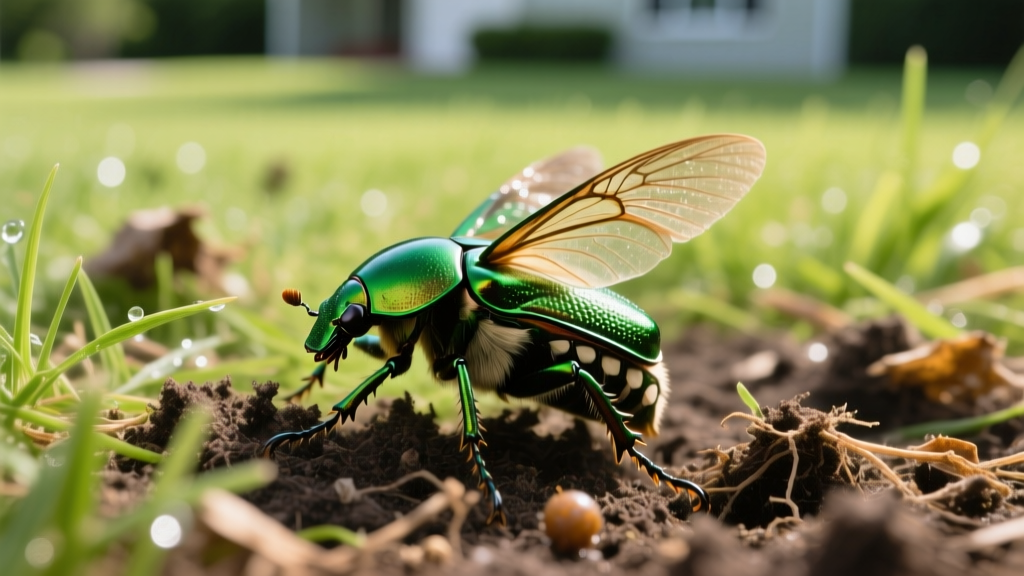
The Florida June Bug Emergence Calendar: When to Treat Grubs
The Florida June Bug Life Cycle: Why Timing Dictates Success
Managing turf pests in the Southeast requires a nuanced understanding of regional microclimates. The Florida June Bug—a common name encompassing both the Green June Beetle (Cotinis nitida) and various May/June beetles (Phyllophaga spp.)—operates on a biological clock driven by soil temperature and subtropical humidity. Unlike northern states where grubs remain dormant for months, Florida's mild winters allow for extended feeding windows, making precise seasonal timing the difference between a pristine lawn and a destroyed root system.
Adult June bugs are primarily a nuisance, flying clumsily into porch lights and leaving behind unsightly frass. The real threat to your St. Augustine, Bermuda, or Zoysia turf is the larval stage (grubs). These C-shaped, white larvae feed aggressively on grassroots, severing the plant's ability to uptake water and nutrients. According to Penn State Extension's definitive research on white grubs, a healthy lawn can tolerate minor feeding, but once populations exceed specific thresholds, the turf will roll back like a loose carpet.
Soil Temperature Triggers: The Real Calendar
Homeowners often rely on the calendar month to schedule treatments, but insects respond to thermodynamics. In Florida, adult emergence and egg-laying are triggered when the soil temperature at a 2-inch depth consistently reaches 70°F to 75°F.
Pro Tip: Buy a basic soil thermometer ($10-$15 at any garden center). Insert it 2 inches deep into a shaded area of your lawn at 8:00 AM. Once you log three consecutive mornings above 70°F in late May or early June, the adult emergence flight has begun, and your treatment countdown starts.
Regional Calendar: Month-by-Month Management Strategy
The following framework is tailored specifically for Florida's USDA Hardiness Zones 8-11. Adjust by 2-3 weeks earlier if you are in South Florida (Zones 10-11) compared to the Panhandle (Zone 8).
| Timeframe | Pest Stage | Action Required | Chemical Class |
|---|---|---|---|
| March - April | Overwintering Grubs | Monitor via tug-test; spot treat if damage is visible. | Curative (Trichlorfon) |
| May - June | Adult Emergence | Reduce outdoor lighting; apply barrier sprays to foundations. | Pyrethroids (Bifenthrin) |
| July - August | Egg Hatch / Early Instar | Apply preventative granular treatments before grubs grow large. | Preventative (Chlorantraniliprole) |
| Sept - October | Peak Grub Feeding | Monitor thresholds; apply fast-acting curatives if >5 grubs/sq ft. | Curative (Trichlorfon / Dylox) |
| Nov - Feb | Dormant / Deep Soil | No treatment effective or necessary; focus on turf winterization. | N/A |
Spring (March - April): Assessing Overwintered Grubs
As soil temperatures climb past 60°F, third-instar grubs that survived the winter migrate upward to feed on grassroots before pupating. In Florida, this damage often mimics fungal diseases like brown patch or take-all root rot. Perform the tug test: grab a handful of yellowing turf and pull gently. If it lifts with zero root resistance, grubs are likely present. Use a shovel to cut a 1-foot by 1-foot square of sod, roll it back, and count the grubs. If you find fewer than 5 grubs per square foot, treatment is unnecessary. If you find 5 to 10+, apply a curative product immediately.
Early Summer (May - June): Managing Adult Emergence
Adult Florida June Bugs emerge at dusk. While they do not eat turfgrass (they prefer decaying organic matter and soft fruits), they mate and lay eggs directly in your lawn. Females prefer to lay eggs in moist, well-irrigated soil with heavy thatch layers.
- Cultural Control: Turn off unnecessary exterior lighting or switch to yellow sodium vapor bulbs, which are less attractive to nocturnal beetles.
- Chemical Control: Apply a bifenthrin-based perimeter spray (e.g., Ortho Home Defense Insect Killer) to your home's foundation and ornamental shrubs to intercept adults before they reach the turf canopy.
Mid-Summer (July - August): The Preventative Grub Window
This is the most critical window for Florida homeowners. Eggs laid in June hatch in July and August. These first-instar grubs are small, actively feeding near the surface, and highly susceptible to preventative insecticides.
The gold standard for preventative grub control is Chlorantraniliprole (commonly sold as Scotts GrubEx1). Unlike older chemicals, it is highly targeted and safe for earthworms and pollinators when applied correctly. However, it moves slowly through the soil profile. You must apply it in July so it reaches the root zone by the time August grubs begin heavy feeding. Apply at a rate of 3.45 lbs per 1,000 square feet and immediately water the lawn with 0.5 inches of irrigation to wash the granules off the grass blades and into the soil.
Fall (September - October): Curative Thresholds
If you missed the preventative window, or if a heavy localized hatch occurs, fall requires a curative approach. By September, grubs are in their second or third instar and possess tough exoskeletons that resist standard preventatives.
Switch to Trichlorfon (sold as Bayer Advanced 24 Hour Grub Killer Plus or Dylox). Trichlorfon is a fast-acting organophosphate that kills large grubs within 24 hours of contact. Warning: Trichlorfon degrades rapidly in alkaline soils (pH above 7.5), which is common in many Florida coastal regions. If your soil pH is high, the chemical may break down before it reaches the grubs, necessitating a soil acidifier or a second application.
Product Selection & Application Matrix
Selecting the wrong active ingredient for the current life stage is the primary reason homeowners fail to control June bugs. Use this matrix to match the product to the season.
| Active Ingredient | Brand Example | Type | Target Stage | Approx. Cost (per 5k sq ft) |
|---|---|---|---|---|
| Chlorantraniliprole | Scotts GrubEx1 | Preventative | Eggs / 1st Instar | $22 - $26 |
| Imidacloprid | BioAdvanced Grub Control | Preventative | 1st / 2nd Instar | $18 - $22 |
| Trichlorfon (Dylox) | Bayer 24hr Grub Killer | Curative | 2nd / 3rd Instar | $30 - $35 |
| Bifenthrin | Ortho Home Defense | Barrier Spray | Adult Beetles | $15 - $20 (Concentrate) |
Common Mistakes Florida Homeowners Make
- Treating Adults to Save the Lawn: Spraying the lawn canopy with Sevin (Carbaryl) to kill flying adults does nothing to stop the grubs destroying the roots below. Adult control is strictly for nuisance reduction around the home's exterior.
- Applying Preventatives Too Late: Applying Chlorantraniliprole in September is useless. The molecule takes 60 to 90 days to translocate through the soil and thatch layer. By the time it reaches the root zone, the grubs have already pupated or stopped feeding.
- Failing to Water In Granulars: Leaving GrubEx1 on the surface of a St. Augustine lawn exposes the chemical to UV degradation and prevents it from reaching the soil. The EPA's guidelines on lawn pesticide safety explicitly mandate watering in granular insecticides to activate them and reduce surface runoff risks.
- Ignoring Thatch Buildup: Florida June Bugs prefer laying eggs in thick thatch. If your thatch layer exceeds 0.5 inches, core aerate and dethatch in early spring. A dense thatch layer also acts as a sponge, trapping curative chemicals before they reach the soil where the grubs live.
"The presence of adult June bugs in your landscape is not an emergency; it is a biological forecast. When you see the adults flying in June, set a calendar reminder to apply your preventative grub treatment exactly 30 to 45 days later. That single scheduling habit will eliminate 90% of turf damage claims we see in the fall."
— Turfgrass Entomology Best Practices, UF/IFAS Extension Guidelines
Frequently Asked Questions
Do Florida June Bugs bite or sting?
No. Neither the adults nor the grubs possess stingers or biting mouthparts capable of piercing human skin. The adults have spiny legs that may scratch you if handled roughly, but they are entirely harmless to humans and pets.
Why is my lawn turning brown in September if I treated for grubs in July?
September browning in Florida is frequently misdiagnosed as grub damage when it is actually a fungal issue like Gray Leaf Spot or a nematode infestation, both of which thrive in late-summer humidity. Always perform the shovel-and-roll test to confirm the physical presence of grubs before applying a secondary round of harsh curative chemicals.
Are there organic alternatives to chemical grub control?
Yes. Milky Spore (Paenibacillus popilliae) is a naturally occurring bacterium that targets Japanese beetle grubs, though its efficacy on native Florida Phyllophaga species is limited. A more reliable biological control is Beneficial Nematodes (Heterorhabditis bacteriophora). Apply them via a hose-end sprayer in the early evening when soil temperatures are between 65°F and 85°F, followed immediately by heavy irrigation to wash them into the root zone.

